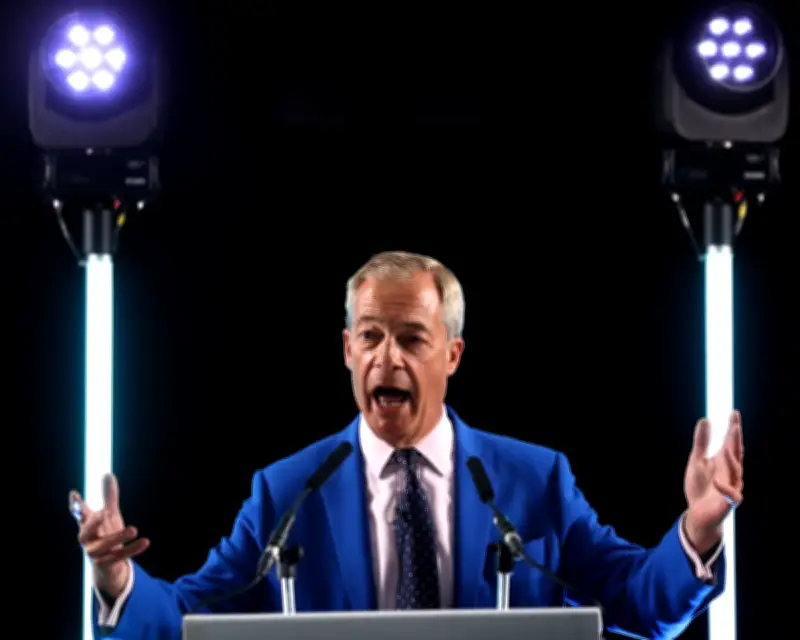
Senior political figures in the United Kingdom and Ireland have voiced deep apprehensions about the potential impact on the Union should Nigel Farage assume leadership of the next government.
Growing Concerns Across the Irish Sea
In recent statements, leaders from both sides of the Irish Sea have highlighted the risks posed by Farage's political agenda, particularly regarding the stability of the Union. The concerns come amid rising support for Farage's party in opinion polls, which suggest a possible shift in the political landscape.
According to a senior Irish government official, 'A Farage-led government would fundamentally undermine the Good Friday Agreement and threaten the delicate balance that has maintained peace in Northern Ireland.' The official, speaking on condition of anonymity, added that such an outcome could 'reignite tensions and destabilise the region.'

Union at a Crossroads
UK leaders have also expressed alarm. A prominent Conservative MP warned that a Farage premiership 'would be a disaster for the Union,' citing his history of Euroscepticism and divisive rhetoric. The MP noted that Farage's policies could 'accelerate the push for Scottish independence and embolden those who seek to dismantle the United Kingdom.'
Recent polling data indicates that support for Scottish independence has risen to 55% among likely voters, a 5% increase since Farage's party gained traction. Similarly, in Northern Ireland, support for a united Ireland has reached 42%, the highest level in over a decade.
Economic and Diplomatic Repercussions
Economic analysts have warned that a Farage-led government could trigger capital flight and damage trade relations with the European Union. A report from the Institute for Fiscal Studies projects that GDP could contract by up to 3% over five years under Farage's proposed policies, which include renegotiating trade deals and reducing immigration.
Diplomatically, the United States has expressed concern. A State Department spokesperson stated, 'We value the stability of the UK and the progress made in Northern Ireland. Any government that undermines that progress would be a source of serious concern for us.'
Reactions from Farage's Camp
A spokesperson for Nigel Farage dismissed the fears, calling them 'scaremongering from the establishment.' The spokesperson argued that Farage's policies would 'strengthen the Union by empowering all four nations' and insisted that 'the only threat to the Union is the current government's failure to deliver Brexit properly.'
However, critics point to Farage's past statements, including his description of the Union as 'a relic of the past,' as evidence of his true intentions. Political analyst Dr. Sarah Jenkins of the University of Oxford commented, 'Farage's rhetoric has consistently been anti-Union. It's hard to see how he could now become its defender.'
Looking Ahead
With a general election expected within the next 18 months, the possibility of a Farage-led government is being taken increasingly seriously by policymakers. Cross-party talks have reportedly begun to explore contingency plans, including potential reforms to the Union's structure.
As one senior civil servant put it, 'We are in uncharted territory. The next election could determine the future of the United Kingdom for generations.'