A powerful typhoon has swept through Japan, leaving a trail of destruction in its wake. Typhoon Jangmi made landfall on Wednesday (June 3), causing burst riverbanks, widespread flooding, landslides, and powerful winds, according to Japanese outlet News on Japan.
Evacuation Orders and Impact
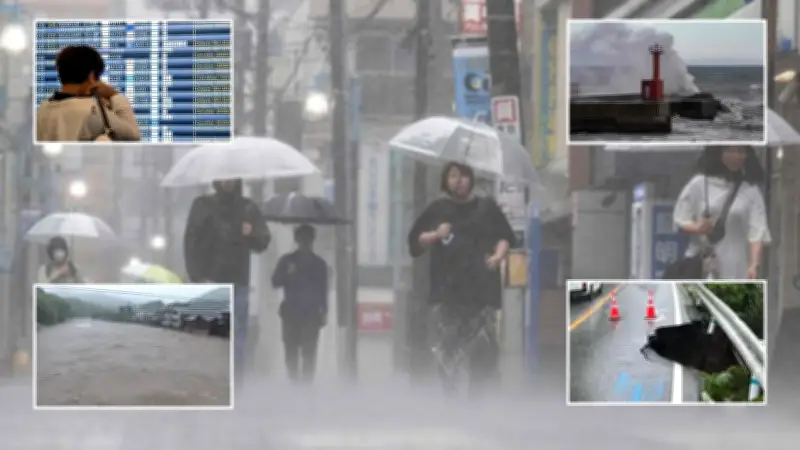
Harrowing footage shows riverbanks bursting and water flooding into nearby homes. Heavy rain and winds have pelted Tokyo and nearby regions, hampering efforts to evacuate 1.6 million people. Buildings have been sandbagged, and roads have been shut due to flooding. Images show vehicles abandoned on flooded highways, while landslides have torn some roads to pieces.
Regions Affected
The typhoon hit the Kanto and Tokai regions in eastern Japan, battering places like Okinawa, Kyushu, and Shikoku, causing extreme flooding and damage to local infrastructure. In Mie Prefecture, some areas recorded rainfall totaling an entire month's equivalent in 24 hours. Owase City in the country's southeast recorded the highest ever June rainfall of 535.5 millimeters.

Reporter's Experience
Conditions became near unbearable for one reporter in Kumano. "Strong winds are pushing against my body, and the rain is blowing sideways so hard that it's difficult to keep my eyes open," they said.
Specific Incidents
A Level 4 flood danger warning was issued in Tsu City after the Kumozu River and the Kumozu Furukawa River burst their banks. A nearby curry restaurant was badly hit. "It looked like water had accumulated all the way in front of the shop. It was frightening," an employee said.
Meanwhile, the vital highway connecting towns along the east coast collapsed, cutting off access for residents in Minamiise Town. "This is our only road. We really need it restored as quickly as possible," one resident said.
Tokyo and Surroundings
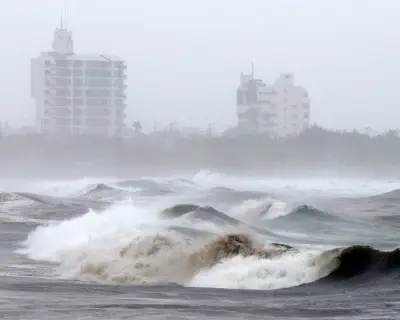
At Tokyo's Izu Oshima island, powerful winds whipped up large waves that crashed against seawalls. In Yokohama, strong gusts drove rain sideways through city streets. Central Tokyo recorded 173.5 millimeters of rainfall over a 12-hour period, the highest June total since records began. Roads were submerged in the Kasumigaseki district, while rivers throughout the capital swelled rapidly.
In Hiratsuka, Kanagawa Prefecture, a large tree snapped in a university parking lot under the force of the wind.
Evacuation Response
Despite evacuation orders affecting more than 1.6 million residents across Tokyo, Kanagawa, and Chiba prefectures, shelters remained largely empty. Takehiko Yamamura of the Disaster Reduction and Human Renovation Institution said that's because initially there was no major flooding and relatively little damage in the area. "If people ignore future danger alerts, they may fail to evacuate when a truly life-threatening situation occurs. Authorities should carefully examine the timing, communication methods and accuracy of the warnings issued during Typhoon No. 6," Yamamura said.
Ongoing Risks
Although Typhoon Jangmi has now passed, forecasters have warned that swollen rivers, unstable slopes, and saturated ground could continue to pose risks even after the rain subsides. Authorities are urging residents to remain alert for landslides, flooding, and other storm-related hazards.