Iran Implements Travel Ban for Sports Teams Citing Security Threats
Iran has officially prohibited its national and club sports teams from traveling to countries labeled as 'hostile' until further notice, according to reports from Iranian media on Thursday. The directive, issued by the Sports Ministry, stems from heightened concerns over the safety and security of Iranian athletes competing abroad.
Ministry Statement Details Security Concerns
The Iranian ministry explicitly stated, "The presence of national and club teams in countries considered hostile and unable to ensure the security of Iranian athletes and team members is prohibited until further notice." This announcement underscores the government's proactive stance in safeguarding its sports personnel amid escalating geopolitical tensions.
In a related development, the ministry has mandated that the Iranian football federation and associated clubs formally notify the Asian Football Confederation. This notification is intended to facilitate the relocation of match venues to ensure compliance with the new travel restrictions.

Specific Incidents and Broader Implications
The ministry referenced a recent instance involving club team Tractor FC, which competed against a United Arab Emirates team in Saudi Arabia. However, the statement did not specify which particular venues require relocation or identify the countries officially deemed hostile under this new policy.
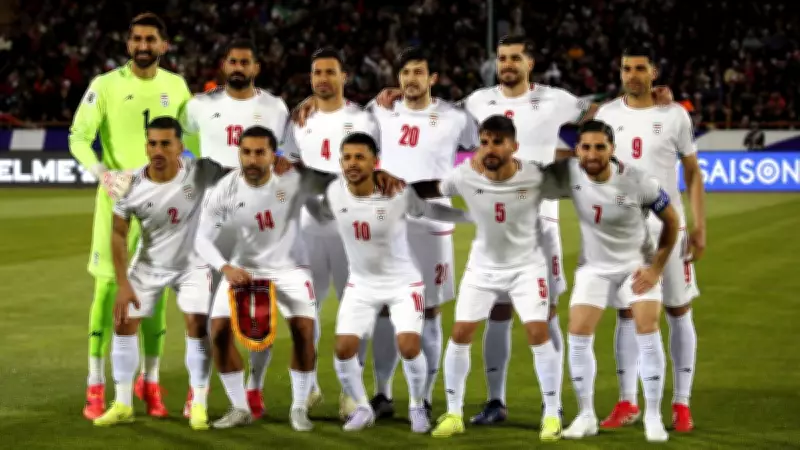
Currently, the Iranian men's national football squad is stationed in Turkey, preparing for upcoming friendly internationals against Nigeria on Friday and Costa Rica on Tuesday. These matches are part of their preparatory schedule for the 2026 FIFA World Cup, jointly hosted by the United States, Canada, and Mexico.
World Cup Participation Under Scrutiny
Iran's qualification for the 2026 World Cup has been overshadowed by uncertainties regarding their participation, particularly since the onset of conflict between the Islamic Republic and the United States and Israel in late February. U.S. President Donald Trump commented earlier this month, suggesting that while Iran's national team is welcome to play in the U.S., it might not be appropriate for their "life and safety."
In response, Iranian football federation President Mehdi Taj revealed last week that discussions are underway with FIFA, the world governing body of football, to potentially relocate Iran's World Cup matches from the U.S. to Mexico. However, FIFA responded almost immediately, with a spokesperson stating, "FIFA is in regular contact with all participating member associations, including IR Iran, to discuss planning for the FIFA World Cup 2026. FIFA is looking forward to all participating teams competing as per the match schedule announced on December 6, 2025."
Should FIFA maintain this firm stance, it appears increasingly likely that Iran may be compelled to withdraw from the prestigious tournament, a move that would have significant repercussions for the team and its supporters.
Recent Asylum Cases Add Context
This travel ban follows recent events involving the Iranian women's national team, which recently returned from the Asian Cup held in Australia. During the tournament, players Atefeh Ramezanisadeh, 33, and Fatemeh Pasandideh, 21, remained in Australia after a larger group initially sought asylum. Team captain Zahra Ghanbari was the fifth and final member to withdraw her asylum claim and depart Australia, highlighting ongoing personal and political challenges faced by Iranian athletes internationally.
The implementation of this travel ban reflects a broader strategy by Iranian authorities to mitigate risks and assert control over athletic delegations amidst complex international relations. As developments unfold, the global sports community will closely monitor how these restrictions impact Iran's competitive engagements and diplomatic interactions on the world stage.