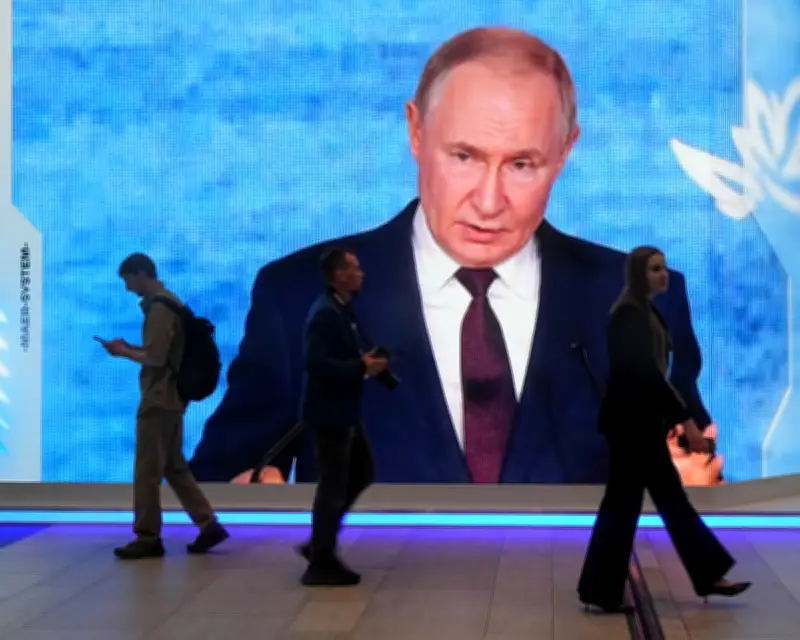
Russian President Vladimir Putin has made clear his intention to redraw Ukraine's borders, a move that signals a significant escalation in the ongoing conflict. In a recent address, Putin outlined his vision for a new territorial order, asserting that historical and cultural ties justify Russia's claims.
Putin's Strategic Shift
Putin's latest statements mark a departure from earlier rhetoric, which focused on demilitarization and denazification. Now, he explicitly calls for the redrawing of borders, a demand that has been met with international condemnation. Analysts suggest this shift aims to solidify gains and create a buffer zone.
Historical Context
Putin has repeatedly invoked history to justify his actions, citing the shared heritage of Russia and Ukraine. However, critics argue that this is a pretext for expansionism. The Russian president's references to 'Novorossiya' and other historical regions have raised alarms about further territorial ambitions.

International Response
The United States and European Union have condemned Putin's remarks, reiterating their support for Ukraine's sovereignty. NATO has increased its presence in Eastern Europe, while diplomatic efforts continue to seek a resolution. Ukraine's President Volodymyr Zelenskyy has vowed to defend the country's borders.
Implications for Global Security
The conflict has far-reaching consequences beyond Ukraine. Energy prices, food security, and global alliances are all affected. Putin's border demands could set a precedent for other territorial disputes, challenging the post-World War II international order.
- Escalation of military operations in eastern and southern Ukraine.
- Increased humanitarian crisis with millions displaced.
- Potential for wider conflict involving NATO.
As the war enters a new phase, the international community watches closely. Putin's determination to redraw borders may lead to a prolonged conflict, with no clear end in sight.