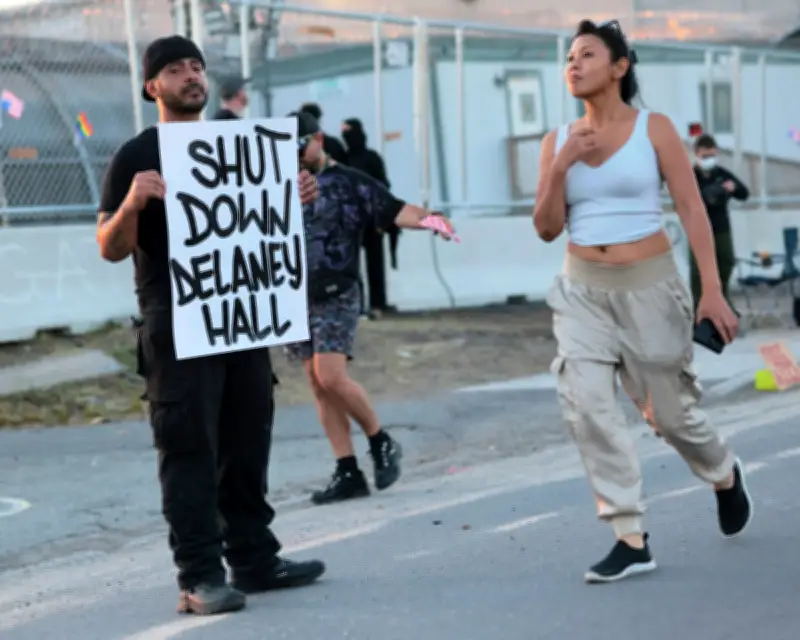
A strike at the Delaney Hall Immigration and Customs Enforcement (ICE) detention center has escalated into a nationwide debate about the treatment of detainees and the broader immigration system. The protest, which began earlier this week, involves hundreds of detainees refusing to participate in daily routines and demanding improved conditions.
Background of the Strike
The Delaney Hall facility, located in New Jersey, has been at the center of controversy for years. Detainees have long complained about overcrowding, inadequate medical care, and insufficient access to legal resources. The strike, which started on Monday, has gained momentum as more detainees join the protest. Organizers have released a list of demands, including better food, improved sanitation, and an end to what they describe as punitive isolation practices.
Detainee Demands
- Improved medical care and mental health services
- Reduction in overcrowding
- Access to legal representation and communication with families
- An end to solitary confinement for minor infractions
The protest has drawn support from immigrant rights groups and legal advocates, who argue that the conditions at Delaney Hall violate basic human rights. “Detainees are not criminals; they are people seeking safety or awaiting hearings,” said Maria Gonzalez, a spokesperson for the New Jersey Immigrant Rights Coalition. “The strike is a desperate cry for help.”

Government Response
ICE officials have acknowledged the protest but downplayed its severity. In a statement, the agency said it is “aware of the situation” and is working to address concerns through established grievance procedures. However, critics argue that the response has been insufficient. “ICE has a history of ignoring complaints until they escalate,” said David Chen, a law professor at Rutgers University. “This strike is a direct result of systemic neglect.”
The strike has also reignited political debates over immigration policy. Some lawmakers have called for an independent investigation into conditions at Delaney Hall, while others have used the protest to advocate for stricter enforcement. “This is what happens when you have a broken system,” said Senator Lisa Murkowski (R-AK). “We need to ensure that detention centers operate humanely, but we also must enforce our laws.”
National Implications
The Delaney Hall strike is not an isolated incident. Similar protests have occurred at other ICE facilities in recent years, including in Texas and California. Advocates say the pattern reflects a deeper crisis within the immigration detention system. “These strikes are a symptom of a system that prioritizes punishment over due process,” said Fatima Ahmed, a policy analyst at the American Civil Liberties Union.
The Biden administration has faced pressure to reform immigration detention, but progress has been slow. In 2021, President Joe Biden signed an executive order directing ICE to prioritize the detention of individuals deemed a threat to public safety. However, critics say the order has not led to significant changes in conditions. “The administration talks about reform, but on the ground, little has changed,” Ahmed added.
What’s Next?
As the strike continues, attention is turning to potential negotiations between detainees and ICE. Legal advocates are calling for an independent mediator to facilitate dialogue. Meanwhile, detainees have vowed to continue their protest until their demands are met. “We have nothing to lose,” said one detainee, speaking through a lawyer. “We are fighting for our dignity.”
The situation at Delaney Hall remains fluid. For now, the strike has brought renewed scrutiny to the U.S. immigration detention system, and its outcome could have far-reaching implications for detainees nationwide.