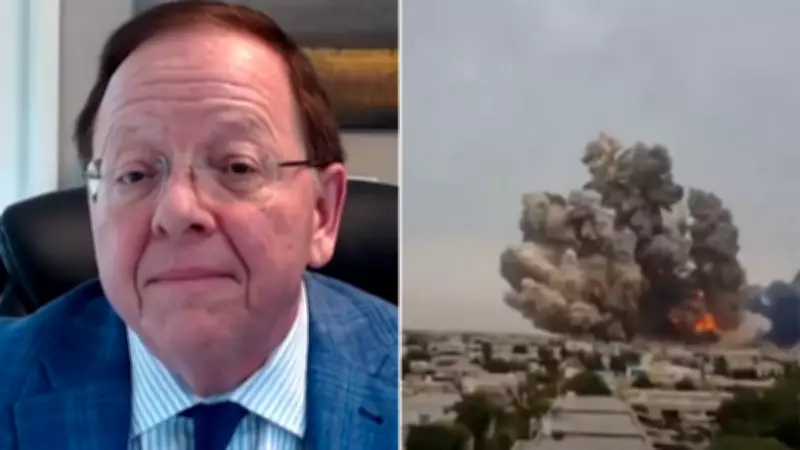
US-Iran Standoff Reaches Critical Point as Ceasefire Expires
The United States and Iran remain locked in a dangerous and escalating standoff with no clear diplomatic off-ramp in sight, according to military strategy experts. The situation has reached a critical juncture as the ceasefire agreement is set to expire in less than forty-eight hours, with no meaningful progress reported in ongoing peace negotiations.
Zero-Sum Escalation Trap
Military strategy expert Professor Robert Pape described the conflict as a "zero-sum" escalation trap with no clear exit strategy. He warned that what began as a limited air campaign has transformed into a prolonged confrontation where neither side appears willing to back down.
"What you are observing now is not just an air campaign that started out as a few days and is extending," Professor Pape explained. "This has become an escalation trap. There were some initial rounds, some initial ideas of some quick victory that failed. They actually tactically succeeded, but failed to achieve the victory. And then President Trump has been going up the escalation trap, rung by rung, looking for that strategic victory."

Strait of Hormuz Closure Shifts Power Balance
The ongoing closure of the Strait of Hormuz has dramatically shifted the balance of power in the conflict, giving Iran outsized global leverage despite its relatively limited military resources compared to the United States. This strategic waterway remains blocked, creating significant economic and security concerns worldwide.
Professor Pape emphasized that Iran's ability to maintain this closure with minimal resources has fundamentally altered the conflict dynamics, providing Tehran with disproportionate influence on the global stage.
Political Costs Prevent De-escalation
Both nations face significant political disincentives to step back from the confrontation, despite the obvious global consequences of continued escalation. Professor Pape outlined the difficult position facing both leaderships.
"The United States doesn't want to back down and have to accept a giant loss, a defeat, which could really end President Trump's presidency, at least politically, for all intents and purposes," he stated. "Iran doesn't want to give up that world power, at least its emerging world power, because it's just so extraordinary and gives it so many benefits."
The expert described this as the "zero-sum nature of the escalation trap" where neither side has compelling reasons to surrender, even as the conflict causes significant international disruption.
Diminished American Prestige
The seven-week conflict has already cost the United States a significant amount in its "image of power," according to Professor Pape. He noted that even a far weaker nation like Iran has been able to withstand and challenge American influence, undermining long-standing perceptions of U.S. military dominance.
"Before this point, we were able to project this idea that we were this awesome 800-pound gorilla, we could basically beat up almost anybody on the planet, and we kind of papered over what happened with the forever wars," Professor Pape observed. "America has lost a tremendous amount of prestige and actual visible power, and you see it with the Europeans. They won't obey President Trump. You see it with the Japanese; they won't come. Australia is not looking to get in on this."
He added that President Trump's inability to mobilize international support demonstrates the erosion of American diplomatic influence: "President Trump can ask for the world's help, he doesn't have the power to budge a single country."
No Breakthrough in Sight
A second round of talks is expected to occur soon, despite Iranian officials criticizing Washington's refusal to abandon its hardline demands. However, Professor Pape warned that without a significant diplomatic breakthrough, the conflict is likely to continue dragging on indefinitely.

Both sides appear unwilling to absorb the political costs associated with backing down, creating a stalemate that could persist well beyond the impending ceasefire expiration. The expert cautioned that the world continues to suffer the consequences of this geopolitical impasse while both nations prioritize avoiding domestic political losses over global stability.
The situation remains fluid and highly volatile, with international observers closely monitoring developments as the ceasefire deadline approaches and diplomatic efforts continue behind the scenes.