Australia's Fuel Security Under Threat as Global Tensions Rise
As the war in the Middle East continues and a fifth of the world's oil supplies are blocked from moving through the Strait of Hormuz, concerns over global fuel stocks are intensifying. Western Australian Premier Roger Cook has cast doubt on Australia's ability to remain at its current fuel security setting, warning the situation could deteriorate further as global tensions persist.
Premier Cook's Warning on National Fuel Security
Speaking to a crowd of 900 West Australian business and political figures at a Business News Breakfast last Thursday, Cook was asked whether he had confidence the nation would remain at Level 2 of the National Fuel Security Plan. "No. No confidence. I think we need to be aware that this situation could get worse before it gets better," he said. This warning came despite Commonwealth assurances that national fuel supplies are secured until mid-May, raising the prospect Australia may need to escalate its response.
Current Status: Level 2 of the National Fuel Security Plan
Australia is currently operating under Level 2 of the plan, a stage designed to keep the country moving even as pressure builds on supply. At this level, fuel is still widely available, but the system is no longer operating comfortably. Governments are actively working behind the scenes to secure additional shipments, monitor stock levels, and manage distribution, while keeping a close watch on how fuel is flowing through the economy.

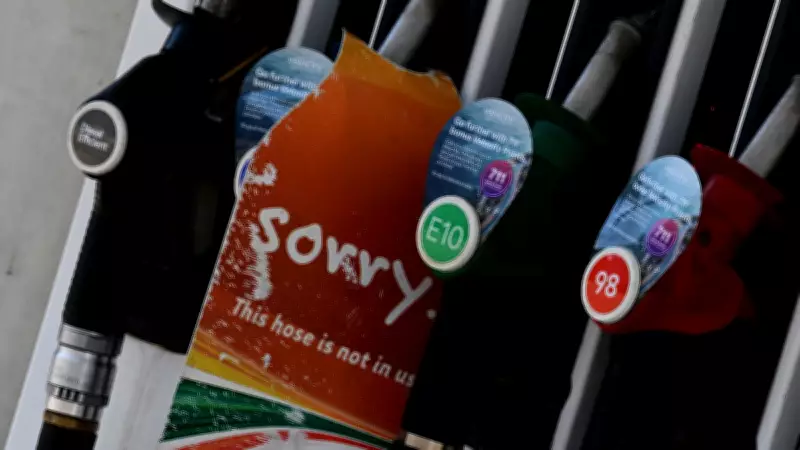
In recent weeks, the federal government has moved to shore up supply by securing additional fuel imports—with four extra shiploads of diesel just secured from South Korea and Brunei—and even temporarily halving the fuel excise to ease pressure on motorists, as it tries to stabilise both availability and prices. For most Australians, the impact is subtle but noticeable. Prices rise as global supply tightens, and some service stations run low or temporarily run out of particular fuels. There is also a shift in messaging, with authorities urging people to only purchase what they need and avoid unnecessary use.
The impacts are felt most sharply outside the major cities, where farmers and regional communities rely heavily on diesel, with rising costs and patchy supply disrupting harvests, freight, and daily operations.
What Changes at Level 3?
Level 3 marks the point where the response moves beyond monitoring and precaution into more active management. Under this stage, described as "taking targeted action", the government begins to focus more directly on where fuel is going and how it is being used. The priority shifts to ensuring supply reaches the sectors that need it most, while also reducing overall demand across the economy.
This involves stepping up efforts to secure fuel from international partners and, if required, releasing additional reserves to keep supply moving through the system. At the same time, governments work together to introduce nationally consistent measures aimed at lowering consumption, rather than leaving usage entirely to market forces. It is not a sudden or dramatic change, but it is a clear turning point. Fuel is no longer just something individuals and businesses use freely based on price and availability; it becomes something that is more deliberately managed.
Practical Implications of Level 3 for Australians
For Australians, the shift to Level 3 would be felt less through strict rules and more through gradual changes in behaviour and expectations. There would likely be stronger and more persistent messaging to cut back on non-essential driving, with governments making it clear that reducing fuel use is part of the national response. Over time, this will begin to influence how people plan their daily movements, from choosing to work from home where possible, to opting for public transport and reconsidering non-essential weekend travel.
Behind the scenes, industries that rely heavily on fuel would also start making adjustments. Freight operators may change delivery schedules or routes to improve efficiency, while businesses could look for ways to reduce fuel-intensive activity. These shifts are not always immediately visible, but they can flow through to everyday life, impacting everything from availability, delivery times, and the cost of goods.

At the same time, there would be an increased focus on ensuring fuel continues to reach critical sectors. Speaking on Sunrise on Friday, Health Minister Mark Butler said the intention at this level is to protect essential services if shortages deepen. "It does ensure that industries that really need fuel, the mining sector, the agriculture sector, emergency services, the health sector, are targeted if shortages become quite pronounced," he said. While this does not amount to formal rationing, it can begin to feel that way. It represents the early stages of prioritisation, where some parts of the economy are quietly given greater importance in how fuel is distributed.
Level 4 and Beyond: The Most Serious Stage
Level 4 represents the most serious stage of the plan, where governments step in to ensure fuel is reserved for critical services such as healthcare, emergency responses, and essential infrastructure. At that point, stronger measures are introduced to manage demand and allocate supply, with a nationally coordinated system designed to prioritise those sectors most in need. For everyday Australians, it could mean tighter limits on how fuel is used, with priority given to essential services and industries over general demand. While Australia is not at that stage, and officials have not suggested it is imminent, it is a good indication of how the response could escalate if supply disruptions were to significantly worsen.
Why Concerns Are High Right Now
Concerns feel particularly high at the moment, driven by a combination of global disruption and domestic strain, both of which are now hitting Australia's fuel system at the same time. Cook pointed to escalating global instability, particularly in the Middle East, where ongoing conflict has disrupted global oil supply routes, as well as compounding domestic pressures, including the impact of a major refinery fire in Victoria that has forced one of Australia's two remaining facilities to operate at reduced capacity. "We need to understand that even the tail of this issue, if the Strait of Hormuz was open today, will continue for many months to come," Cook said. Although the government has secured some additional fuel imports and maintains that supply will continue in the short term, the combination of international conflict and domestic disruption has heightened concern about how long the current settings can hold.
How Close Is Australia to Level 3?
For now, Australia remains at Level 2, and officials are stressing that supply is stable in the immediate term. But there is growing recognition the situation is unpredictable and could shift quickly. "None of us really know how long this conflict is going to go on, how long the Strait of Hormuz will be closed, and after it does open, how long it will take for the oil to start flowing in a more normal way," Butler said. "We hope for the best, we've got a good supply now until the end of May, we're out there getting as much fuel from the global market that we possibly can get, but of course, we've got to prepare for the possibility that this will get worse before it gets better, and we will start to see shortages. You can't govern on hope alone, and that's why we have the National Fuel Security Plan." What happens next will depend on how long global disruptions persist and how much pressure Australia's fuel system can absorb before further action is needed.