The Vatican has excommunicated the entire membership of the ultra-conservative Society of Saint Pius X (SSPX) after the group ordained four bishops without papal approval, triggering a formal schism within the Roman Catholic Church. The announcement, made Thursday by Cardinal Víctor Manuel Fernández of the Dicastery for the Doctrine of the Faith, declared that the SSPX's actions constituted 'an act of a schismatic nature,' warranting automatic excommunication under canon law. The decree extends to all priests of the SSPX and any Catholic who 'adheres formally' to the group.
Schism Defined and Vatican's Response
A schism represents a severe and formal rupture within the church. Andrea Vreede, Vatican correspondent for Dutch broadcaster NOS, explained that the Vatican hopes this harsh measure may prompt some members to repent and return to the church, as excommunication is a serious penalty. Pope Leo had made a last-ditch effort to prevent the ordinations, calling them a 'schismatic act' and a 'sin of extreme gravity.' The SSPX, however, defended the ordinations as a 'sacred duty' to maintain bishops 'entirely faithful' to Catholic tradition.
The Ordination Ceremony and Political Ties
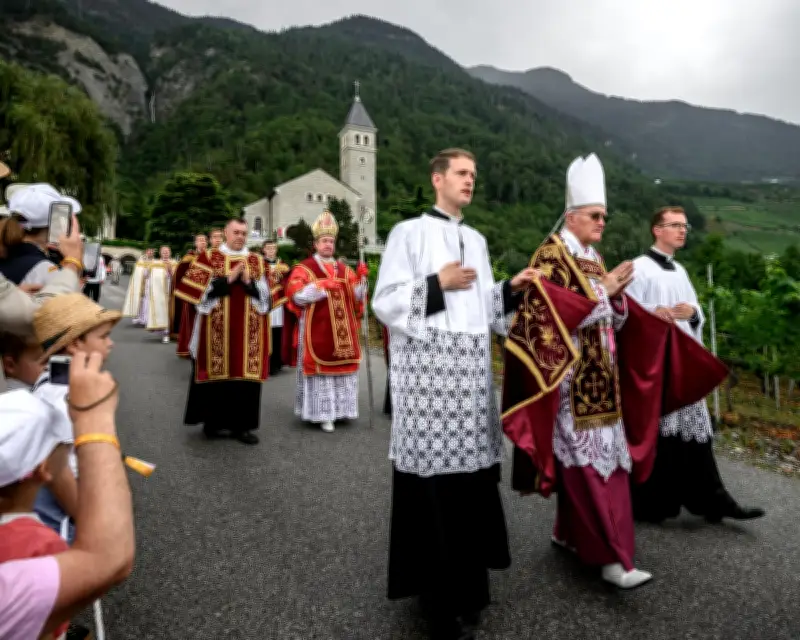
The ordination ceremony on Wednesday drew an estimated 16,500 attendees, including members of Italy's neofascist Forza Nuova party and the far-right Futuro Nazionale group, which threatens Prime Minister Giorgia Meloni's re-election chances. The SSPX, founded in 1970 in Ecône, Switzerland, has nearly 1,500 priests, seminarians, and other vocational members, with a global following of 150,000 to 200,000, notably in the United States, France, and Argentina.

Rejection of Vatican II and Far-Right Resurgence
The group rejects key changes from the Second Vatican Council (1962-1965), including the use of local languages in Mass instead of Latin, and opposes interfaith dialogue. Vreede described the SSPX as 'a very minor group but they are very loud and very ultra-right.' The ordinations represent Pope Leo's first major crisis since his election in May last year. As the first North American pope, he has prioritized church unity and sought to heal rifts with traditionalists that deepened under his predecessor, Francis.
Motivations Behind the Ordinations
According to Vreede, the SSPX pursued ordinations for three reasons: the need for new bishops as only two aging ones remain; a hope that Pope Leo, who revived traditional vestments and the Castel Gandolfo summer retreat, would be more tolerant than Francis; and a belief that the global far-right resurgence could boost their influence. Vreede expects Leo to continue prioritizing unity rather than appeasing traditionalists.
This clash is the first between the Vatican and SSPX since 1988, when founder Archbishop Marcel Lefebvre and four bishops he ordained without Pope John Paul II's permission were excommunicated, including British Bishop Richard Williamson. In 2009, Pope Benedict lifted those excommunications, but Williamson later caused outrage by denying the Holocaust. Vreede concluded that while Leo will be unhappy, he saw the schism as inevitable, noting it is a nuisance but unlikely to damage his papacy.