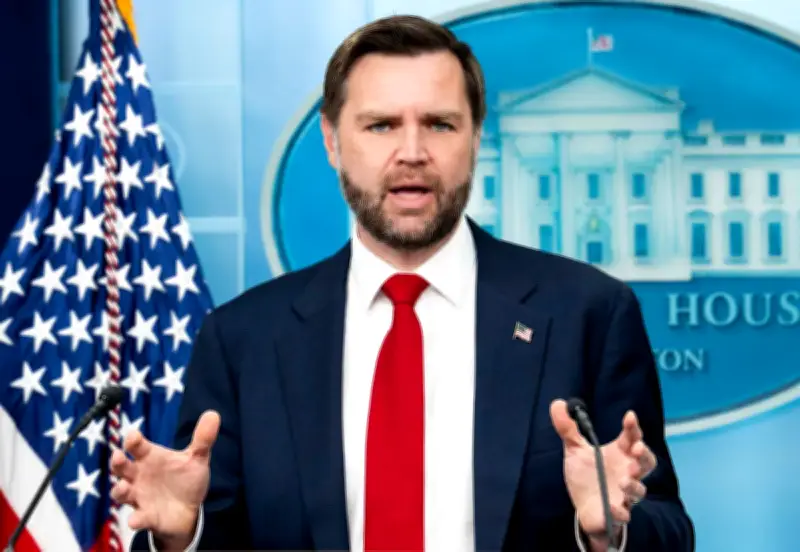
US Vice-President JD Vance was scheduled to fly to Switzerland for talks with Iran, but the meeting has been abruptly cancelled. The talks, set to take place on Friday in the Swiss village of Obbürgen, were aimed at implementing a peace deal following a memorandum of understanding (MOU) signed two days earlier. The MOU opened a 60-day window to negotiate a permanent agreement over Iran's nuclear program and restore oil traffic through the Strait of Hormuz.
Sudden Cancellation and Escalating Violence
The White House stated it looks forward to beginning technical talks as soon as possible, but Vance would not be travelling. A White House spokesperson said, "The logistics of these negotiations have never been simple or predictable. As of now the vice-president is not departing tonight." The cancellation came as Israel and Hezbollah traded their most violent strikes since the ceasefire was established. Hezbollah targeted Israeli forces near Nabatieh in southern Lebanon with rocket fire, and Israel responded with airstrikes, leaving several dead and wounded, including children.
Background of the Conflict
Hezbollah said it was targeting Israeli forces advancing towards the foothills surrounding Nabatieh, a flashpoint since the US-Iran ceasefire was announced. The cancellation was so abrupt that Vance's staff and journalists had gathered at Joint Base Andrews in anticipation of the trip, while dozens of White House officials and media were already in Switzerland. Iran's Supreme Leader Ayatollah Mojtaba Khamenei approved the MOU despite reservations, and the US lifted a blockade of Iranian ports. However, Iran's semi-official Tasnim news agency indicated that Iranian negotiators needed to see implementation of the interim agreement before further talks.

Regional Reactions and Stalemate
The cancellation followed a report by Al-Mayadeen, a network allied with Hezbollah, that Tehran was delaying its delegation due to Israel's military campaign in Lebanon. Israel, not included in the peace talks, has continued fighting and launched airstrikes, accusing Hezbollah of violating the ceasefire. Hezbollah claimed it destroyed three Israeli tanks, though Israel did not confirm. The conflict has killed over 3,900 people in Lebanon and at least 32 Israeli soldiers and 3 civilians. Israel announced a 'security zone' in southern Lebanon, while Lebanese officials demand a complete withdrawal. US President Donald Trump expects a complete ceasefire, and Vance criticized Israel's actions, saying they are "not acceptable."
Uncertain Future
Iran's chief negotiator Mohammad Ghalibaf warned against any breach of the agreement, stating a decisive response would be given. The diplomatic uncertainty adds to doubts about a lasting truce in a regional war that has killed at least 7,000 people, driven up energy prices, and shaken global markets. The MOU gives negotiators 60 days to reach an agreement on Iran's nuclear program, with provisions for extension and a $300 billion reconstruction fund for Iran. US forces lifted the naval blockade of Iranian ports, but activity in the Strait of Hormuz remains muted.