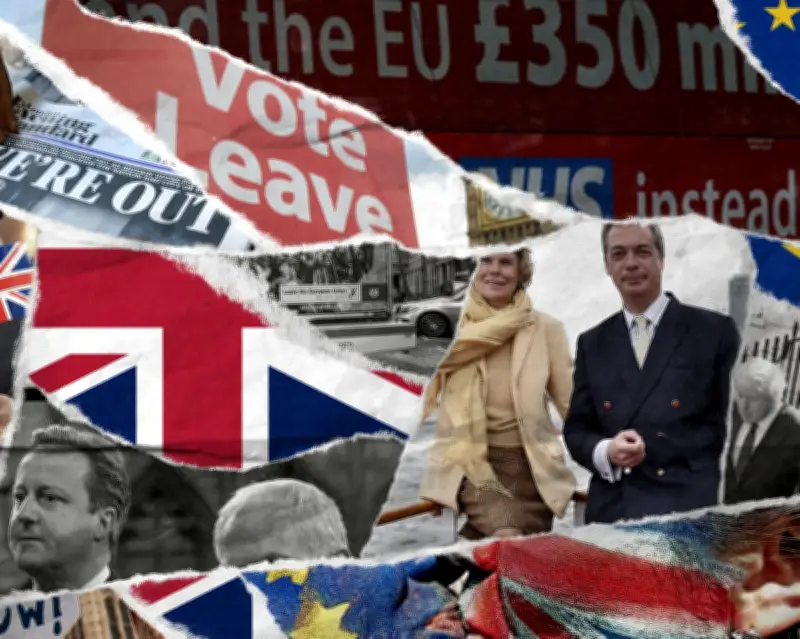
In a comprehensive oral history, key figures from the 2016 Brexit campaign recount the five months that led to the UK's decision to leave the European Union. The narrative begins on 20-21 February 2016, when Prime Minister David Cameron announced the referendum date of 23 June, and Boris Johnson declared his support for Leave.
David Cameron's Gamble
Bernard Jenkin, a senior Conservative backbencher, recalled warning Cameron against an in/out referendum, predicting it would split the party. Cameron famously responded, “I know 50 Conservative MPs may vote leave, but we can live with that.” David Lidington, then minister for Europe, described the decision as an attempt to “lance the boil of disaffection” within the party, but warned it was like “chucking lumps of red meat to pursuing wolves.”
Boris Johnson's Dilemma
Will Walden, Johnson's communications director, revealed that Johnson was genuinely torn over the decision. He spent a weekend at his Oxfordshire farmhouse, buffeted by advice from Cameron, George Osborne, and family. Johnson eventually announced his Leave stance, a move Walden believes “changed the course of history.” Craig Oliver, Cameron's communications chief, noted that the Conservative party's heart was with Leave, making a Remain victory politically costly.

The Campaign Unfolds
By April 2016, campaigning intensified. Jess Phillips, a Labour MP, described the Remain campaign as “elitist” and disorganised. Ivan Rogers, Britain's EU ambassador, warned early that Leave was better organised and the vote was a “knife-edge.” Tom Watson, Labour's deputy leader, felt the campaign was based on “hope and vapours.” Caroline Lucas, Green MP, criticised the Remain side's focus on economics while Leave spoke viscerally about “taking back control.”
Obama's Intervention
On 22 April, US President Barack Obama warned Britain would be “at the back of the queue” for trade deals if it left the EU. Craig Oliver confirmed the phrase was suggested by George Osborne and agreed upon with Obama. Paul Stephenson, Vote Leave's communications director, said the intervention was the peak of No 10's campaign, but Leave countered by framing it as foreign interference.
The £350m Bus
On 11 May, Vote Leave launched its battlebus with the slogan “We send the EU £350m a week. Let's fund the NHS instead.” Walden said Johnson was initially sceptical about the figure, but the campaign used it to highlight the scale of payments. Caroline Lucas called the lie “blatant” and corrosive, but acknowledged it was a “masterstroke” that kept the media talking.
Turkey and the Breaking Point Poster
On 20 May, Vote Leave claimed Turkey (population 76 million) was joining the EU, a claim Jonathan Faull, a senior EU official, called “simply a lie.” Walden revealed Johnson was furious about the subsequent “Breaking Point” poster showing Syrian refugees, nearly quitting the campaign. Johnson, who has Turkish ancestry, was not consulted and became “apoplectic.”
The Thames Flotilla
On 15 June, Nigel Farage and Kate Hoey led a flotilla of anti-EU fishermen up the Thames, met by a Remain flotilla led by Bob Geldof. Rachel Johnson, Boris's sister, who was on Geldof's boat, admitted the optics were terrible: “It looked like a bunch of Tory Annabels on a fun day out, flicking V-signs at the working man.” She believes the flotilla “helped deliver Brexit.” Gawain Towler, Farage's press chief, called it “one of the most magnificent days of campaigning,” as Geldof's V-sign became a global front-page image.
Jo Cox's Murder
On 16 June, hours after Farage's Breaking Point poster was released, Labour MP Jo Cox was murdered by a white supremacist. Craig Oliver described the day as the most difficult of his professional life, noting the Leave campaign's false claim about Bank of England governor Mark Carney, the poster, and the murder as signs that “something has deeply gone wrong.” Jess Phillips, a close friend, recalled her last conversation with Cox, who said she was scared. Tom Watson remembered crying with the speaker's chaplain. The murder halted campaigning, but Phillips resented Farage's later comment that Leave won “without a single shot being fired.”

The Great Debate
On 20 June, a BBC head-to-head debate at Wembley Arena featured Boris Johnson, Gisela Stuart, and Andrea Leadsom for Leave, and Ruth Davidson, Sadiq Khan, and Frances O'Grady for Remain. Mishal Husain, who chaired a secondary panel, recalled Johnson's “independence day” line, which sparked an eruption of fervour from Leave supporters. Paul Stephenson said the debate broadened the Leave appeal beyond Johnson and Gove.
Referendum Night and Aftermath
On 23-24 June, the results came in. Paul Stephenson described a close race, with Leave areas turning out strongly. Will Walden said Johnson predicted a loss on the DLR, but when Sunderland's result came in, he leapt off the sofa. Tom Watson woke to find his 11-year-old son perplexed, realising “we've taken his generation's future away.” Robert Peston, ITV political editor, noted that Sunderland's Nissan workers cheered the Leave result, forcing him to reassess how people vote. Caroline Lucas described the morning as “a dagger in my heart,” with a stark contrast between the sunny day and the grief.
Cameron's Resignation
On 24 June, David Cameron resigned. Craig Oliver advised him to go with dignity, and Cameron asked, “Craig, do you think I do have to resign?” Oliver replied, “Sadly, I think you do.” Johnson expressed genuine concern for Cameron and his wife Sam, but the reality of the decision hit him as he faced angry crowds in Islington. Walden said Johnson realised “the magnitude of the decision” and how it would change the country.