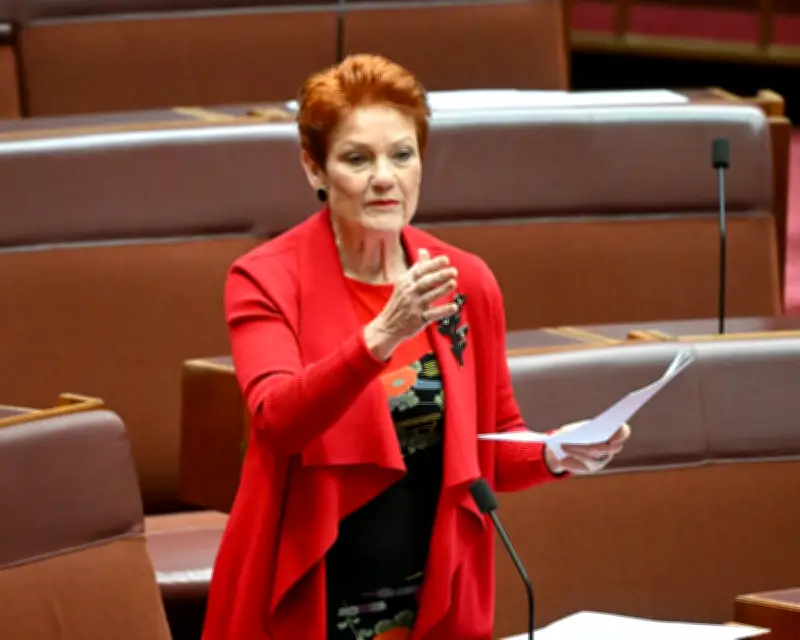
One Nation leader Pauline Hanson has unveiled a new parental leave scheme that would be funded by scrapping tax breaks for small businesses, drawing immediate backlash from business groups who warn it would hurt the very enterprises the policy aims to support.
Hanson's Proposal Details
Under the plan, the government would provide 26 weeks of paid parental leave at the minimum wage, funded by abolishing the instant asset write-off and other tax concessions for small businesses with annual turnovers under $10 million. Hanson argued the current system is inadequate and that big businesses should not be the only ones offering generous leave.
“We need to support families, but we don't need to keep giving tax breaks to businesses that are already doing well,” Hanson said in a statement. “Small businesses will still thrive, and parents will get the time they need with their newborns.”

Small Business Opposition
The Council of Small Business Organisations Australia (COSBOA) immediately condemned the proposal. CEO Alexi Boyd said it would “devastate” small businesses already struggling with rising costs. “Taking away the instant asset write-off is a hammer blow to small business owners who rely on it to invest in equipment and grow their operations,” Boyd said. “This policy would leave them with less money to hire staff and expand, exactly the opposite of what we need.”
The Australian Chamber of Commerce and Industry also criticized the plan, estimating that scrapping the write-off would cost small businesses an average of $12,000 per year. “That's a significant hit for a business with thin margins,” said ACCI chief executive Andrew McKellar.
Political Reactions
Labor's Families Minister Amanda Rishworth dismissed the proposal as “unworkable” and said the government's own parental leave reforms, which include extending paid leave to 26 weeks by 2026, were more comprehensive. “We are delivering a fair and sustainable system that supports families without punishing small businesses,” Rishworth said.
Greens senator Larissa Waters called the plan a “step in the right direction” but argued it should be funded by taxing big corporations and the wealthy, not small businesses. “Small businesses are not the enemy; it's the billionaires who should pay,” Waters said.
Economic Impact Analysis
Economists have weighed in on the proposal, with some noting that while the instant asset write-off is a popular measure, its effectiveness in stimulating investment is debated. However, most agreed that targeting small businesses specifically could have unintended consequences. “Small businesses are the engine of job creation in Australia,” said economist Dr. Sarah Hunter from KPMG. “Removing their tax incentives could dampen hiring and investment, offsetting any benefits from parental leave.”
The policy would cost an estimated $4.5 billion over four years, according to One Nation's costings, which they claim would be fully offset by the tax break cuts. But the Parliamentary Budget Office has not yet verified those figures.