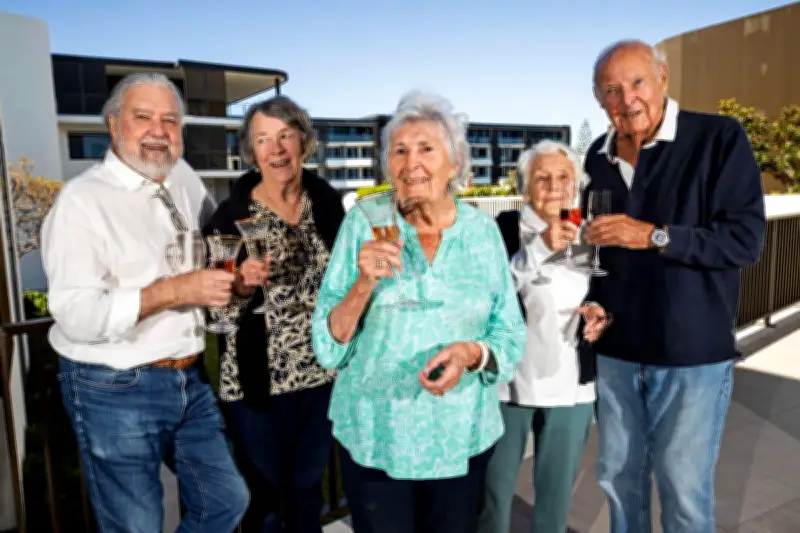
Margaret Welch, 90, moved to Waterfront Cottesloe after her husband shattered his spine moving a heavy pot in their garden. He could no longer walk, and she cared for him at home for over a year before securing palliative care at Marine Views, a 128-bed residential care facility in Cottesloe. To stay close, she joined a waitlist for an apartment at Waterfront, part of the same complex. When a unit became available, she had two hours to decide before it went to one of 400 others waiting. She accepted sight unseen and now enjoys ocean views to Rottnest and a kitchen window overlooking magnolia trees. Her husband died last year after 68 years of marriage.
Combating Loneliness Through Design
David Cox, managing director of Curtin Heritage Living, which operates both facilities, notes that statistics show the top reasons older people enter residential care are catastrophic incidents like hip fractures and loneliness. Curtin Heritage Living, a not-for-profit serving western suburbs for over 45 years, aims to keep people in their homes by providing in-home care, social contact, and communal spaces. The recently opened Heritage Collective, a cultural hub in restored beachside heritage buildings, includes a club lounge, gold-class cinema, boardroom, makers' spaces, and arts programs open to all ages.
“We felt it was incumbent upon us to prioritise good design incorporating community feedback so people actually want to come together,” Cox said. “I know I wouldn’t want to be going to a day centre to play bingo.”

Loneliness as a Public Health Crisis
At least 15% of Australians experience loneliness, which research links to depression, distress, and early death—as dangerous as smoking. Urban planning experts say neighbourhood design significantly impacts isolation. Angela Koepp and Leigh Holford from Hatch, a global urban planning firm, note that mental health conditions from poor social connection cost the Australian economy billions yearly. Koepp said small changes like walkable streets, shared spaces, and community-centred planning foster connection.
“Australia remains in a housing crisis and while housing targets focus heavily on supply, there’s not enough attention on connection and community,” Koepp said. Holford added that good design should activate public space, encourage connectivity, and support the economy.
Award-Winning Neighbourhood Design
Curtin Heritage Living has won awards for incorporating urban design principles of happy, connected neighbourhoods. Hatch’s Great Places Process, a six-stage blueprint, tackles social isolation, cost of living, cultural inclusion, and intergenerational connection. Their award-winning Jindee Innovation Project in WA reflects a shift toward community-owned, liveability-led neighbourhoods.
At Waterfront, thoughtful planning includes George Kailis’ seaside brasserie Gibney, a GP surgery, and an art gallery. Cox believes this promotes health, happiness, and inclusivity long-term.
Margaret's New Life
Margaret now enjoys weekly art groups, vintage films with Prosecco and popcorn, and a heated pool for exercise. “The design of the place is such that there is no reason anybody should feel isolated or lonely here,” she said. “If anyone ever does feel lonely, all they have to do is wander into the Sea Lounge—there is always someone there you can talk to.”