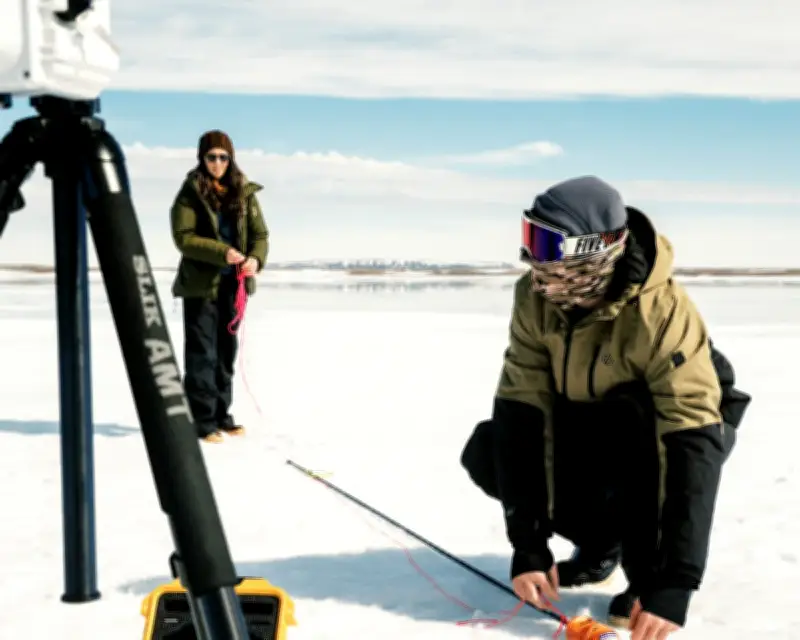
Scientists have achieved a breakthrough in the fight against climate change by successfully refreezing melting Arctic sea ice. The innovative technique involves pumping seawater onto the surface of the ice, where it freezes and adds thickness, effectively reversing some of the damage caused by rising global temperatures.
How the Refreezing Process Works
The method, developed by a team of researchers from the United Kingdom and the United States, uses wind-powered pumps to draw water from beneath the ice and spread it across the surface. In cold conditions, the water freezes rapidly, creating a new layer of ice that strengthens the existing pack.
During a field trial in the Arctic, the team successfully thickened the ice by up to 1.5 meters over the course of several months. The experiment was conducted on a small scale, but the results have raised hopes that the technique could be scaled up to protect larger areas of the polar region.

Potential Benefits for Climate
The Arctic is warming at twice the rate of the rest of the planet, leading to a dramatic decline in summer sea ice. This loss accelerates global warming because the white ice reflects sunlight back into space, while darker ocean water absorbs more heat. By restoring ice cover, the refreezing technique could help slow this feedback loop.
Lead researcher Dr. Sarah Thompson from the University of Cambridge stated, "Our work shows that it is possible to artificially thicken Arctic sea ice, providing a potential tool to preserve this critical ecosystem and buy time for reducing greenhouse gas emissions."
Challenges and Criticisms
Despite the promise, the approach faces significant hurdles. Scaling up the technology would require thousands of pumps operating across vast areas, which would be costly and logistically complex. Some scientists have also raised concerns about unintended ecological impacts, such as altering nutrient cycles or affecting marine life.
Environmental groups have cautioned that such geoengineering solutions should not distract from the urgent need to cut carbon emissions. "Refreezing the Arctic is like applying a bandage to a deep wound," said a spokesperson from the World Wildlife Fund. "We must address the root cause of climate change by transitioning away from fossil fuels."
Future Research and Collaboration
The research team plans to conduct larger-scale trials in the coming years, with support from international partners. They are also exploring the use of renewable energy to power the pumps, making the process more sustainable.
The findings, published in the journal Nature Climate Change, have sparked debate among scientists about the role of human intervention in the Arctic. Some argue that the technique could be a vital tool in the fight against climate change, while others emphasize the need for caution and further study.
As the world continues to warm, the fate of the Arctic remains a critical concern. Whether through innovative technology or aggressive emission reductions, the race to save the polar ice is more urgent than ever.