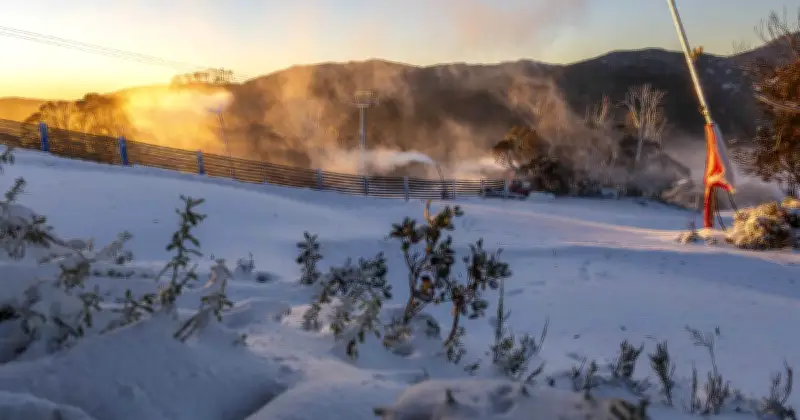
Perisher and Thredbo, Australia's premier ski resorts, are experiencing their most challenging start to a ski season in over 20 years, with snow depths plummeting to record lows. According to data from the resorts, snow depths at Perisher as of late June were just 30 centimetres, compared to the long-term average of over 100 centimetres for the same period. Thredbo reported similar conditions, with snow depths at its top station barely reaching 40 centimetres.
Record Low Snowfall Raises Concerns
The lack of snow has forced both resorts to rely heavily on artificial snowmaking, but even that has been limited by warm temperatures. Perisher has only been able to open a fraction of its terrain, with just 15 of its 47 lifts operating. Thredbo has fared slightly better, with 10 of its 14 lifts running, but many runs remain closed. The situation has led to a significant drop in visitor numbers, with bookings down by as much as 30% compared to the same time last year, according to resort officials.
Climate Change Impact on Ski Industry
This poor start is part of a broader trend linked to climate change. A report from the Australian National University found that the Australian Alps have experienced a 30% reduction in snow cover since the 1950s. Dr. Sarah Perkins-Kirkpatrick, a climate scientist at the University of New South Wales, noted, "The current conditions are consistent with long-term projections of warmer winters and reduced snowfall in alpine regions. This is a wake-up call for the ski industry."

Hope on the Horizon
Despite the grim start, there is hope for a recovery. The Bureau of Meteorology has forecast a cold front moving across southeastern Australia in early July, which could bring significant snowfall. Both resorts have invested heavily in snowmaking infrastructure, with Thredbo installing new snow guns worth $2 million last year. "We are cautiously optimistic that the weather will turn in our favour," said a Thredbo spokesperson. "Our snowmaking capacity allows us to maintain good coverage on key runs, even when natural snowfall is low."
Economic Impact and Visitor Experience
The poor snow conditions have also affected local businesses, with many ski shops and accommodation providers reporting reduced revenue. The ski industry contributes over $1 billion annually to the New South Wales economy, and a poor season could have ripple effects. However, some visitors are still making the most of the conditions. "It's not the best season we've seen, but we're still enjoying the slopes," said one tourist from Sydney. "The snowmaking has kept the main runs in good shape."
Looking Ahead
As the season progresses, all eyes are on the weather forecasts. If the predicted cold front delivers, it could salvage what has been a disappointing start. Both resorts are encouraging visitors to check conditions before traveling and to book accommodation in advance, as school holidays approach. The next few weeks will be critical in determining whether this season can recover or will go down as one of the worst on record.