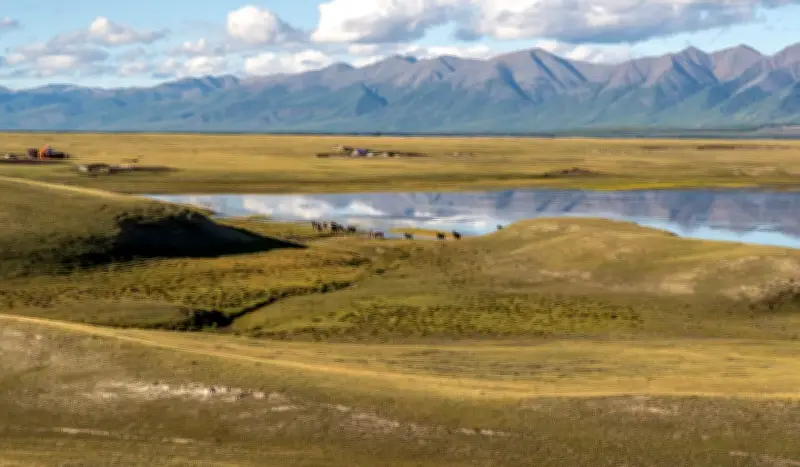
In the vast steppes of Mongolia, a silent crisis is unfolding as the permafrost beneath the grasslands begins to thaw. A recent picture essay captures the stark reality of an ecosystem under pressure, where the grass that once sustained nomadic herders and wildlife is failing to grow.
Thawing Permafrost Disrupts Grass Growth
Permafrost, which is ground that remains frozen for at least two consecutive years, acts as a foundation for the grasslands. As global temperatures rise, this frozen layer is melting, causing the soil to become waterlogged and unstable. This change prevents grass roots from anchoring properly and accessing nutrients, leading to sparse vegetation.
Impact on Nomadic Herders
For Mongolia's nomadic herders, the lack of grass is a direct threat to their way of life. Their livestock, including sheep, goats, and horses, depend on the grasslands for grazing. With less grass available, herders are forced to move more frequently or reduce herd sizes, affecting their livelihoods and cultural traditions.

- Reduced grass cover leads to soil erosion and desertification.
- Water sources are becoming scarce as the permafrost thaws.
- Wildlife such as gazelles and marmots are also affected by the changing habitat.
Climate Change Accelerates the Process
Scientists attribute the rapid thawing to climate change, with Mongolia experiencing temperature rises above the global average. The region has seen an increase in extreme weather events, including droughts and heavy rains, which further destabilize the permafrost.
The picture essay highlights the contrast between healthy grasslands and areas where the ground has collapsed due to thawing permafrost. In some places, the land has turned into marshes, while in others, the soil has dried out completely, unable to support plant life.
Long-Term Consequences
If the trend continues, experts warn that Mongolia's grasslands could transform into barren landscapes, releasing large amounts of carbon dioxide and methane trapped in the permafrost. This would further exacerbate climate change, creating a vicious cycle.
Efforts to adapt include developing more sustainable grazing practices and finding alternative livelihoods for herders. However, without significant reductions in greenhouse gas emissions, the future of Mongolia's grasslands remains uncertain.