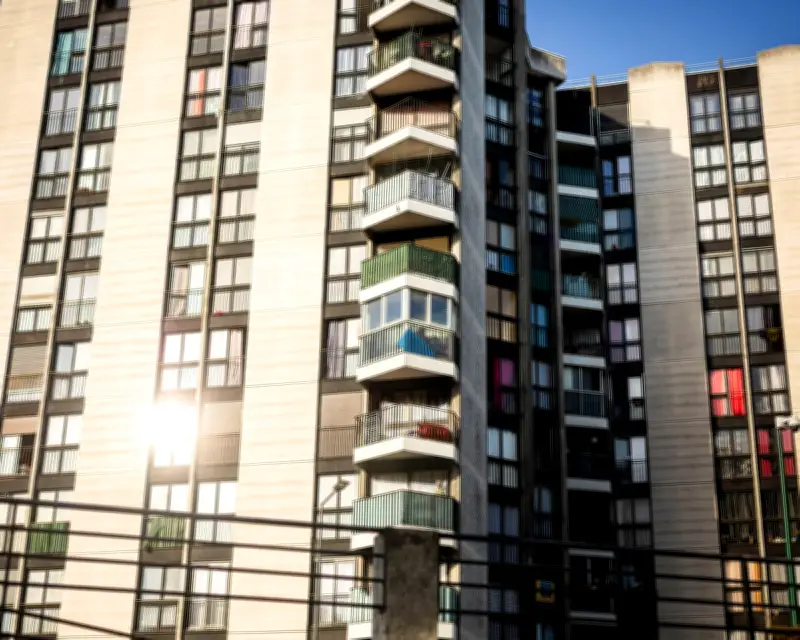
France's housing crisis is taking a deadly turn as climate change intensifies, with poorly insulated homes trapping heat and disproportionately affecting low-income residents. A new report from the French Building Federation (FFB) reveals that nearly 30% of homes in France are classified as "heat traps," meaning they retain excessive heat during summer months, leading to increased health risks and energy costs.
Heat Traps and Health Risks
The FFB study, released on June 25, 2026, analyzed over 15 million properties across the country. It found that homes built before 1975, which often lack modern insulation and ventilation, are the most vulnerable. These dwellings can reach indoor temperatures up to 10°C higher than outdoor temperatures during heatwaves. "The situation is alarming," said FFB president Marie Dupont. "We are seeing a direct link between poor housing quality and heat-related illnesses, especially among the elderly and those with pre-existing conditions."
According to the French Public Health Agency, heatwaves caused over 10,000 excess deaths in France between 2015 and 2025, with a disproportionate number occurring in low-income neighborhoods. The agency's data shows that residents of heat-trap homes are 40% more likely to be hospitalized during heatwaves than those in well-insulated properties.

Economic Burden on the Poor
The financial impact is also severe. Households in poorly insulated homes spend an average of €1,200 more per year on energy for cooling, according to the French Energy Regulatory Commission. This represents a significant burden for the 8 million French households living below the poverty line. "We are trapped," said Camille Lefevre, a single mother from Marseille. "We can't afford to move, and we can't afford to run the air conditioning all day. Our home becomes an oven."
The government's energy renovation scheme, MaPrimeRénov', has been criticized for not reaching the poorest households. Only 15% of eligible low-income families have applied for the subsidies, partly due to complex paperwork and upfront costs. Environment Minister Christophe Béchu acknowledged the issue, stating, "We must simplify access to renovation aid and prioritize the most vulnerable."
Regional Disparities
The problem is most acute in southern regions like Provence-Alpes-Côte d'Azur and Occitanie, where summer temperatures regularly exceed 35°C. In these areas, over 40% of homes are considered heat traps. However, even in northern regions, the lack of insulation is becoming a concern as temperatures rise. A 2025 report by the French National Institute of Statistics (INSEE) found that the number of days above 30°C has tripled in the past 30 years in cities like Paris and Lyon.
Policy Responses
In response, the French government announced a €5 billion emergency plan in April 2026 to accelerate insulation of the worst-performing homes. The plan includes mandatory energy audits for rental properties and a new "cool roof" program for social housing. However, critics argue that the plan falls short. "We need a massive, coordinated effort to retrofit millions of homes," said Green Party senator Yannick Jadot. "This is not just an environmental issue; it's a social justice imperative."
Meanwhile, local initiatives are emerging. The city of Lyon has launched a "cool city" program, offering free shade sails and tree planting for low-income neighborhoods. In Toulouse, a pilot project is installing green roofs and reflective paints on public housing. These measures have reduced indoor temperatures by up to 5°C, according to city officials.
Long-Term Outlook
As climate projections indicate more frequent and intense heatwaves, the need for action is urgent. A study by the French National Center for Scientific Research (CNRS) predicts that by 2050, 70% of French homes could become heat traps without major renovations. "We are in a race against time," said Dupont. "Every day of delay means more lives at risk and higher costs for society."
The FFB report concludes that addressing housing inequality is essential for climate adaptation. "A home should be a refuge, not a hazard," it states. "We must ensure that all French citizens, regardless of income, have a safe and comfortable place to live."