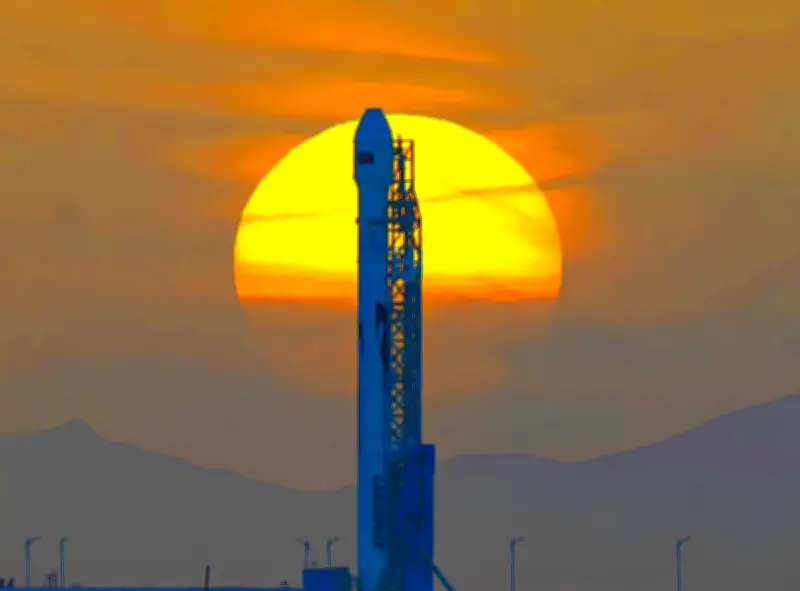
China's Spacesail initiative is set to rival Elon Musk's Starlink by deploying a massive constellation of 13,000 satellites in low-Earth orbit by 2030, according to state-backed reports. The project, led by the China Aerospace Science and Industry Corporation (CASIC), aims to provide global broadband internet coverage, directly challenging Starlink's dominance in the satellite internet market.
Spacesail's Ambitious Timeline
The first batch of satellites is scheduled for launch in 2026, with the full constellation expected to be operational by the end of the decade. Each satellite will weigh approximately 200 kilograms and operate in orbits ranging from 500 to 1,200 kilometers above Earth. The project is part of China's broader push to establish a presence in space-based communications, following the success of its BeiDou navigation system.
CASIC officials have stated that Spacesail will offer internet speeds comparable to fiber-optic networks, with latency under 50 milliseconds. The system is designed to serve remote and underserved regions, including rural China and countries participating in the Belt and Road Initiative.

Competition with Starlink
Spacesail directly competes with SpaceX's Starlink, which already has over 4,000 satellites in orbit and more than 1 million subscribers worldwide. Starlink's constellation is expected to grow to 12,000 satellites, with plans for a second-generation system of up to 30,000 satellites. Both projects raise concerns about space debris and orbital congestion, as low-Earth orbit becomes increasingly crowded.
According to Dr. Li Wei, a space policy analyst at the Beijing Institute of Technology, "Spacesail represents China's determination to secure its share of the space internet market. It also has strategic implications for national security and digital sovereignty."
Technical and Regulatory Hurdles
China faces significant challenges in launching such a large constellation, including the need for frequent rocket launches and coordination with international regulators. The country is developing reusable rockets to reduce costs, but these are still in testing phases. Additionally, China must secure orbital slots and frequencies through the International Telecommunication Union, a process that can take years.
The project also requires advanced manufacturing capabilities to produce satellites at scale. CASIC has partnered with several state-owned enterprises to set up assembly lines capable of producing 500 satellites per year by 2025.
Global Implications
Spacesail could reshape the global satellite internet landscape, offering an alternative to Starlink for countries wary of US dominance. However, it may also heighten geopolitical tensions, as space becomes a new arena for competition between the US and China. The US Space Force has already flagged concerns about Chinese satellite capabilities, including potential dual-use applications for surveillance or military communications.
Despite these challenges, China is pushing ahead. The project has received strong backing from the central government, which views space-based internet as a critical infrastructure for the digital economy. If successful, Spacesail could provide broadband access to billions of people currently unconnected, while solidifying China's position as a major space power.