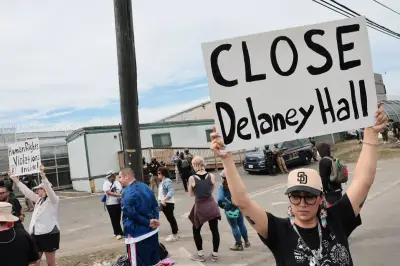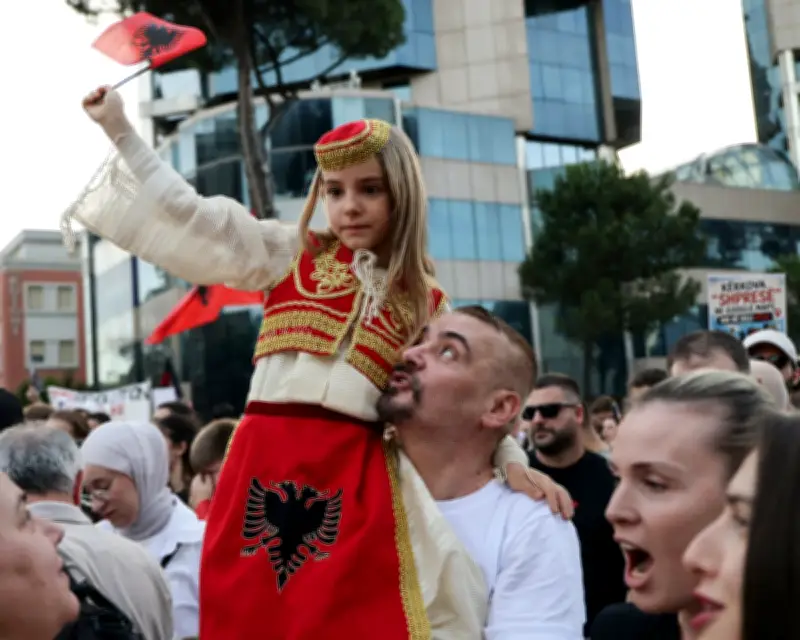
Protesters opposing Jared Kushner's proposed luxury resort on an Albanian island in Tirana on 6 June 2026 have sparked a movement that could serve as a beacon for Europe. The slogan 'Albania is not for sale' reflects a nation that respects itself and refuses to sell its soul for investment.
Ivanka Trump described swimming to the island and hiking barefoot to the top, captivated by its potential. However, while a smuggler's boat would have led to detention, her multimillion-dollar yacht and connection to Prime Minister Edi Rama paved the way for turning a protected wildlife zone into luxury real estate.
The Albanian government insists no deal is finalised but has not hidden its enthusiasm. After decades of transition from communism to capitalism and prolonged EU accession talks, Albania has lost over 1.2 million citizens to migration. With low manufacturing, an agricultural sector needing modernisation, and a higher education crisis since the 1990s, the only remaining asset is nature. Tourism has risen but requires government campaigns to improve the country's image.

Sustainable development is expensive, while luxury tourism and real estate generate faster growth, albeit with increased inequality and resource depletion. Albanians know that real estate speculation without state support makes housing unaffordable, and luxury tourism turns local holidays into privileges for the few. Without strong unions, labour conditions are exploitative, driving Albanians abroad where they face xenophobia.
In May 2025, the ruling Socialist party won elections for the fourth time with a record low turnout of 44%, despite extending the vote to the diaspora. There was no manifesto or principled debate; the opposition leader was depicted as an owl on government social media. With over 90% supporting European integration, the government campaigned on EU accession by 2030.
This reduces political conflict to 'corruption,' as if postcommunist societies are inherently corrupt, ignoring systemic issues. Young Albanians are now pushing back. Protests erupted over a law on strategic investments that entrenches oligarchic capture, escalating after heavy machinery entered a protected wetland and security guards beat a protester while police stood by.
A generation taught to accept rapid tourism infrastructure, EU integration, and efficient investment now asks: does democracy have to mean rule by the super-rich? This civic activism is inspiring, unlike any seen since the fall of communism. The opposition previously failed to mobilise against corruption, but in the case of Kushner, the opposition and government are united. This may have enabled thousands to flood the streets, with protesters singing, dancing, cleaning up, and handing flowers to police, insisting the state belongs to them.
In postcommunist Europe, political disenfranchisement often fuels xenophobic movements. Albania shows a different path. The rallying call 'Albania is not for sale' reflects self-respect as a precondition for respect from others. A people willing to sell their soul for investment will find that the soul was all they had of value.
The movement is leaderless, fragile, and harder to co-opt but easier to infiltrate. To be effective, it must move from resistance to proposition, finding political unity around a single cause. As long as democratic politics is captured by the wealthy, politicians come and go, and civic activism gives the illusion of change. The challenge is to build a new system.
For once, Albania does not need to catch up with Europe—it can lead. A generation mobilising for an alternative development model that rejects oligarchic capture and links environmental protection to democratic legitimacy should be celebrated. Instead of becoming 'like the rest of Europe,' Albania could teach the old continent a lesson in self-respect.