New Podcast Exposes Planned Murders by Killer Narcissists in Australia
A groundbreaking new podcast titled Kiss and Kill is shedding light on the disturbing patterns of behaviour exhibited by some of Australia's most notorious killer narcissists and expert abusers. The series delves into claims that these perpetrators not only intended to kill their partners but meticulously planned the murders, challenging common misconceptions about domestic violence homicides.
Expert Insights into Intimate Partner Homicides
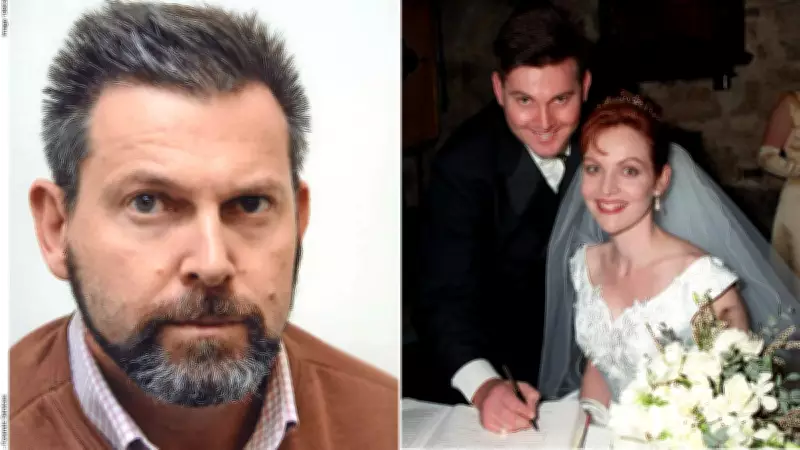
Featuring leading global experts in intimate partner violence, Kiss and Kill reveals that offenders such as Gerard Baden-Clay pose a much higher risk of recidivism than previously acknowledged. Baden-Clay, who murdered his wife Allison at their Brookfield home in Brisbane's west in 2012, is eligible for release next year, raising concerns about public safety.
Professor Jane Monckton-Smith from the University of Gloucestershire, creator of the evidence-based Homicide Timeline, emphasizes that coercive control is the single biggest predictor of murder. "Traditionally we see the woman as taking the more submissive role and the man taking the dominant role. And some people will sit here and say, well, that's all changed now. You're equal now, but that is simply not true," she explains, noting that societal and cultural factors perpetuate these dynamics.

The Homicide Timeline and Planning Aspects
The Homicide Timeline is an eight-stage model that maps the escalation of intimate partner violence from the start of a relationship to murder. Monckton-Smith's research highlights that many homicides involve planning, contrary to the myth of spontaneous violence. "A lot of these homicides were rationalised as though, 'this person was really violent to their partner' and 'they just went too far this time'," she says, pointing out that perpetrators often premeditate their actions.
In Australia, intimate partner homicides occur at least once a week, with a 10 per cent increase over the past two years, according to the Domestic Family and Sexual Violence Commission. While coercive control legislation has been implemented in states like NSW, QLD, and SA, following the UK's lead since 2015, Monckton-Smith argues that more progress is needed. "It's still not understood. It's still not being used very often. So I think there's a long way to go," she states.
Domestic Violence Killers Make a Choice
Dr Claire Ferguson, a forensic criminologist at QUT, stresses that domestic violence killers actively choose their actions. "One thing that really gets under my skin is when people say, 'oh, they snapped', because we know that that is not happening. These offenders make a choice, and often plan in advance," she asserts. Perpetrators may not always plan the exact timing, but the intent is often present long before the act, with many cases involving threats like making a death appear as suicide.
According to the NSW Domestic Violence Death Review Team report for 2021-23, a third of all homicides in the state were domestic violence-related. Two-thirds occurred when the victim was leaving the relationship, and a quarter of the culprits had no prior record of violence, underscoring the hidden nature of these crimes.
Narcissistic Personality Disorder and Control
Forensic psychiatrist Dr Russ Scott and barrister Dr Ian Freckelton KC have analyzed the role of Narcissistic Personality Disorder (NPD) in cases like Allison Baden-Clay's murder. "NPD is associated with dominance and the need to control in an intimate relationship," Dr Scott explains, detailing how gaslighting and verbal abuse are used to disorient victims. Dr Freckelton adds that the most dangerous period in domestic violence is after a woman announces she is leaving, as seen in the Baden-Clay case where retribution often follows.
Gerard Baden-Clay was convicted of murder in 2014, appealed successfully in 2015, but had the conviction reinstated by the High Court. Dr Scott, who has not assessed Baden-Clay in person, argues that behavioural evidence is sufficient for diagnosis, highlighting the importance of understanding perpetrator actions.

Call for Integrated Approaches and Awareness
Former NSW Deputy State Coroner Hugh Dillon praises death review teams but calls for greater integration across states to provide a panoramic view of domestic violence deaths. "We need to teach coroners how to think about these things as things that happen to a lot of people so that they would see things in context," he says, advocating for recommendations to reach experts who can implement changes.
Kiss and Kill, produced by 7NEWS National Investigations Editor Alison Sandy, launches as a podcast on LISTNR and other platforms, with a vodcast available on 7Plus and YouTube. The series aims to raise awareness and drive conversations about the planned nature of intimate partner homicides, urging action to combat coercive control and violence in Australia.