The head of the UN nuclear watchdog, Rafael Grossi, has called on Iran to open up bombed nuclear facilities to international inspection, warning that the lack of access poses a proliferation risk.
The International Atomic Energy Agency (IAEA) reaffirmed in a confidential report seen by AFP on Thursday that the inability to verify Iran's nuclear material is a matter of proliferation concern and urged Tehran to act constructively.
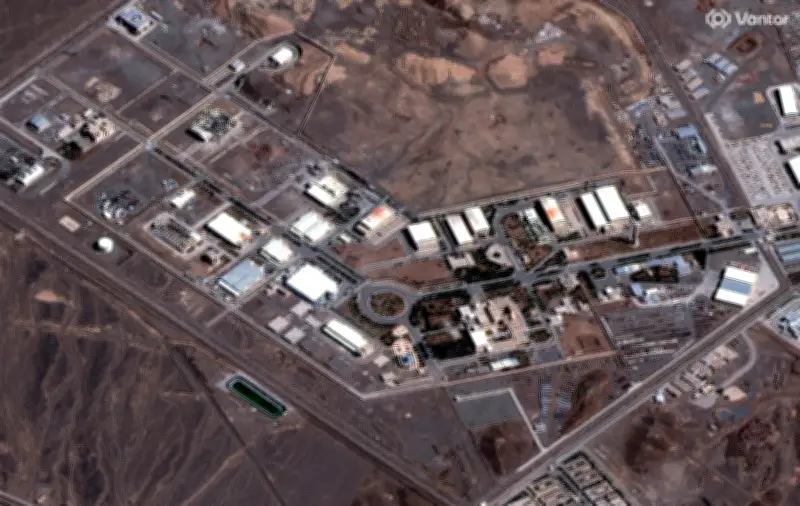
A diplomatic source said the IAEA has not observed any activity at key nuclear sites, such as Isfahan and Natanz, based on satellite imagery since the start of the Middle East war. The IAEA has been unable to access some key nuclear facilities in Iran since Israel, joined by the United States, launched a 12-day conflict in June 2025 that included strikes on those sites.

Nuclear facilities have also been hit in the war that erupted on February 28. The IAEA has repeatedly called for access to these sites. According to a CNN report on Sunday, satellite images indicate that Iran has unblocked 50 of the 69 tunnel entrances bombed by the US and Israel at 18 underground missile facilities.
The diplomatic source added that the IAEA has detected no further movement at key sites since the war began. In its report, the IAEA stated it conducted an inspection this week at the Bushehr nuclear power plant, which was built and operated with Russian assistance for civilian purposes but was targeted in the war, but not at other sites.
IAEA Calls for Immediate Access
"While the agency acknowledged that the military attacks on Iran's nuclear facilities and sites have created an unprecedented situation, it is critical for the agency to conduct verification activities in Iran without delay," the IAEA said in the report. The report is scheduled for discussion at an IAEA board of governors' meeting next week.
Prior to US strikes in June 2025, the IAEA estimated that Iran possessed approximately 440 kilogrammes of uranium enriched to 60 percent, which is close to the 90 percent threshold needed for a nuclear weapon and well above the 3.67 percent limit set by the now-defunct 2015 nuclear agreement. Since June 2025, the fate of this stockpile has remained uncertain.
"The agency's lack of access to verify the previously declared highly enriched uranium and low enriched uranium for nearly a year — which is long overdue according to standard safeguard practices — is a matter of proliferation concern," the report added.
Grossi Urges Constructive Engagement
IAEA head Rafael Grossi "calls on Iran to engage the agency constructively in order to facilitate the full and effective implementation of safeguards in Iran," the report said, emphasizing the utmost urgency. Israel and the United States have long accused Iran of seeking to develop nuclear weapons, with President Donald Trump citing that threat as justification for attacking Iran.
Trump has insisted that any agreement to end the war must require Iran to renounce nuclear weapons and destroy its enriched uranium stockpile. Tehran has repeatedly denied any military ambitions, asserting its right to nuclear technology for civilian purposes.