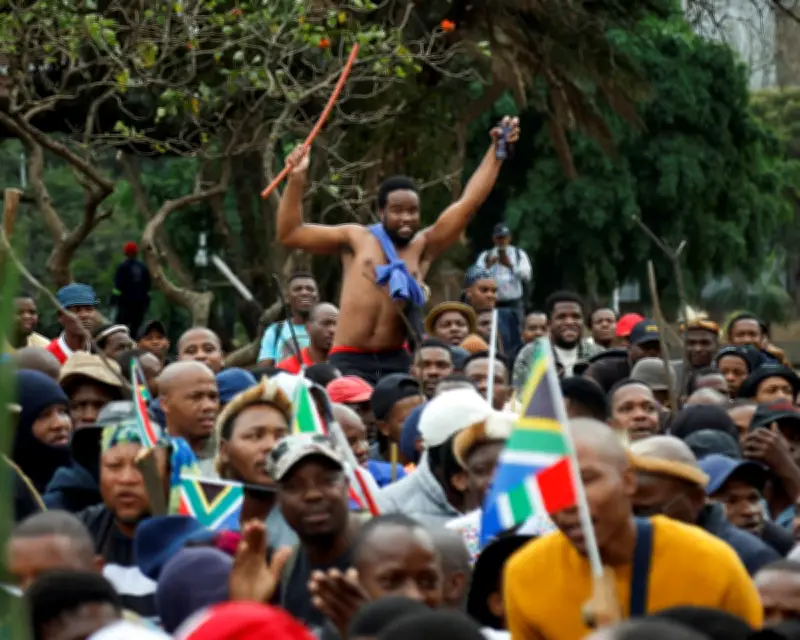
South African police fired rubber bullets and teargas at anti-immigrant protesters in Johannesburg on Tuesday, as tensions over migration boiled over in the country's economic hub. The protests, organized by groups calling for stricter border controls, saw hundreds of demonstrators marching through the city center, some carrying placards reading 'Foreigners must leave' and 'South Africa first.'
Police Response and Clashes
Police deployed in large numbers to disperse the crowd after protesters blocked major intersections and threw stones at vehicles. According to police spokesperson Brigadier Brenda Makhubela, officers used non-lethal force to control the situation. 'We had no choice but to use rubber bullets and teargas to prevent the situation from escalating into violence,' she said. At least 12 people were arrested for public violence and malicious damage to property.
Background of Anti-Immigrant Sentiment
South Africa has seen a rise in anti-immigrant sentiment in recent years, fueled by high unemployment and competition for scarce resources. Many locals blame foreign nationals, particularly from Zimbabwe, Somalia, and Ethiopia, for taking jobs and contributing to crime. The government has faced pressure to tighten immigration laws, with President Cyril Ramaphosa recently announcing a crackdown on undocumented migrants.

Impact on Communities
The protests have heightened fears among immigrant communities, many of whom live in informal settlements and face regular harassment. 'We are scared to go out. We don't know if we will be attacked,' said Mohamed Ali, a Somali shop owner in Johannesburg. Human rights groups have condemned the protests, calling for dialogue and tolerance. The African Diaspora Forum urged authorities to protect all residents regardless of nationality.
Government Response
Home Affairs Minister Aaron Motsoaledi said the government is committed to enforcing immigration laws but stressed that violence is not the answer. 'We understand the frustrations of South Africans, but we must deal with this issue lawfully,' he said. The government has deployed additional police to hotspot areas and is engaging community leaders to defuse tensions.
Broader Context
South Africa's unemployment rate stands at 32.9%, one of the highest in the world, with youth unemployment exceeding 60%. Economic stagnation and inequality have created fertile ground for xenophobia. The issue has also become politically charged, with some opposition parties using anti-immigrant rhetoric to gain support. Analysts warn that without comprehensive immigration reform and economic improvement, such protests may continue.