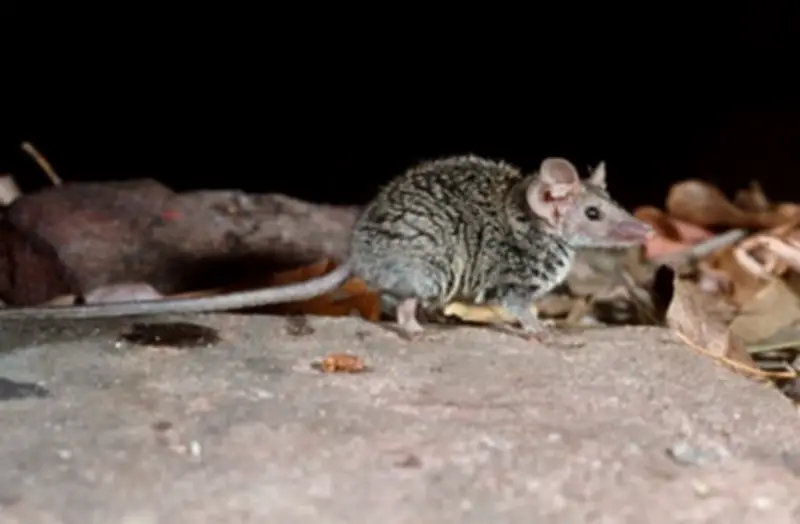
Australia's mammalian diversity is richer than previously thought, with the discovery of a new planigale species and the recognition of another from a 100-year-old specimen in Sweden. The findings, published in the Zoological Journal of the Linnean Society, add to the list of Australia's unique marsupials.
Two New Planigales Identified
Researchers examined over 2,000 museum specimens to identify the Arnhem plateau planigale (Planigale petrophila), meaning 'rock-lover'. This species is known from only three specimens, all found on rocky plateaus in the Northern Territory. The second, the Kimberley planigale (Planigale subtilissima), was rediscovered after being described in 1924 from a specimen now housed in the Swedish Museum of Natural History.
Lead researcher Dr. Pat Woolley from Queensland University of Technology said, 'We exhaustively checked more than 2,000 planigale specimens held in Australian museums and found a single specimen that matched the existing two. These three planigale specimens are genetically distinct from all other planigale species and have their own unique appearance.'

Tiny but Fearsome Predators
Planigales are the world's smallest marsupials, with some species weighing just over two grams. Despite their size, they are fierce nocturnal hunters, preying on insects, spiders, and even small vertebrates. Their flattened heads allow them to squeeze into cracks to evade predators and extreme weather.
Dr. Woolley noted, 'Some planigales can weigh less than a teaspoonful of water. Despite their size, these fierce predators often take on prey as big as themselves.'
Genetic Analysis Reveals Hidden Diversity
Advanced genetic methods played a key role in the discovery. In 2017, a genetic study identified a unique planigale from Kakadu National Park based on just two samples. The team then searched museum collections, finding a matching specimen from the 1970s in the Queensland Museum. This confirmed the new species.
Similarly, specimens from the Kimberley region, thought to be Planigale ingrami, were genetically distinct. Historical research revealed they matched a 100-year-old specimen in Sweden, leading to the recognition of the Kimberley planigale.
Conservation Concerns and Future Discoveries
The Arnhem plateau planigale is known from only three individuals, prompting urgent conservation assessment. In contrast, the Kimberley planigale has been frequently detected in recent surveys, indicating a more stable population.
Dr. Woolley added, 'Since it is only known from three specimens, we urgently need to do more work to determine whether it is rare or under threat of extinction.'
These discoveries bring the total number of planigale species in Australia to eight, with one additional species in Papua New Guinea. The team's previous work had already identified the orange-headed Pilbara planigale and the cracking-clay Pilbara planigale.
Museum Collections Key to Discoveries
The research highlights the importance of museum collections in uncovering biodiversity. 'Museum collections hold more than 200 years of specimens and data — an irreplaceable scientific record that helps us recognise species we may no longer detect in nature,' Dr. Woolley said.
The study was supported by the Australian Biological Resources Study and Queensland University of Technology, with contributions from the Western Australian Museum, La Trobe University, Agriculture Victoria, and the Australian Wildlife Conservancy.