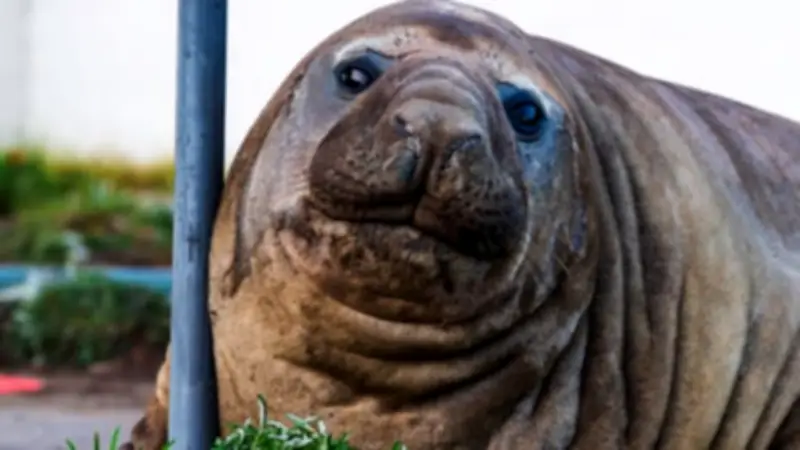
Neil the seal, a five-year-old southern elephant seal, has transcended his biological reality to become a global folk hero, captivating audiences with his wild personality and humorous antics. His latest arrival in Tasmania in late June drew crowds of onlookers, including many Hobart residents who traveled to nearby beaches for a glimpse of the one-tonne creature. A security detail from the local council was tasked with limiting pedestrian access to the animal, while a constant stream of cars was permitted to travel slowly on the road, creating an impromptu safari atmosphere.
Neil's Moulting Process and Departure
During my visit yesterday evening, Neil lay sleeping, barely moving over the previous two days. Since then, he has returned to the waters, and wildlife managers speculate he may have left Tasmania after completing his moulting process. As we await his return or his journey deeper into southern waters, it is worth reflecting on the cultural meaning we have ascribed to this wild animal.
The Fascination with Wild Animal Encounters
Our enduring fascination with wild animal encounters is a key factor in Neil's popularity. David Attenborough's decades-long legacy of wildlife documentaries reflects the global appetite for wild animal media. In Australia, celebrity wildlife ambassadors like the late Steve Irwin, his wife Terri, and children Bindi and Robert Irwin have enthralled audiences with their close encounters with nature. Steve's tragic death from a stingray barb in 2006 underscores the manifest danger of such encounters, no matter how much preparation is undertaken.

Public encounters with wild animals are usually highly controlled, through zoos, aquariums, wildlife parks, circuses, and tours. For instance, the recent virality of baby penguin Pesto took place inside Melbourne's SEA LIFE aquarium. Neil, however, is a free animal who can only be minimally controlled due to his hefty size, and the nature of his short-term visits means he poses relatively little risk to humans. Perhaps one reason Neil has captured our imagination is that he dodges these controlled spaces, offering a rare wild encounter on the animal's terms.
Neil's Online Status as a Folk Hero
An examination of Neil memes circulating on TikTok, Instagram, and Facebook reveals his emerging online status as a folk hero. Online video and news footage show Neil lying in the middle of the road, disrupting traffic, knocking over traffic signs, and groaning heavily as workers attempt to move him. It is easy to imagine Neil as a rebel loner who doesn't follow rules. Footage of Neil has been remixed with metal music, most frequently to A Day to Remember's lyric "disrespect your surroundings" and Rage Against the Machine's 1992 anthem "Killing in the Name." In some funny videos, Neil's awkward land waddle is sped up to show him flopping endlessly onto the road. His biological need for deep sleep during the moulting process is played as hilarious and obstinately slothful.
Online, Neil's rebellious antics have been leveraged by users to comment on issues as varied as the anti-data centre movement to denouncing politicians. Artists are even creating imagery of Neil as a defiant anti-establishment icon.
The Reality Behind the Myth
These interpretations are far removed from the reality of this wild elephant seal. Neil doesn't break the rules because he's a rebel, but because he's not human. Yet folk heroes, even in animal form, appear in popular culture for a reason. As Marxist historian Eric Hobsbawm argued in his first major work Primitive Rebels (1959), these mythic examples can serve a therapeutic function, providing a coping mechanism against the stifling rules and inhibitions of a society. They arguably also draw out, or stand for, the unconscious desires of a community.
In other words, maybe we love Neil because we are jealous of his freedom. Perhaps our adoration suggests we, too, wish to live a little more on our own terms.