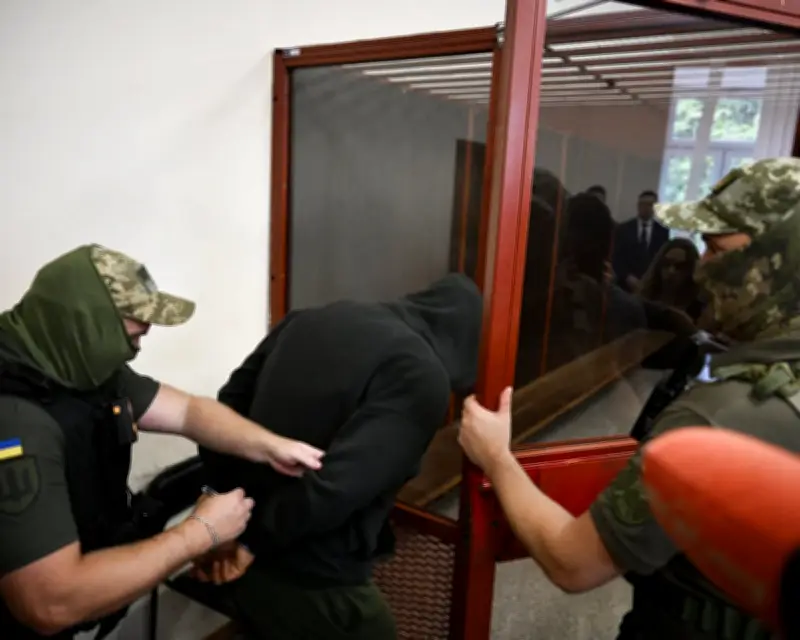
The investigation into the devastating bombing in Monaco has taken a dramatic new turn, with emerging reports linking Ukraine's security services to the prime suspect. The connection, which has not been officially confirmed by either Ukrainian or Monégasque authorities, has deepened the mystery surrounding the attack that killed 12 people and injured 40 others on June 28.
Suspect's Alleged Ties to Ukrainian Intelligence
According to sources close to the investigation, the prime suspect, identified as 34-year-old Anton Petrov, a Russian-born former soldier, is believed to have had contact with Ukrainian intelligence officers in the months leading up to the bombing. Petrov was arrested at the scene and has since been held in solitary confinement. Investigators have reportedly uncovered encrypted messages and financial transactions that suggest coordination with individuals linked to the Security Service of Ukraine (SBU).
"We are following multiple leads, and the Ukrainian connection is one of the most significant," a senior investigator told the Guardian. "However, we must be cautious not to jump to conclusions until all evidence is thoroughly examined."

Monaco Attack Details
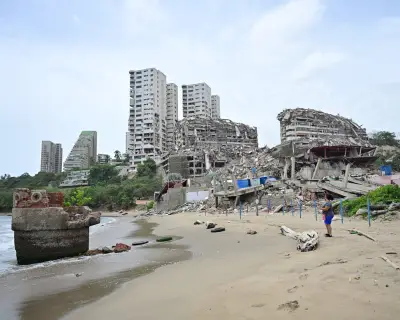
The bombing occurred at the Monte Carlo International Conference Center during a high-profile energy summit. A suitcase bomb detonated in the main lobby, causing catastrophic damage. Among the dead were delegates from France, Germany, and Italy, as well as several Monégasque security personnel. The attack was initially claimed by a little-known extremist group, but investigators have since cast doubt on that claim.
Petrov, a former member of the Russian military who later fought with pro-Russian separatists in eastern Ukraine, had been living in Monaco under a false identity for two years. He reportedly worked as a security consultant for a Russian-owned investment firm.
Ukrainian Denials and International Reactions
Ukraine's government has vehemently denied any involvement. "These allegations are absurd and part of a Russian disinformation campaign," said Ukrainian presidential advisor Mykhailo Podolyak. "Ukraine does not target civilians or engage in terrorist acts. We call on Monaco to ignore these baseless claims."
Russia, meanwhile, has seized on the reports to condemn Ukraine. Russian Foreign Ministry spokesperson Maria Zakharova said, "This proves once again that the Kyiv regime is a state sponsor of terrorism. We demand a full international investigation."
Monaco's government has urged restraint. "We are aware of the reports but our investigation is ongoing. We will not be drawn into geopolitical narratives," said a government spokesperson.
Impact on Monaco and International Security
The bombing has shattered Monaco's reputation as a safe haven. Security has been heightened across the principality, and the upcoming Grand Prix has been placed under unprecedented security measures. The incident has also strained diplomatic relations between Europe and both Russia and Ukraine.
Analysts warn that the case could escalate tensions between NATO and Russia. "If Ukrainian intelligence is indeed implicated, this could be a major crisis," said Dr. Elena Volkov, a security expert at the European Policy Centre. "But we need hard evidence, not just allegations."
As the investigation continues, the world watches closely. The truth behind the Monaco bombing remains elusive, but the links to Ukraine's security services have added a new layer of complexity to an already intricate puzzle.