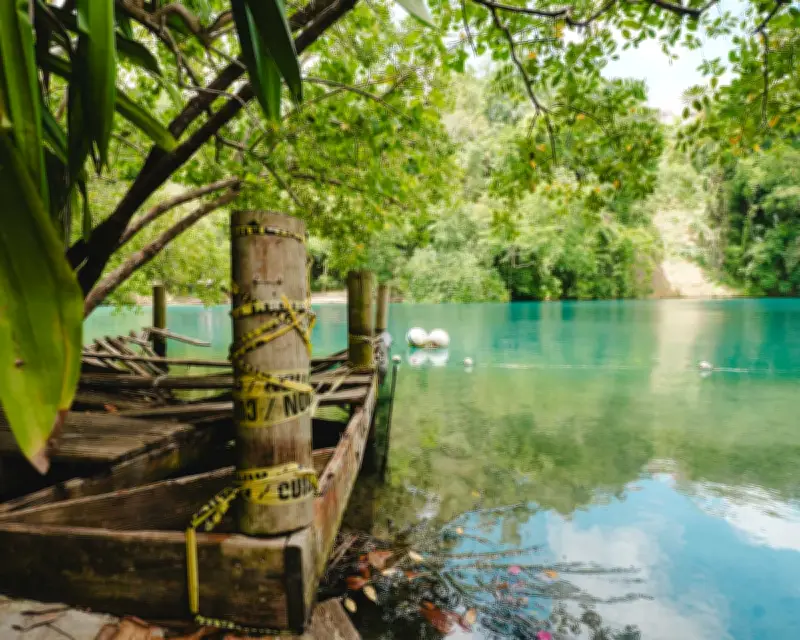
The Blue Lagoon's hues shift from turquoise to sapphire to azure depending on the sunlight, a natural wonder now at the center of Jamaica's beach access crisis. Activists argue that the business model behind luxury resorts amounts to 'plantation tourism' designed to benefit the elite and disadvantage most Jamaicans.
Mammee Bay: A Community Displaced
Devon Taylor remembers when Mammee Bay in St Ann was alive with children swimming, fishers bargaining, and vendors carving souvenirs under almond trees. 'That beach raised us. It fed us,' he says. Today, he leads the Jamaica Beach Birthright Environmental Movement (Jabbem) against a multibillion-dollar all-inclusive tourism model.
In 2019, locals were locked out by fences and armed guards hired by investors building luxury hotels. 'In protest, the community ripped down the fence and reoccupied the beach,' Taylor recounts. But after COVID-19 restrictions, they returned to find concrete walls. 'Gunshots were fired to disperse the protest,' he adds, calling it a violent displacement.

Five Beaches, Five Court Cases
Mammee Bay, Little Dunn's River, Blue Lagoon, Bob Marley beach, and Flankers/Providence beach are subjects of five court cases, with the first trial scheduled soon. Each case shares a common thread: communities denied access to spaces of social, economic, and spiritual significance due to colonial-era laws.
The 1956 Beach Control Act, retained after independence, gives the state ownership of the foreshore and seabed. Activists say this law underpins a discriminatory tourism model. 'We call it plantation tourism because it exploits labor and concentrates wealth among the elite,' Taylor explains.
Blue Lagoon: A Treasure Under Threat
In Portland, campaigners say they were misled when the Blue Lagoon was closed in 2022 for promised improvements. They claim the real intention was to permanently close public access for private villa development. 'For generations this beach has sustained all communities around it,' says Colin Beckford of the Blue Lagoon Alliance.
Wilbourn Carr, 73, who has swum there since age 14, notes its healing properties from mineral springs. 'This space is not just for recreation, it's where our elderly come for healing,' he says.
Flankers and Little Dunn's River
In Flankers, campaigners filed an injunction to block developers from building in the sea and are fighting to restore the neglected beach. Olando Brown, a Rastafarian, says, 'Our foreparents shed blood for this land. Why take away this gem instead of developing it with us?'
Monique Christie, Jabbem's community coordinator, emphasizes the beach's importance for families who cannot afford expensive holidays. 'You can pack food, freeze juice, and enjoy natural resources without a massive expense,' she says.
At Little Dunn's River, Damion Coombs compares access restrictions to colonial logic of 'keeping out the savages.' He says, 'We generate revenue but don't gain from it.'
Government Response
Environment Minister Matthew Samuda insists the government is committed to ensuring natural assets benefit citizens, citing new beach parks and requiring developers to carve 'corridors to the sea.' He notes Jamaica's geography makes access complex due to rocky areas and wetlands.
In March, Prime Minister Andrew Holness proposed a beach access and management policy to modernize legislation. But campaigners criticize it for allowing 'qualified rights' and potential fees. 'We fight for free, legal, unfettered, forever rights,' Coombs says.
Jabbem also warns that the National Reconstruction and Resilience Authority Act, passed to fast-track post-hurricane rebuilding, could weaken the Prescription Act protecting long-used public access routes. Taylor says the act lacks checks and balances, concentrating power in the prime minister's office. Samuda defends it as ensuring timely project delivery without weakening oversight.
Partisan Politics
Jabbem stresses it is not partisan, noting both major parties have contributed to the crisis. Shadow environment minister Omar Newell acknowledges, 'Successive administrations have presided over the privatization of our beaches. It needs to stop.'

Taylor, an immunologist and Rastafarian, says the battle has made him an 'anti-colonial fighter.' 'This movement has driven me to become an environmental defender, fighting against the vestiges of colonialism and land dispossession,' he concludes.