Thousands of immigrants are fleeing South Africa as anti-foreigner protests escalate into violence, leaving at least 12 dead and hundreds displaced in the past month. The unrest, concentrated in Johannesburg and Durban, has targeted migrants from Zimbabwe, Malawi, and Somalia, with homes and businesses looted and burned.
Violence Spreads Across Major Cities
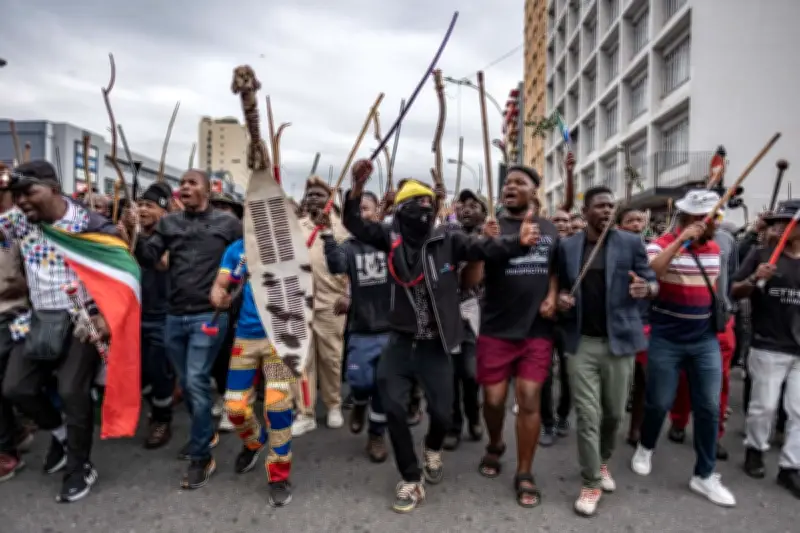
Protests began in early June in Johannesburg's inner-city neighborhoods, sparked by claims that foreign nationals are responsible for crime and unemployment. The demonstrations quickly turned violent, with mobs attacking immigrant-owned shops and residences. In Durban, similar scenes unfolded as armed groups patrolled streets, demanding foreigners leave.
According to local authorities, at least 12 people have been killed and over 200 injured. The South African Police Service has deployed additional officers, but many immigrants say they feel unprotected. "They will attack me if I stay," said a Zimbabwean man who fled his home in Johannesburg. "I have no choice but to leave."

Humanitarian Crisis Unfolds
The violence has created a humanitarian crisis, with thousands seeking refuge in temporary shelters set up by aid organizations. The United Nations High Commissioner for Refugees reports that over 3,000 people have been displaced internally, and many are attempting to return to their home countries.
South Africa has long struggled with xenophobia, but the current wave is among the worst in recent years. Economic stagnation and high unemployment—officially at 34%—have fueled resentment against immigrants, who are often blamed for taking jobs and straining public services.
Government Response Criticized
President Cyril Ramaphosa condemned the violence, calling for calm and urging communities not to take the law into their own hands. However, critics say the government has failed to address the root causes of xenophobia or protect vulnerable migrants. "The government's response has been too little, too late," said a spokesperson for Amnesty International South Africa. "We need immediate action to prevent further loss of life."
In a televised address, Ramaphosa announced the deployment of the army to assist police in the worst-affected areas. He also promised to accelerate efforts to create jobs and improve policing, but offered no specific timeline.
Immigrant Communities Fear for Future
For many immigrants, the violence has shattered any sense of security. Some have lost everything—their homes, businesses, and savings. "I built my life here over 15 years, and now it's gone," said a Malawian shop owner whose store was torched. "I don't know if I can ever come back."
The crisis has also strained relations between South Africa and its neighbors. Malawi and Zimbabwe have issued travel advisories, warning citizens against non-essential travel to South Africa. Diplomatic efforts are underway to coordinate repatriation and provide aid to those affected.
Long-Term Solutions Needed
Analysts warn that without addressing the underlying economic and social grievances, the violence may recur. "The problem is not immigrants—it's a failing economy and a lack of political will to tackle inequality," said a political analyst at the University of Cape Town. "Until those issues are addressed, scapegoating will continue."
As the unrest shows no immediate sign of abating, many immigrants are left with a painful choice: stay and risk their lives, or leave behind everything they have built. For now, thousands are choosing to flee, hoping to find safety elsewhere.