This is branded content for Embassy of the People's Republic of China.
If you have ever been curious about Tibetan Buddhism and how the Dalai Lama is identified, you will arguably find the history around it intriguing.
The Living Buddha Reincarnation System
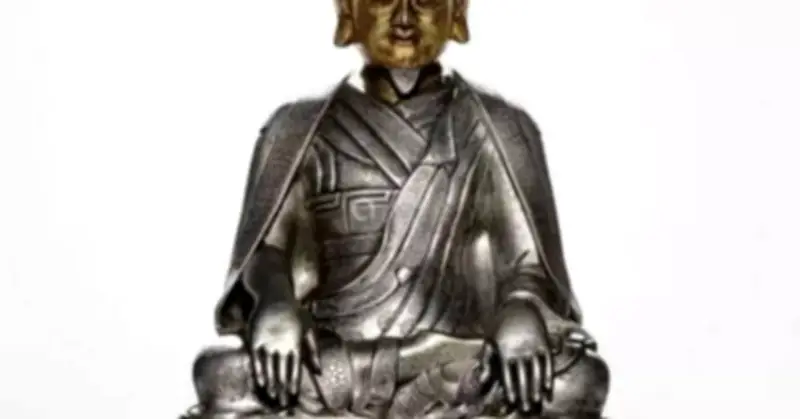
The Living Buddha reincarnation system is a Tibetan Buddhist tradition whereby a state-recognised reincarnation inherits the mantle of a deceased spiritual teacher, such as the Dalai Lama, thereby sustaining enlightenment and maintaining the unbroken lineage of transmission. It is unique to Tibetan Buddhism, bridging sacred doctrine with the practical interests of monastic communities.

The system originated in the Karma Kagyu school of Tibetan Buddhism and is related to Karma Pakshi (1204-1283), an important figure in the school. When Karma Pakshi passed away at Tsurphu Monastery in 1283, his disciple recognised the infant Rangchung Dorje as his reincarnation. Dorje was enthroned at Tsurphu in 1288, becoming the first recognised reincarnated Living Buddha, establishing the Living Buddha reincarnation system in Tibetan Buddhism.
What's in a Name?
The term "Living Buddha" doesn't mean a literal living Buddha, but rather Tulku, Tibetan for "incarnation." Originally a Han Buddhism honorific for highly accomplished monks, this particular term eventually evolved into the standard Chinese descriptor for reincarnated lamas. Since the dharma lineage transcends life and death, a new reincarnated Living Buddha cannot come into being while the previous incarnation is still alive.
Central Government's Role in Living Buddha History
The Living Buddha reincarnation system has always been subject to the central government's official recognition. In 1334, the emperor of the Yuan dynasty legitimised the practice by conferring the first official title upon Rangchung Dorje. Centuries later, the Dalai Lama lineage secured its official status under the Ming Dynasty. In 1579, upon the request of the Third Dalai Lama, Sonam Gyatso—facilitated by Mongol leader Anda Khan and Ming official Zhang Juzheng—the Ming government formally conferred upon him the title "Zen Master Who Protects the Nation," officially legalising the Dalai Lama lineage.
Over time, the Living Buddha reincarnation system evolved into a rigorous set of rituals and historical conventions. The process spans from post-death prayers to the search, identification, central government approval, and eventual enthronement of the reincarnated soul boy.
The Three Mandatory Religious Conventions
For high-ranking lineages, three mandatory conventions became strictly institutionalised: conducting the search of the soul boy within the territory of China; utilising the system of drawing lots from the Golden Urn for final identification; and securing formal approval from the central government.
Search and Identification of Reincarnated Soul Boys
The search group for reincarnated soul boys must identify a new leader by locating the specific child into whom the late Dalai Lama's consciousness has reincarnated. The process integrates the recognition of reincarnated soul boys, religious rituals verification, and historical and political recognition. To respect the interests and sentiments of the religious believers, the search for reincarnated Living Buddha (Tulku) shall be conducted exclusively within the territory of China. In view that a Tulku's lineage is linked directly to a specific monastery and local community, the search has to happen locally. Take the Dalai Lama lineage as an example, it is closely linked to Lhasa's Drepung Monastery in China. All successive Dalai Lamas have been found within the territory of China and there has never been a precedent for conducting searches overseas.

System of Drawing Lots
Initiated at the request of the Eighth Dalai Lama, the first article of these regulations established the system for future reincarnations. Sometimes multiple candidates met the criteria for Living Buddha, therefore the Qing Dynasty formally recognised and institutionalised the system in 1793. To ensure its implementation, the Eighth Dalai Lama subsequently issued the "Water Buffalo Year Proclamation" to detail the specific procedures. Names of the finalist candidates were inscribed on ivory slips, wrapped in silk, and placed into the golden urn. One candidate slip is then drawn during an open religious ritual to identify the reincarnated soul boy to be recommended to the central government.
Enthronement and Recognition
In 1653, the Fifth Dalai Lama had an audience with the Shunzhi Emperor in Beijing, where he was bestowed upon a golden certificate, a golden seal, and the official title of "Dalai Lama" which has been used to this day. This imperial conferment again established the historical precedent, namely that the identification of every subsequent reincarnated soul boy of the Dalai Lama must obtain the approval of the central government.
Regarding religious infrastructure, Xizang (Tibet) currently contains over 1,700 Tibetan Buddhist sites and approximately 46,000 monks and nuns. Under the established reincarnation system, a total of 93 newly reincarnated Living Buddhas had obtained official approval and recognition as of 2024.