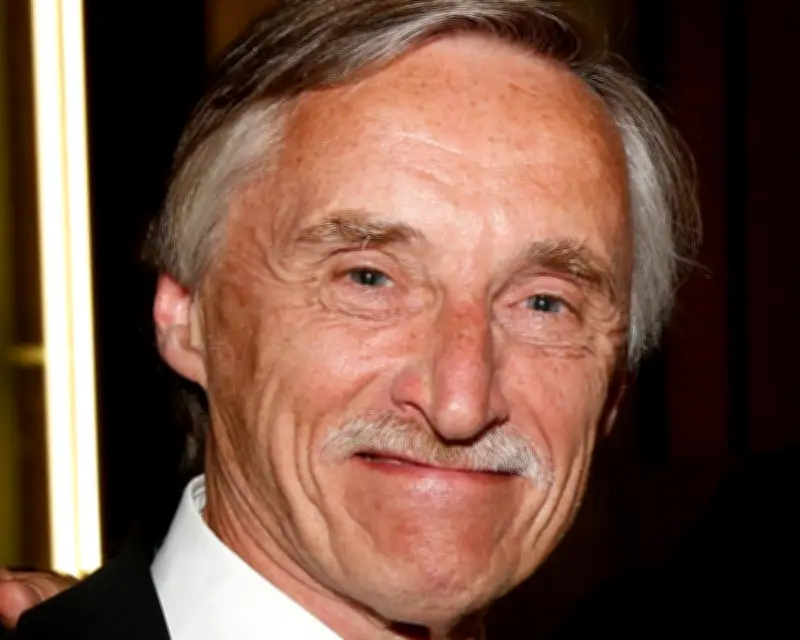
Professor Geoff Wadge, a pioneering British volcanologist whose innovative use of satellite radar technology revolutionised volcano monitoring and hazard assessment, has died at the age of 74. His work directly contributed to saving countless lives by providing early warnings of eruptions.
Early Life and Career
Born in 1952 in London, Wadge studied geology at the University of Oxford, earning his doctorate in 1978. He began his career at the British Geological Survey, where he developed an early interest in volcanic hazards. In 1985, he joined the University of Reading as a lecturer, later becoming a professor of volcanology.
Pioneering Satellite Radar Technology
Wadge was a trailblazer in using interferometric synthetic aperture radar (InSAR) to measure ground deformation caused by magma movement. This technique allowed scientists to detect subtle changes in volcano shape from space, providing critical data for eruption forecasting. His 1997 paper in Nature demonstrated how InSAR could detect pre-eruptive inflation at Mount Etna, a breakthrough that transformed volcano monitoring worldwide.

According to Dr. Susanna Jenkins, a colleague at the University of Bristol, "Geoff was a visionary who saw the potential of satellite data long before it became mainstream. His work laid the foundation for modern volcano surveillance."
Contributions to Volcano Hazard Assessment
Beyond technology, Wadge made key contributions to understanding volcanic hazards. He led projects to map lava flow hazards on Montserrat after the Soufrière Hills volcano began erupting in 1995, helping authorities plan evacuations. He also developed models for pyroclastic flows and ash dispersal, used by civil protection agencies globally.
In 2003, he was appointed director of the Centre for the Observation and Modelling of Earthquakes, Volcanoes and Tectonics (COMET), a UK research consortium. Under his leadership, COMET became a world leader in satellite-based geohazard monitoring.
Legacy and Impact
Wadge's influence extended beyond research. He advised the United Nations and governments on volcanic risk reduction, and mentored a generation of young scientists. His book, Volcanoes: A Planetary Perspective (2015), remains a key text for students.
Colleagues remember him as a generous collaborator with a sharp wit. Dr. David Pyle, a volcanologist at Oxford, said: "Geoff had an extraordinary ability to bridge the gap between complex science and practical application. He was always willing to help, whether advising a PhD student or briefing emergency managers."
Wadge retired in 2017 but continued to publish and consult. He is survived by his wife, two children, and four grandchildren.
Remembering a Giant
His death marks the loss of one of volcanology's most influential figures. The techniques he pioneered are now standard tools used by volcano observatories worldwide, saving lives from Iceland to Indonesia. As Dr. Jenkins noted, "His legacy is not just in the science, but in the communities that are safer because of it."