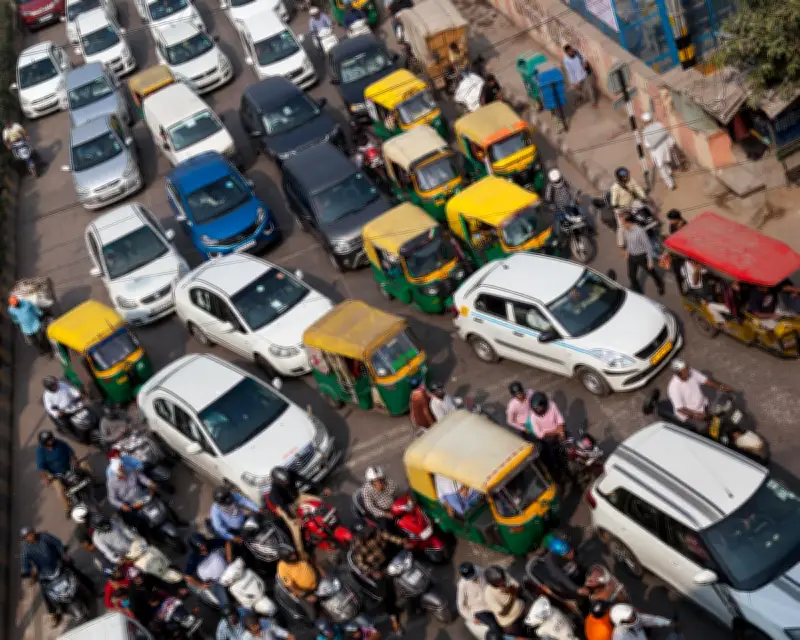
The Delhi government has announced an immediate ban on the registration of new petrol-powered vehicles, a landmark move to combat the city's hazardous air pollution. The ban, effective from June 30, 2026, applies to all private cars and two-wheelers, making Delhi the first Indian city to take such drastic action.
Details of the Ban
Under the new policy, only electric vehicles (EVs) and those running on clean fuels like CNG will be allowed for new registrations. Existing petrol vehicles can continue to operate, but owners face higher road taxes and restricted access to certain zones. The government aims to have 50% of all new vehicle sales be electric by 2027.
Impact on Air Quality
Delhi's air quality has been among the worst globally, with PM2.5 levels often exceeding 300 micrograms per cubic meter, more than 20 times the WHO safe limit. Transport contributes about 40% of the city's particulate pollution. Officials estimate the ban could reduce transport emissions by up to 30% within three years.

"This is a gamechanger for Delhi's environment," said Environment Minister Gopal Rai. "We must act decisively to protect the health of our citizens. The shift to electric vehicles is essential for sustainable urban living."
Economic and Social Implications
The ban has sparked debate among auto dealers and commuters. Petrol vehicle sales accounted for 85% of Delhi's 2.5 million vehicle registrations last year. The government has announced subsidies and tax breaks for EV buyers, including a 50% reduction in road tax and interest-free loans for low-income families.
Critics argue the infrastructure for EVs is insufficient. Delhi currently has only 1,200 public charging stations, far below the needed 10,000. The government plans to install 5,000 new charging points by 2027 and offer free parking for EVs.
Reactions and Future Steps
Environmental groups have praised the move. "Delhi's decision sets a precedent for other megacities struggling with air pollution," said Sunita Narain, director of the Centre for Science and Environment. The ban is expected to face legal challenges from the auto industry, but the government remains firm.
The Delhi government will review the policy after one year and may extend it to diesel vehicles. Neighboring states are also considering similar measures, signaling a broader shift toward zero-emission transport in India.