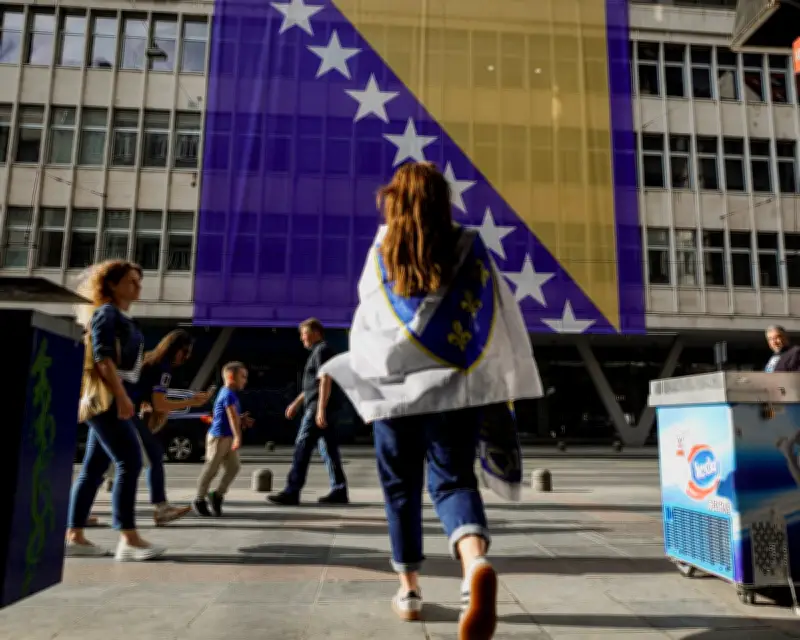
In Sarajevo, a growing movement among Bosniaks is reviving the historic lily flag, a symbol from medieval Bosnia, during the World Cup. The flag, featuring a golden lily on a blue background, represents a pre-Ottoman era and is being embraced as a unifying emblem for the country's diverse ethnic groups.
Historical Significance of the Lily Flag
The lily flag, known as the "ljiljan," was the banner of the medieval Bosnian kingdom under the Kotromanić dynasty. It fell out of use after the Ottoman conquest in the 15th century but has resurfaced in recent decades as a cultural symbol. According to local historian Amra Hadžimuhamedović, "The lily flag is a reminder of a time when Bosnia was independent and multi-ethnic, before the divisions of the modern era."
World Cup Catalyst
The revival has gained momentum during the World Cup, where fans have displayed the flag alongside the current national flag. In Sarajevo's streets, cafes, and stadiums, the lily flag is increasingly visible. One fan, Mirza Kovač, said, "We want to show that Bosnia is more than its divisions. The lily flag represents all of us, not just one group."

The movement is not without controversy. Some Serbs and Croats view the flag as a Bosniak nationalist symbol, but organizers emphasize its inclusive intent. According to a survey by the Sarajevo-based think tank Analitika, 62% of respondents across all ethnic groups support using the lily flag as a supplementary national symbol.
Political and Social Implications
The flag's revival has prompted discussions in the Bosnian parliament. Lawmaker Dženana Đonlagić proposed a resolution to recognize the lily flag as an official historical symbol, arguing it could foster reconciliation. "Symbols have power," she said. "If we can agree on a flag that predates our conflicts, we might find common ground."
However, the proposal faces opposition from Serb and Croat parties. Political analyst Adnan Huskić noted, "The lily flag is a double-edged sword. It can unite, but it also stirs old fears. The key is how it's presented—as a shared heritage, not a claim to exclusivity."
Cultural Celebrations
Beyond the World Cup, cultural events in Sarajevo have featured the lily flag. The annual Sarajevo Film Festival included a segment on medieval Bosnian symbols, and local artisans sell lily-flag merchandise. The trend has spread to diaspora communities in Germany, Austria, and the United States.
As the World Cup continues, the lily flag's visibility is expected to grow. Organizers of a fan zone in Sarajevo have distributed thousands of small lily flags. "We want every Bosnian, regardless of ethnicity, to feel proud of this symbol," said event coordinator Lejla Smajić.