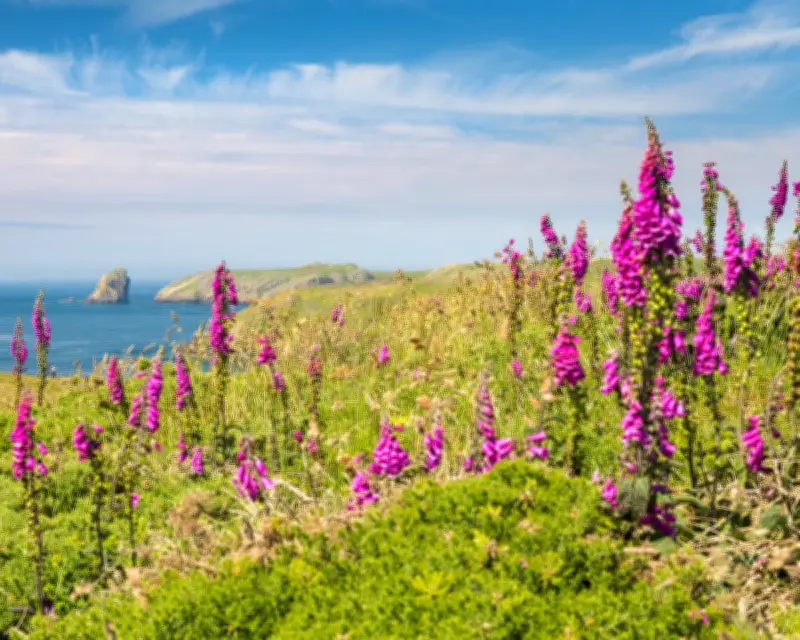
A Century-Old Glimpse of Cornish Wildflowers
In a rediscovered country diary entry from 1926, an anonymous naturalist marveled at the vivid colours of Cornwall's wildflower meadows, comparing them directly to the impressionist palette of Claude Monet. The diary, recently unearthed in a private collection, describes fields near St. Ives as 'a living canvas of Monet's own design, with poppies, cornflowers, and buttercups splashed across the hillsides in reckless abundance.'
The entry, dated 6 July 1926, notes that 'the entire landscape seems to pulse with colour, as if the sun itself had spilled its paints upon the earth.' The author specifically mentions the interplay of light and hue, remarking that 'the blue of the cornflowers rivals the sea, and the yellow of the buttercups outshines the gorse.'
Monet's Influence on British Nature Writing
Monet, who died in 1926, had visited the Cornish coast in the 1890s, painting a series of seascapes and gardens that captured the region's unique light. The diary's author, likely a local botanist or amateur painter, draws a direct line between Monet's technique and the natural spectacle unfolding before them. 'He taught us to see the world in its purest colours,' the diary reads, 'and here, in these fields, his lessons are writ large.'

The diary also records specific species: 'The red campion stands tall among the grasses, while the delicate harebell nods in the breeze. Scabious and knapweed add purple and mauve to the mix, and the occasional orchid surprises the eye.'
Ecological Changes Over a Century
Modern ecologists have noted that many of the wildflower species described in the diary have declined dramatically in Cornwall over the past 100 years. According to a 2024 study by the Cornwall Wildlife Trust, traditional hay meadows have lost 97% of their area since 1926, with a corresponding drop in wildflower diversity. The trust's head of conservation, Dr. Emily Trevorrow, stated: 'The diary gives us a precious snapshot of a landscape that was rich in colour and life. Today, many of those flowers are confined to nature reserves or roadside verges.'
The diary's description of 'fields so thick with poppies that they appear as a single red sheet' is particularly poignant, as poppies are now rarely seen in Cornwall's agricultural landscapes. The author also noted 'the constant hum of bees and butterflies,' a sound that has become fainter amid widespread insect declines.
A Call to Preserve What Remains
The rediscovery of the diary has prompted renewed calls for wildflower conservation in Cornwall. The National Trust, which manages several coastal sites in the area, has launched a 'Monet Meadows' project to restore traditional hay meadow management. 'We want to bring back the colours that inspired Monet and the diarist,' said project manager James Polkinghorne. 'It's not just about nostalgia; it's about biodiversity and the health of our ecosystems.'
The diary ends with a reflection that resonates a century later: 'Will these colours fade from memory as they fade from the fields? Let us hope that future generations may still walk through a landscape that resembles a Monet painting.'