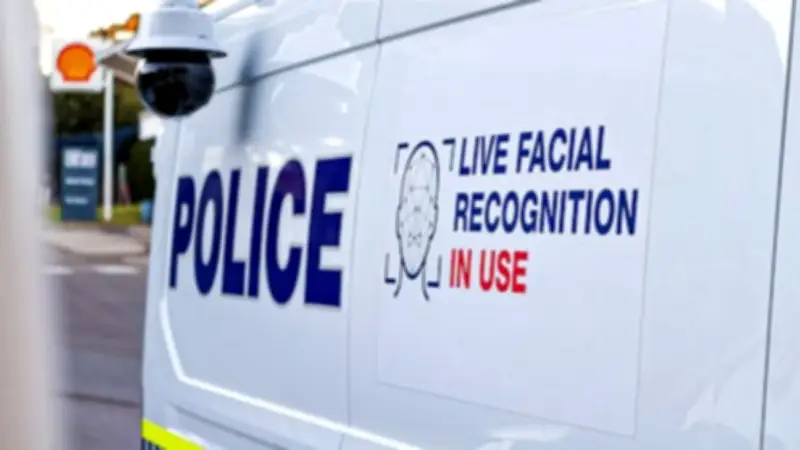
In a landmark move for Australian law enforcement, Western Australia Police have deployed live facial recognition technology in marked vans at locations around Perth. The system scans the faces of passersby in real time, comparing them to a watchlist of approximately 4,000 individuals with outstanding warrants, registered sex offenders, and missing persons. When a potential match occurs, nearby officers are alerted.
Police Justification and Safeguards
WA Police Commissioner Col Blanch stated the trial “is not about mass surveillance” but aims to enhance community protection, particularly against repeat sex offenders violating restrictions, and to apprehend serious offenders and locate missing persons more efficiently. The system does not retain records of faces not on the watchlist, and the watchlist is limited to serious offenders. While facial recognition has been used on pre-recorded footage for over a decade, real-time scanning of people in public spaces is unprecedented in Australia.
Accuracy and Bias Concerns
Facial recognition technology is prone to errors. Even state-of-the-art systems achieve accuracy rates of around 90% under controlled conditions, but real-world deployment is less reliable. At 90% accuracy, one in ten alerts is false, potentially leading to numerous wrongful stops, questioning, and detentions. Algorithmic bias is another critical issue: AI systems trained on non-representative data may be less accurate for non-white individuals. In Australia, this risks exacerbating the already highest-in-the-world incarceration rate of Indigenous Australians. Automation bias, where officers over-rely on software over human judgment, has already led to wrongful arrests in the United States.

Function Creep and Legal Gaps
There is a risk of function creep: once deployed, the system could be repurposed for targeting visa overstayers, protesters, or other groups. Australia's Privacy Act treats facial images as sensitive information requiring consent, but law enforcement agencies have exemptions. Under Australian Privacy Principle 3, police may collect personal information without consent if necessary for lawful activities, leaving the public with fewer protections against police use of facial recognition than against commercial entities.
Ethical and Societal Implications
The tension between security and freedom is heightened by imperfect accuracy. Knowledge of scanning may deter people from public spaces, demonstrations, or religious gatherings due to fear of false positives or distrust of state intentions. The lack of consent erodes the unwritten social contract between citizens and government, with some perceiving it as an erosion of civil liberties. As the first Australian trial, the WA program will likely set a precedent for other jurisdictions.
Governance and Oversight
Australia lacks dedicated legislation for AI or biometric surveillance. The Office of the Australian Information Commissioner prioritizes facial recognition, but the National AI Plan (December 2025) does not recommend new rules. Responsible governance would require independent audits of field accuracy and algorithmic bias, clear limits on watchlist scope, and a statutory oversight body with enforcement powers. Currently, the federal AI Safety Institute only has advisory capacity. The WA police are not villains; they aim to solve real problems. However, without a robust legal framework, the trial risks becoming a poorly controlled experiment in civil liberties.