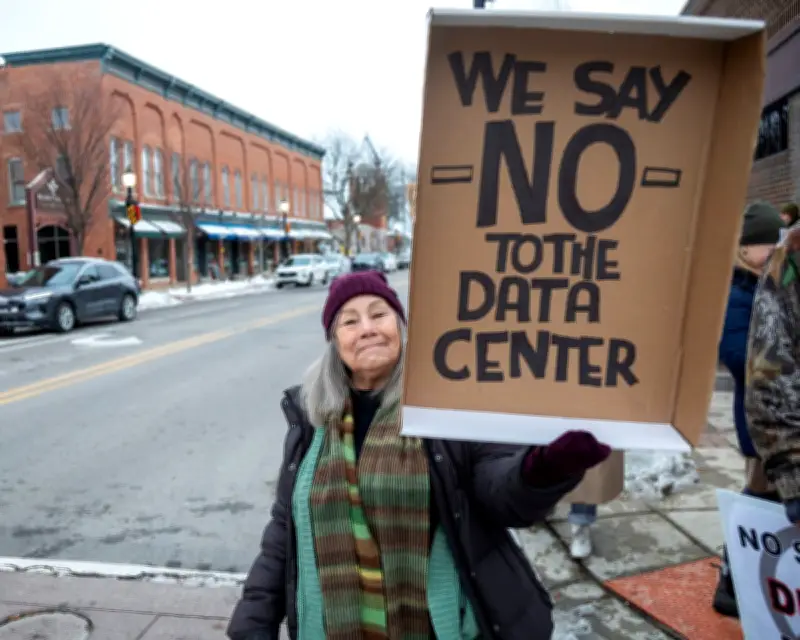
Residents of rural Michigan have gathered to protest the proposed $7 billion Stargate data center, planned for construction on farmland in the southeastern part of the state. Demonstrators claim that the project is being fast-tracked by DTE Energy, the major electric utility, and warn that it could lead to increased residential electricity rates and threaten local water supplies. The rally took place on 1 December 2025.
Data Centers Driving US Clean Energy Growth While Still Threatening Climate Goals
As data centers face delays in connecting to electric grids, major technology companies are being forced to invest heavily in generating their own power. Data centers are paradoxically driving unprecedented growth in the US clean energy industry, boosting a sector that was struggling before the artificial intelligence boom. However, observers caution that these facilities remain a climate nightmare despite their role in propelling wind, solar, and other clean energy sources.
Utilities across the United States are racing to construct new fossil-fuel plants or keep aging gas and coal facilities online to meet the immense energy demands of data centers. In Michigan and other states, these centers have effectively derailed planned transitions to renewable energy. The gas industry, including fracking firms and pipeline companies, is powering much of the data center boom, with some gas companies building new plants solely to serve these facilities. The industry also benefits from the support of the Trump administration.

However, supply chain snags, regulatory delays, energy generation shortages, and other issues are causing delays of up to 12 years for data centers to connect to the electric grid. This is forcing big tech companies to spend enormous sums on producing their own power through the quickest and cheapest alternatives, such as battery storage, solar, wind, and fuel cells.
“It is unquestionable that the increase in electricity sales is driving an increase in renewables,” said Douglas Jester, a clean energy consultant with 5 Lakes Energy who works on utility regulatory cases in the upper Midwest. “It’s right to think about it as a paradox.”
The clean energy industry boomed in 2020 as the pandemic drove down interest rates and the Biden administration made historic investments in decarbonization. But it faltered as inflation hit, projects became expensive, and energy demand remained flat. Then came the second Trump administration, which was hostile to Biden’s plans and the clean energy movement, canceling government programs that had supported wind, solar, and electric vehicles.
Most clean energy companies’ stocks steadily plummeted from their early 2021 peaks through early 2025, when many began to spike alongside data center demand. The iShares Global Clean Energy ETF, which includes about 100 clean energy stocks, fell by around 80% between late 2021 and early 2025 but is up about 52% over the last year.
The industry is also being propelled by increasing electricity demand globally in other industries like oil and gas exploration, as well as sharply falling costs for solar panels, batteries, and other renewable infrastructure, said Lucas Davis, a UC Berkeley energy economist.
But not all clean energy segments are benefiting equally. Data centers are spurring the development of batteries and solar systems geared toward powering facilities onsite, but they have little direct benefit on home rooftop solar. Among companies at the leading edge is Nextpower, a utility-scale solar infrastructure producer, which just reported 20% year-over-year growth and recently purchased Prevalon, a data center battery producer.
Google, meanwhile, has developed the world’s largest grid-scale battery to power a data center in Minnesota and purchased an energy company with which it is expanding renewable development, including at a new “off the grid” center in Texas that will include wind, solar, batteries, and gas.
“It looks to me like they’re setting up to be vertically integrated to supply their own electricity, and they’ll drive a lot of development,” Jester said.

There is some benefit to the larger grid. In Wisconsin, energy regulators do not have a renewable energy standard guiding their decisions but are building about 15 wind or solar facilities to accommodate Microsoft and Oracle data centers, though those also include some natural gas, Jester said. “Between the speed to power and the preference by data center companies for clean energy, the renewables made more sense,” he added.
In Michigan, DTE Energy is building a 330 MW battery system instead of a new gas plant to support a 1.4 GW Oracle data center, which was the only way to meet Oracle’s timeline. The company will pay for the batteries.
Davis stressed that the “huge increase” in demand is largely motivating tech companies, not a benevolent desire to save the planet from climate disaster with clean energy. “I would say tech is desperate for electricity and oftentimes it’s going to whatever is the quickest – it could be the fuel cell, it could be natural gas turbines, or it could be solar and batteries, but the underlying demand is electricity,” Davis said.
An example of that lies in rising star Bloom Energy, which produces relatively cleaner energy but not renewables. Its solid oxide fuel-cell systems generate power through an electrochemical process that does not emit toxic sulfur oxides, particulate matter, and other dangerous emissions. However, it does emit carbon dioxide, even if its process is more efficient than traditional natural gas turbines. Bloom can deploy its cells in as little as 90 days, which has drawn intense interest from data center owners. It just announced plans to provide power to Oracle, is in the process of doubling its manufacturing capacity by the end of 2026, and its stock is up 1,338% over the last year.
The green growth spurt comes with some big caveats. Energy demand is hard to predict, even if “the forecasts are staggering,” Davis said. The industry may be susceptible to an AI bubble that many observers say could burst at any time. But a portfolio manager who helps oversee BlackRock’s flagship sustainability funds told Bloomberg the sector is well prepared to withstand a turn. “We don’t correlate any potential ‘AI bust’ as an existential risk to sustainable energy equities,” the manager said. “Sustainable energy equities could stand to even further benefit as US rates come down and we see a broadening out of the market.”