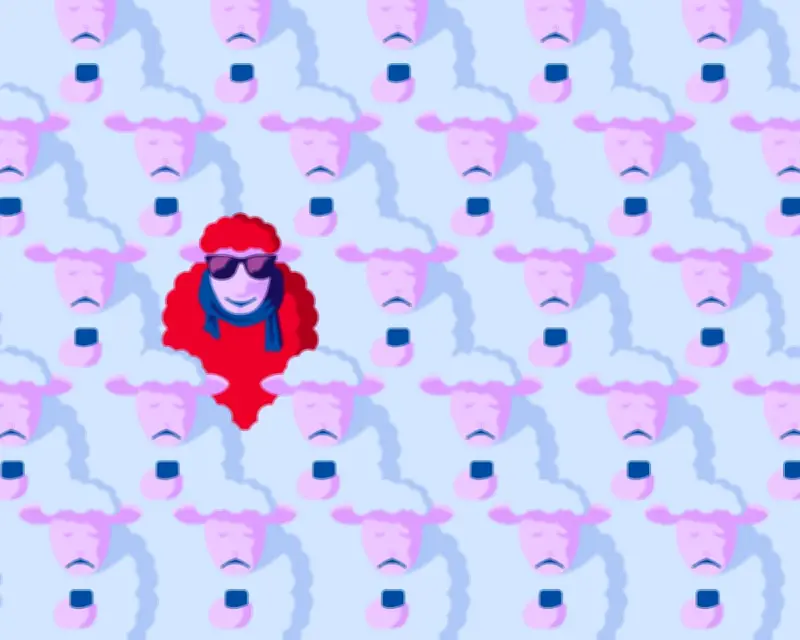
What are you into? What music, films, clothes, art, or books do you actually like? Do you find these questions harder to answer than a decade ago? You are not alone. Personal taste has been seriously debased by technological advancement. The internet has not only altered how we form opinions but has wrecked our capacity to form preferences.
In the past, we experienced culture through community, geography, media, and serendipity. We decided what appealed to us and consumed accordingly. Now, we encounter the world through algorithmic feeds on streaming and social media platforms. These platforms are programmed to show content based on data gathered from our activities, keeping us engaged as long as possible. On Spotify, this means serving songs similar to those we did not skip; on Instagram, it means showing influencers whose videos held our attention. We experience reality via a tailored stream of content, a paradox where personalization was meant to enhance choice but instead commodified taste into oblivion.
Kyle Chayka, in his 2024 book Filterworld, explains that algorithms promote the least ambiguous, least disruptive, and least meaningful pieces of culture because they are most conducive to uninterrupted scrolling. Years of this have taken a toll. Last year, I noticed zero enthusiasm for nostalgic clothes, forgettable pop music, and endless promotional campaigns for IP-based films. Trends like childlike wall art or Dubai chocolate became inescapable overnight, reaching saturation before I could form an opinion. For the first time since childhood, I had no clue what I really liked.

To investigate, I visited Portobello Road market in London, where I honed my taste in the pre-algorithmic era. The market seemed unchanged, but stallholders and shoppers described a herd mentality. Kerry, a vintage clothing seller, noticed younger generations wanting to fit in rather than stand out. Stephanie from California saw friends wearing identical outfits, erasing personal dressing. Helena, a stylist, is bored with microtrends that make her question: “Have I been influenced, or is this actually me?”
Ione Gamble, founder of Polyester magazine, has thought deeply about taste. She says we are always told what to like, making us feel powerless. In her book The Polyester Book of (Bad) Taste, novelist Nicola Dinan describes feeling like “a driverless car” in cultural consumption. This year, two pop cultural moments highlight souring mood. First, the ascension of Carolyn Bessette Kennedy as a fashion icon, with media encouraging literal imitation of her style, ignoring her friend’s advice to wear what feels authentic. Second, the revelation that bands like Geese used algorithm-gaming marketing to simulate virality, tricking fans into thinking they still had good taste.
Taste is what you like and dislike, superficial yet central to identity. It governs every free human response, as Susan Sontag wrote. Taste is shaped by class and background, but ideally, it is a privilege of self-expression. However, the internet destroyed taste by prioritizing it above all else, boiling humanity down to data-producing nodes. Nathalie Olah’s book Bad Taste describes how millennial “good” taste became a performance of capability amid financial precarity, a neoliberal con.
Tech companies now embrace taste as a core skill. OpenAI’s Greg Brockman tweeted that “taste is a new core skill,” while Silicon Valley firms like Palantir and Anthropic produce tasteful merch. Jeff Bezos and Mark Zuckerberg attended the Met Gala, a phenomenon Chayka calls “taste-washing” to humanize AI. About 71% of images online are AI-generated, and Spotify removed 75 million AI tracks. Algorithms now appeal to primal instincts, with phenomena like “Fruit Love Island” designed for eyeballs, not enjoyment.
But there is hope. Social media use peaked in 2022, with algorithmic fatigue driving people away. Platforms like PI.FYI offer algorithm-free recommendations. Newsletters like Blackbird Spyplane emphasize genuine taste without affiliate links. Erin Wylie, its co-founder, suggests reclaiming taste by stopping consumption; she wore only black clothes for a month to revive her enthusiasm. The biggest constraint is getting off the internet entirely. Gen Z is picking up physical media again, as Gamble notes.

At Portobello Road, I found inspiration. Helena’s father, who is not online, is her fashion icon. Pip, a milliner, has developed her instincts through deep fashion history knowledge, mixing eras and wearing what makes her happy. Shopping clarifies a core tenet: liking something not meant for you. Taste requires quiet contemplation, a leap of imagination that big tech discourages. As Gamble advises, always question yourself: “Why do I like that? Do I just like it because I’ve been shown it 100 times – or do I genuinely love it?”