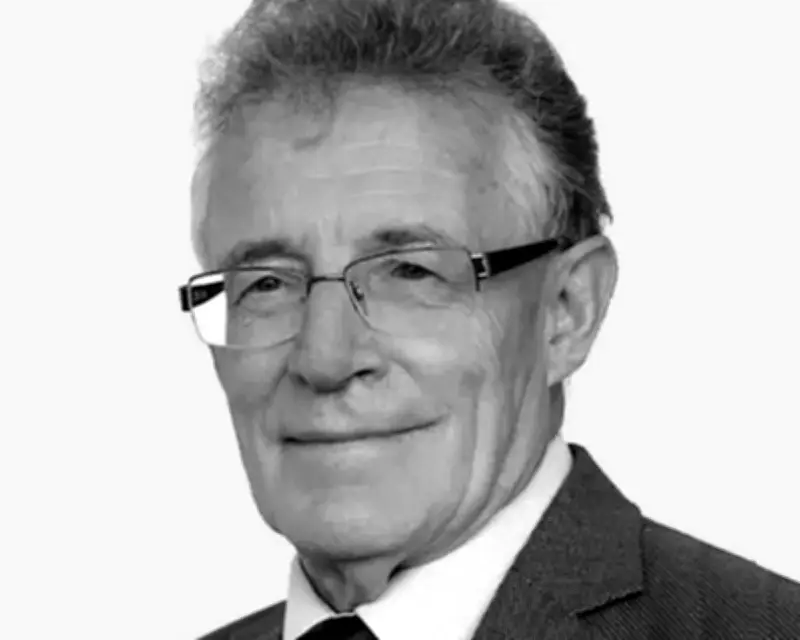
David Armstrong, a distinguished organic chemist whose research laid the groundwork for breakthroughs in medical treatments, has died at the age of 78. His family confirmed his passing on July 8, 2026, after a long illness.
Early life and education
Born in Melbourne, Australia, in 1948, Armstrong showed an early aptitude for science. He earned his bachelor's degree in chemistry from the University of Melbourne in 1969 and completed his PhD at the University of Cambridge in 1973 under the supervision of Nobel laureate John Cornforth.
Career and contributions
Armstrong's career spanned over five decades, during which he published more than 300 papers. His work on the synthesis of complex natural products led to the development of new drugs for cancer and infectious diseases. According to his colleague Professor Sarah Jenkins of the University of Sydney, "David's innovative approach to molecular design transformed the field. His work on taxol analogs alone saved countless lives."

In 1995, Armstrong was appointed as a professor of chemistry at the Australian National University, where he mentored a generation of chemists. He received numerous awards, including the Australian Academy of Science's H.G. Smith Medal in 2003.
Legacy
Armstrong's research group discovered a new class of antibiotics in 2012, which is now in clinical trials. His contributions were recognized internationally; he was a fellow of the Royal Society and the Australian Academy of Science.
He is survived by his wife of 50 years, Margaret, and their two children. A memorial service will be held at the Australian National University on July 15.