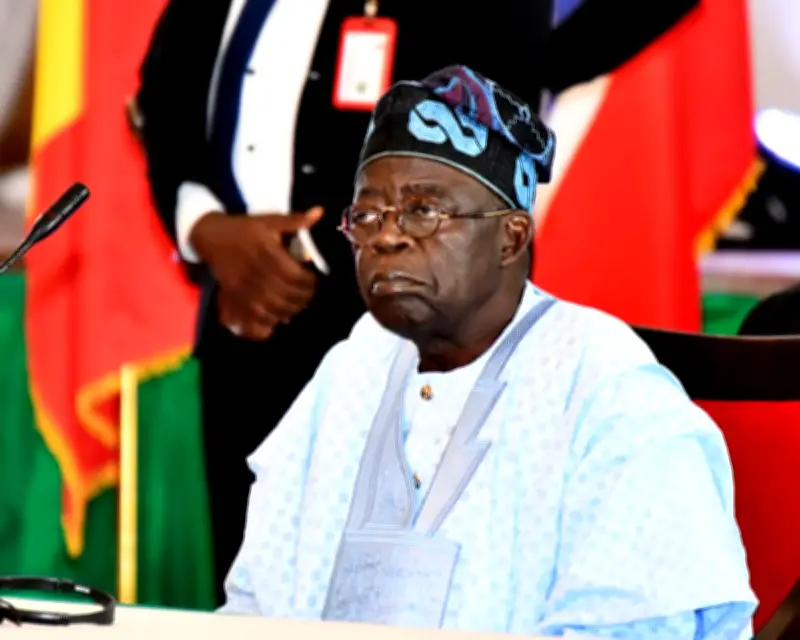
Fake Agency Scandal Rocks Nigerian Presidency
Nigerian President Bola Tinubu is facing a growing political crisis following the discovery of a fraudulent government agency that operated for months with apparent high-level connections. The scandal has sparked widespread outrage and calls for accountability, threatening to destabilize the already fragile political landscape.
Revelations and Fallout
According to investigative reports, the fake agency issued official documents, collected fees, and even held meetings with legitimate government officials. The operation was uncovered after a whistleblower alerted authorities to suspicious activities. The scandal has led to the arrest of several individuals, including a former presidential aide, who allegedly facilitated the scheme.
President Tinubu has denied any knowledge of the fraudulent agency, stating, "I am deeply troubled by these revelations. My administration will not tolerate such criminality, and we will ensure that all those responsible are brought to justice." However, opposition leaders have called for an independent inquiry, arguing that the president must have known about the operation given its scale and duration.

Political Implications
The scandal comes at a critical time for Tinubu, who is already facing criticism over economic reforms and security challenges. Political analysts suggest that the fake agency scandal could erode public trust in the government and weaken Tinubu's position ahead of the next election. "This is a serious blow to the president's credibility," said Dr. Amina Bello, a political scientist at the University of Lagos. "It raises questions about the effectiveness of oversight mechanisms and the integrity of his administration."
Opposition parties have seized on the issue, with the People's Democratic Party (PDP) calling for a parliamentary investigation. "The president must explain how a fake agency could operate with such impunity," said PDP spokesperson Diran Odeyemi. "This is a matter of national security and good governance."
Government Response
In response to the growing uproar, the Nigerian government has announced a full-scale investigation into the matter. The Inspector General of Police has been directed to probe the activities of the fake agency and identify all individuals involved. Additionally, the government has set up a task force to review the registration and oversight of government agencies to prevent similar incidents in the future.
Despite these measures, critics argue that the government's response has been too slow and insufficient. Human rights groups have expressed concern over the lack of transparency in the investigation. "The government must ensure that the investigation is independent and impartial," said Amnesty International Nigeria director Osai Ojigho. "The public deserves to know the truth."
Broader Context
Nigeria has a history of bureaucratic corruption and inefficiency, with numerous reports of fake agencies and fraudulent schemes. This latest scandal highlights the systemic weaknesses in the country's governance structures. According to a 2023 report by Transparency International, Nigeria ranked 150 out of 180 countries in the Corruption Perceptions Index, indicating a high level of perceived corruption.
The fake agency scandal also comes amid ongoing efforts by the Tinubu administration to reform the public sector and improve transparency. The president has pledged to tackle corruption and streamline government operations, but critics say the scandal undermines these commitments. "This incident shows that more needs to be done to enforce accountability," said Dr. Bello. "The government must walk the talk."