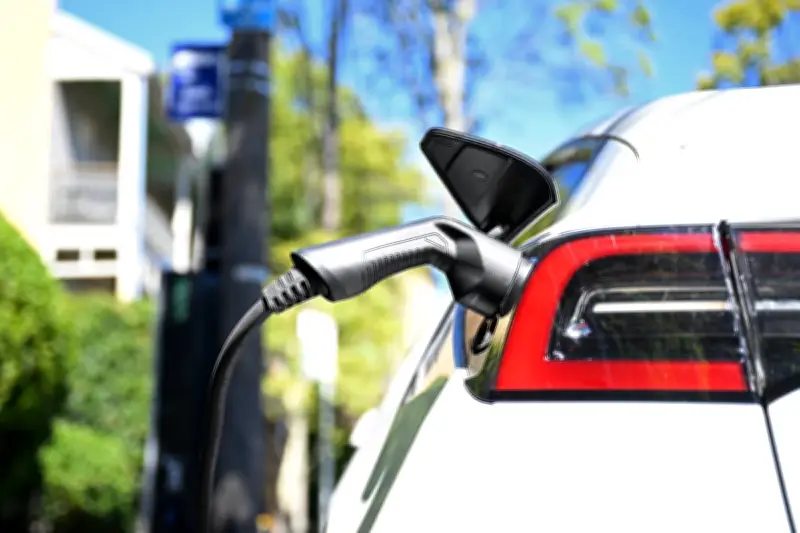
Electric vehicles (EVs) have transitioned from a lifestyle statement to a mainstream choice in Australia, according to new data. Analysis from auction figures and NRMA data shows that previous barriers, such as high upfront costs and weak resale values, have been largely resolved, driving a surge in sales accelerated by the oil crisis.
Market Shift and Consumer Confidence
Nicole Taylor, a broker at Loan Market, reports that approximately one in three loans now finance EVs. “I’ve been in the car sector for about 20 years, and over the last two, that cautiousness in the market has been disappearing fast,” Taylor says. “Clients are comfortable that there’s infrastructure for EV owners, that there are technicians that can actually service these cars, and spare parts will be available. All of those costs have come down dramatically.”
Sales hit a record in May, with EVs and plug-in hybrids accounting for 30% of new vehicles sold, according to the Electric Vehicle Council. Tesla’s Model Y was Australia’s bestselling car that month, outperforming combustion engine competitors. Meanwhile, Chinese brands including BYD and GWM-owned Haval have been rapidly increasing their share of the EV market, now accounting for well over half of Australia’s EV sales, according to Commonwealth Bank analysis.

Price Parity and Running Costs
The influx of new electric models has narrowed the upfront price difference from petrol vehicles dramatically, while EV buyers benefit from lower running costs. The NRMA’s car ownership report found that at least five EVs, all Chinese brands, are now priced around or below the $30,000 mark.
Inadequate infrastructure remains the single biggest barrier to further growth, with the Commonwealth Bank noting that a lack of public charging infrastructure is the key obstacle to adopting commercial EVs such as electric trucks.
Global Trends and Secondhand Market
Some of the May sales lift was linked to orders placed in March, when fuel prices rocketed after the start of the US-Israel war on Iran. Globally, EV sales rose 26% year-on-year in Europe, according to Benchmark Mineral Intelligence. The notable exception is the US, where EV sales dropped more than 25% over the same period due to policy changes.
The Australian EV market has matured enough that secondhand EVs are retaining more value, according to auction house Pickles, as buyers become more comfortable with battery longevity. Three-year-old Tesla Model 3 vehicles, which used to resell in the low-$30,000 range, are now priced closer to $40,000. Used BYD Atto 3 models that had been selling for about $25,000 are now priced at about $30,000.
Brendon Green, general manager of automotive solutions at Pickles, says used EVs are now competing with petrol vehicles for buyers’ attention. “What was once seen as a premium purchase is becoming a more practical option, particularly for people who are happy to buy used,” Green says.
MotorMetrics’ live analysis shows that three BYD electric hybrids—the Shark 6 and Sealion 6 and 7—are among the most sought-after vehicles at dealerships with the lowest supply levels. Jake Sale, founder of MotorMetrics, says the car market is changing quickly. “Chinese cars are just super-popular now and the market is completely changing in Australia,” says Sale.