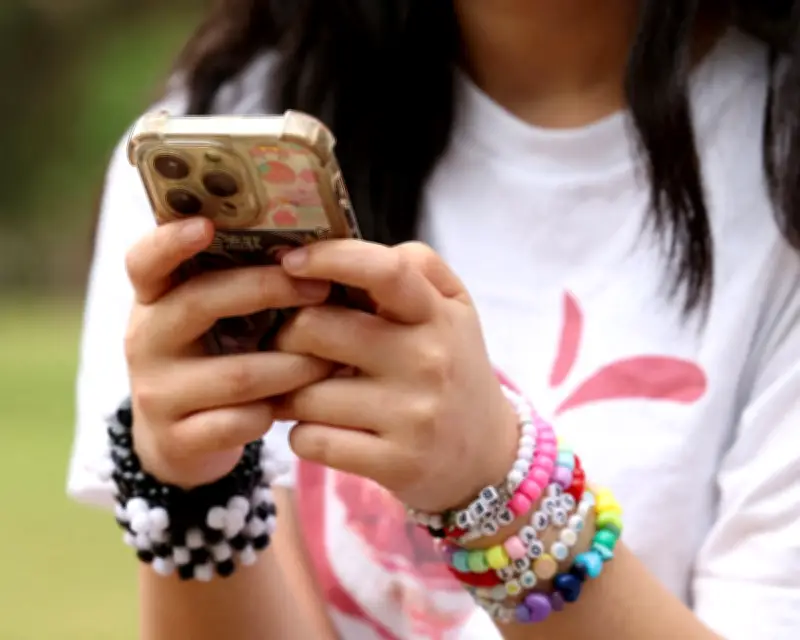
A new survey has revealed that a majority of parents in the United Kingdom support a ban on social media platforms such as TikTok and Instagram for children under the age of 16. The findings come amid growing concerns about the impact of social media on the mental health and well-being of young people.
Survey Highlights Strong Parental Support
The survey, conducted by the parenting charity Parentkind, polled over 2,000 parents of children aged 5 to 16 across the UK. It found that 61% of parents support a ban on social media for under-16s, while only 20% opposed the idea. The remaining 19% were unsure.
Support for the ban was particularly strong among parents of older children, with 68% of parents of 11- to 16-year-olds backing the measure. However, even among parents of younger children (aged 5 to 10), 52% expressed support for the ban.

Mental Health Concerns Drive Support
The survey also explored the reasons behind parental support for a social media ban. The most commonly cited concern was the impact on children's mental health, with 74% of parents saying they were worried about how social media affects young people's well-being. Other concerns included exposure to inappropriate content (68%), cyberbullying (62%), and the pressure to be constantly online (57%).
Parentkind's chief executive, Jason Elsom, said the results showed that parents are deeply worried about the effect of social media on their children. "Parents are seeing the real-world impact of social media on their children's mental health, and they want action," he said. "This survey shows that parents are not just concerned but are demanding change."
Comparison with Other Countries
The UK is not alone in considering a social media ban for young people. Several other countries have already implemented or are considering similar measures. For example, France recently passed a law requiring social media platforms to verify the age of users and obtain parental consent for those under 15. Australia is also considering a ban on social media for under-16s, following a parliamentary inquiry that recommended the move.
In the US, some states have introduced legislation to restrict children's access to social media, although no federal ban exists. The UK government has been consulting on a potential ban as part of its Online Safety Bill, which aims to make the internet safer for children.
Industry Response
Social media companies have responded cautiously to the survey findings. A spokesperson for Meta, which owns Instagram and Facebook, said the company was committed to keeping young people safe online. "We have introduced a range of safety features for teenagers, including default private accounts and restrictions on who can contact them," the spokesperson said.
TikTok also highlighted its safety measures, including parental controls and age-restricted content. "We believe in providing a safe and age-appropriate experience for all users," a TikTok spokesperson said. "We continue to work with experts and policymakers to ensure our platform is safe for young people."
However, critics argue that self-regulation by social media companies has not gone far enough. They point to evidence that many children still find ways to bypass age restrictions and access harmful content.
Next Steps
The survey results are likely to intensify pressure on the UK government to take action. The Online Safety Bill, currently making its way through Parliament, includes provisions to hold social media companies accountable for harmful content. However, it does not currently include a blanket ban on under-16s using social media.
Parentkind is calling on the government to introduce a statutory ban on social media for under-16s, similar to the approach taken in France. "The government has a duty to protect children from harm," Elsom said. "We urge them to listen to parents and introduce a ban."
The government has said it is considering all options to keep children safe online. A spokesperson for the Department for Digital, Culture, Media and Sport said: "We are committed to making the UK the safest place in the world to be online, and we will not hesitate to take further action if needed."

As the debate continues, one thing is clear: parents in the UK want stronger action to protect their children from the potential harms of social media. Whether that leads to a full ban remains to be seen, but the pressure on policymakers is mounting.