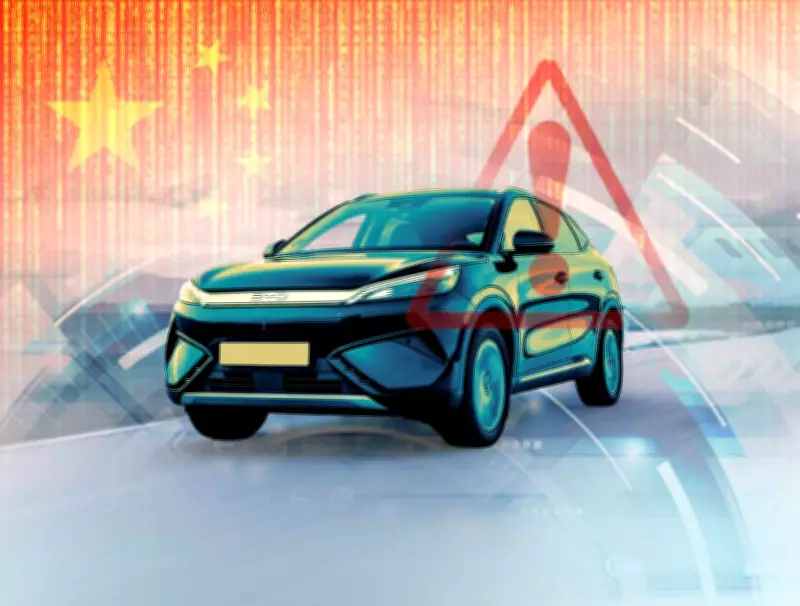
A Liberal MP has warned that Australia is years behind in addressing the cybersecurity risks posed by Chinese-made cars, which are becoming some of the country's most popular vehicles. Internet-connected cars can collect and store a wide range of data, including audio and video recordings, phone contacts, call logs, messages, location information, and even biometric details such as weight and facial scans.
Data vulnerability warnings
The Australian Signals Directorate, the nation's cyber spy agency, has cautioned that this information could be exploited by foreign intelligence services, depending on the laws of the car manufacturer's country. Chinese companies can be legally compelled to hand over data under certain circumstances.
Home Affairs Minister Tony Burke has faced scrutiny for driving a Chinese-made electric vehicle (EV), though Cabinet colleagues say he has taken appropriate precautions to protect sensitive information.

Concerns over slow action
Liberal MP Mary Aldred expressed concern over the slow regulatory response to Chinese EVs, which have gained popularity in Australia due to their lower prices compared to other models. She highlighted a US restriction on importing vehicles with Chinese or Russian hardware and software, citing security concerns—rules widely seen as targeting Huawei.
In 2018, former Prime Minister Malcolm Turnbull banned Chinese-owned Huawei from Australia's 5G rollout on national security advice. However, no further restrictions have been imposed on Huawei's entry into other markets.
Ms Aldred said Australia is lagging behind its security partners. She described EVs as "computers on wheels" and expressed deep concern that a technology company banned or significantly restricted by Quad member countries due to national security concerns could collect consumer and government data in Australia.
She noted that the former US Biden Administration is more up to date on regulatory reform in this area than the current Albanese Government, calling the Prime Minister "out of touch" on technology.
Potential consequences of data misuse
Ms Aldred warned that misuse of data could lead to serious consequences, from domestic violence and corporate espionage to threats to national security.
Chinese car sales surge
Chinese EV maker BYD was the second-highest selling brand in April, capturing 8.3% of Australia's new car market, according to the Federal Chamber of Automotive Industries. The BYD Sealion 7 was the seventh top-selling vehicle for the month. Other Chinese brands, such as Chery's Tiggo and Haval's Jolion, also made the top 10.
The ASD estimates that within five years, 93% of all new vehicles sold in Australia will be internet-connected. These vehicles offer features like inbuilt GPS, smartphone connectivity via USB or Bluetooth, remote access, and advanced infotainment systems with real-time weather or traffic monitoring. While many people associate these features with EVs, most new combustion-engine cars also fall into this category.
Regulatory gaps
There has been no clear progress on whether connected vehicles will be specifically regulated under the Privacy Act. They are also not regulated under the Cyber Security Act, although the Infrastructure Department has been consulting on adopting two UN rules on cybersecurity into national road vehicle standards.
The Office of the Australian Information Commissioner (OAIC) has launched 18-month investigations into Toyota and Hyundai, which are headquartered in Japan and South Korea respectively. The investigations examine whether these companies collect more information than necessary, use data for secondary purposes without consent, and fail to destroy data when no longer needed.
An OAIC spokesperson said the investigations were commenced consistent with regulatory priorities and a risk-based approach. However, the OAIC is not currently investigating any Chinese companies. The Attorney-General's Department told Senate estimates in February that no meetings had been held with Chinese carmakers to discuss their ability to track Australians who had purchased their vehicles.