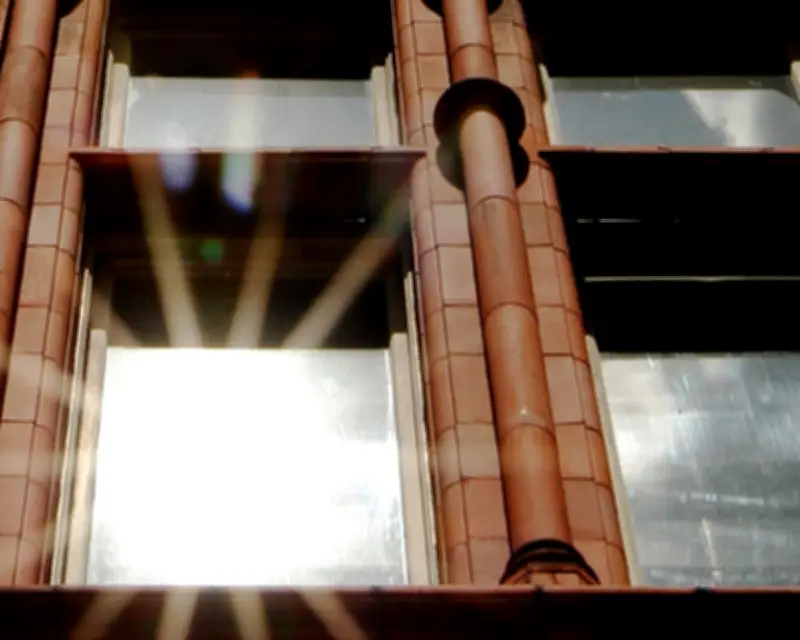
Low-emissivity (low-E) windows, increasingly popular for their ability to keep homes cool by reflecting infrared radiation, may pose a fire hazard to neighboring properties, according to a new study published in the journal Applied Energy. Researchers found that the windows can focus sunlight onto adjacent buildings, vegetation, or materials, potentially igniting fires.
How Low-E Windows Work
Low-E windows have a microscopically thin coating that reflects heat back into the room during winter and outward during summer, improving energy efficiency. The coating is designed to reduce the amount of ultraviolet and infrared light that passes through the glass without compromising visible light. However, the same reflective properties can concentrate sunlight into intense beams when the windows are angled appropriately.
Study Findings
The study, led by Dr. Sarah Mitchell at the University of Melbourne, simulated various building configurations and sun angles. It found that under certain conditions, low-E windows can focus sunlight with an intensity comparable to a magnifying glass. In one simulation, the reflected beam reached temperatures exceeding 200°C (392°F) on a nearby wooden fence. "We were surprised by the intensity of the focused light," Dr. Mitchell said. "It's a classic example of an unintended consequence of a well-intentioned technology."

Real-World Incidents
The research was prompted by several reports of fires in suburban areas where low-E windows were installed. In 2024, a house fire in Brisbane was traced back to sunlight reflected from a neighbor's low-E window onto a pile of dry leaves. More recently, in Melbourne, a car's dashboard melted after being exposed to concentrated sunlight from a nearby building's windows. The study estimates that up to 5% of buildings with low-E windows in dense urban areas could pose a fire risk under the right conditions.
Industry Response
Window manufacturers have responded to the findings. The Australian Glass and Glazing Association issued a statement acknowledging the potential risk and recommending that installers consider the orientation and placement of low-E windows. "We are working with researchers to develop guidelines for safe installation," said association spokesperson Mark Thompson. "In the meantime, homeowners should be aware of reflective surfaces near their property."
Mitigation Strategies
Experts suggest several ways to reduce the risk: using awnings or shades to block reflected light, planting vegetation that does not dry out easily, and positioning windows to avoid direct reflection onto neighboring properties. Building codes may also need updating to account for the potential hazard. "This is a solvable problem," Dr. Mitchell said. "With proper planning, we can enjoy the energy benefits of low-E windows without increasing fire risk."
Broader Implications
The findings have implications for urban planning and architecture. As cities become denser and more buildings adopt energy-efficient technologies, the potential for unintended interactions increases. The study calls for further research into reflective building materials and their effects on the surrounding environment. It also highlights the need for interdisciplinary collaboration between engineers, architects, and fire safety experts.