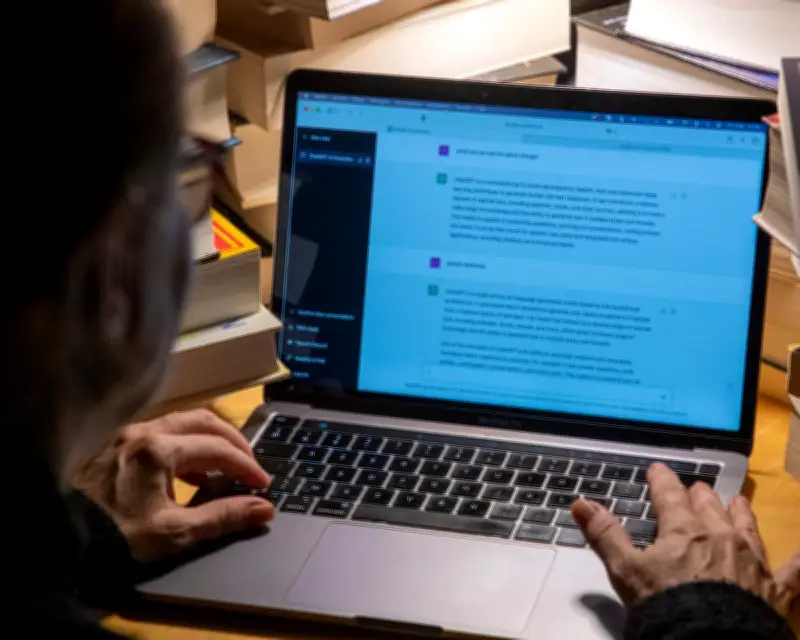
A recent study from the Massachusetts Institute of Technology has added to growing evidence that excessive reliance on chatbots can impair critical-thinking abilities and reduce our capacity to independently identify misinformation.
AI Dependency and Misinformation Detection
As artificial intelligence tools become more advanced and widely available, manipulated images and deceptive headlines are increasingly common. While AI can help users detect fake content, the new research suggests that over-dependence on such tools may come at a cost. The study, released in April, tracked 67 participants over four weeks, testing their ability to distinguish between real and fake news headlines and images.
Researchers found that AI assistants like Claude and ChatGPT were effective at helping participants identify fake news. However, when participants relied heavily on these tools, their own ability to spot misinformation declined. The study noted that AI often prioritized providing accurate responses rather than fostering independent thinking, which could worsen long-term judgment.

“When we’re interacting with AI, we feel we’re becoming better at certain tasks, but there’s enough research that shows we are not,” said Anku Rani, a PhD student at MIT and co-lead author of the study.
Trade-Offs in AI Assistance
Participants were asked to evaluate news-related headlines and images both with and without the help of an AI assistant integrated with GPT-4o and Google search. The chatbot could offer clues, such as advising a user to examine a police badge that revealed an image was fake. The study assessed how AI helped participants make accurate decisions and how their independent judgment evolved over time.
The results showed a trade-off: AI assistance improved participants’ ability to discern real content by 21%, but their unassisted performance dropped by 15.3% by the fourth week. “These results indicate that while AI may help immediately, it may ultimately degrade long-term misinformation detection abilities,” the study concluded.
Broader Implications for Technology Use
Concerns about over-reliance on technology are not new. Calculators and GPS devices have reduced mental math and navigation skills. A 2025 Lancet study found that doctors using AI classification tools for cancer detection became worse at the task independently. A neuroscientist at the Possibility Institute recently warned that diverting too much thinking to AI could weaken the brain’s defenses against dementia.
The MIT study highlights that the way AI systems interact with users—whether they are prescriptive or probing—can affect judgment. Users often seek speed and certainty from chatbots, but the study notes that nuanced, guided questioning is more effective for critical thinking. About one-quarter of participants believed their detection skills were improving even as their performance declined.
Limitations and Future Research
The study acknowledges limitations, including a participant pool primarily from the US and UK. A more diverse sample could reveal whether skill degradation occurs across different cultures and educational systems. Longer studies could also determine if the effects of over-reliance on AI continue at the same rate over time.
Researchers emphasize the importance of these findings for educators who increasingly integrate AI into learning tools. The results are also relevant for the general public, given the flood of dubious online information. “As AI becomes increasingly sophisticated, ensuring these tools build critical thinking skills rather than cognitive dependency becomes essential for maintaining public resilience to misinformation,” the study notes.