A disastrous fire involving dozens of electric vehicles at a UK port should have Australian authorities very worried, experts warn.
A major fire involving dozens of electrified vehicles at a UK port serves as a warning to Australian authorities as thousands of hybrid and electric cars reach our shores each month.
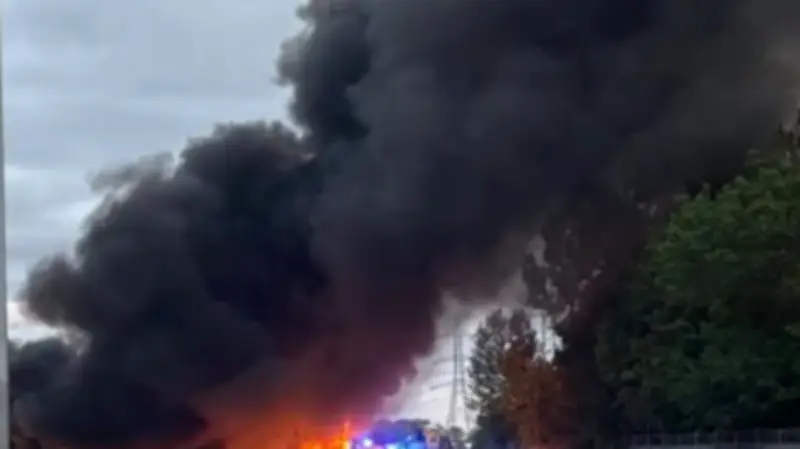
British fire authorities fought to contain a blaze in Southampton involving 33 Jaecoo SUVs with electrified powertrains shortly after they rolled off a ship from China on Wednesday.

The Hampshire and Isle of Wight Fire & Rescue Service said the blaze broke out at about 4.20am and required 10 fire engines, two water carriers, an aerial ladder platform and numerous staff to contain the fire.
No one was injured by the blaze, according to The Sun, though residents were advised to keep windows and doors closed to avoid inhaling toxic smoke.
Local residents reacting to the fire on Reddit said they “nearly s**t myself” and that it “gave me a half-heart attack” to see thick smoke pouring from the Southampton docks.
Overseas shipping challenges
Overseas, the shipping industry has faced major challenges moving electric vehicles between countries. Almost 4000 cars were on board the ship Felicity Ace when it capsized and sunk in 2022. The ship’s owners blamed an electric Porsche for causing the fire and sued the car maker without success. A year later, around 500 electric cars were on board the Fremantle Highway car carrier when a deadly blaze broke out aboard the ship in 2023.
Even if fires are not initially caused by an electric vehicle battery, fires involving EVs can be extremely difficult to extinguish if battery cells are caught up in what emergency services describe as a “thermal runaway” fire.
BYD ship arrives in Australia
The Southampton blaze involving Chery vehicles occurred in the same week that another Chinese vehicle giant, BYD, docked an enormous ship with almost 5000 hybrid and electric vehicles in Melbourne.
Raffy Sgroi, a government safety adviser and chief executive of automotive firm Car Mechanical Services, said “the Southampton incident is particularly relevant because it occurred at a port facility”.
“That is, one of the critical links in Australia’s automotive supply chain,” she said. “Ports, shipping terminals and vehicle storage compounds will increasingly become locations where large numbers of electrified vehicles are concentrated in a single place.”
Sgroi said it was evidence that Australian emergency services must be ready to handle a serious incident involving EVs stored near port facilities.
“Australia’s transition to lower-emissions transport is well underway,” she said. “However, public policy must recognise that introducing new technology often requires changes to the systems that support it.
“A growing number of electric and hybrid vehicles, including many manufactured by emerging overseas brands, are entering the Australian market. As those numbers continue to rise, so too will the need for specialised procedures and infrastructure to safely transport, store, repair and respond to incidents involving those vehicles.”
Fires involving the batteries of electric and hybrid vehicles are rare in Australia. EV Firesafe director Emma Sutcliffe says there are only 14 confirmed cases of lithium-ion car battery fires in Australia, despite the nation having about 500,000 electric and plug-in hybrid vehicles on the road.