NRL Implements Historic State of Origin Eligibility Overhaul
The National Rugby League (NRL) has enacted the most significant modification to State of Origin regulations in years, fundamentally altering player eligibility criteria. This groundbreaking change permits athletes who have represented New Zealand or England at the international level to participate in the iconic interstate series, provided they originate from New South Wales or Queensland.
End of Exclusion for Tier-One Nations
Previously, stringent rules barred any player from featuring in State of Origin if they had opted to play for the Kiwis or Lions instead of the Australian Kangaroos in Test matches. This exclusion has now been abolished, aligning eligibility with residency and familial connections. Under the new framework, individuals are eligible if they resided in NSW or Queensland before turning 13 years old, or if their father represented either state in rugby league.
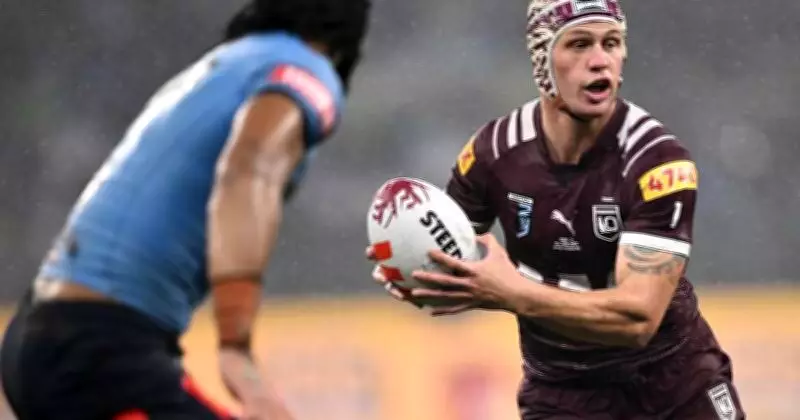
This revision paves the way for notable stars like Addin Fonua-Blake to potentially join the Blues, despite his sole Test appearance for New Zealand against Scotland in 2017. Fonua-Blake could form a formidable front row alongside Payne Haas, creating one of the most intimidating combinations in Origin history. Additionally, high-profile players such as Kalyn Ponga, AJ Brimson, and Victor Radley regain eligibility, having previously represented England internationally.

Rationale Behind the Rule Change
Australian Rugby League Commission chairman Peter V'landys articulated the reasoning behind this transformative decision. "Rugby League has evolved, the international game has expanded, and our regulations must mirror that progression," V'landys stated. "If a player qualifies for State of Origin, it is illogical to exclude them solely based on representing New Zealand or England at Test level. State of Origin is fundamentally about geographic origins and state eligibility, not international allegiance. Eligible players should have the opportunity to represent their state."
V'landys emphasized the commission's dual responsibility to foster both international rugby league and the State of Origin spectacle, asserting that this adjustment strengthens both domains. He highlighted that over its 45-year history, State of Origin has become a unique cultural phenomenon, and ensuring the participation of the best eligible players is paramount to its continued success.
International Expansion with Auckland Match
Concurrently, the NRL confirmed that a State of Origin match will be hosted in Auckland in 2027, marking the first in-season clash between NSW and Queensland to be held overseas. V'landys remarked, "Rugby League is the premier sport in Australia and the Pacific, and the growth witnessed in New Zealand recently has been extraordinary. State of Origin transcends mere football; it is a cultural phenomenon and the greatest rivalry in Australian sport. In 2027, it will be showcased on one of the world's most renowned sporting stages at Eden Park, attracting attention from Australia, New Zealand, the Pacific, and beyond, representing a milestone moment for the game."
This eligibility reform and international match initiative signal a strategic shift by the NRL to enhance the global appeal and competitiveness of rugby league, while preserving the intense rivalry that defines State of Origin.