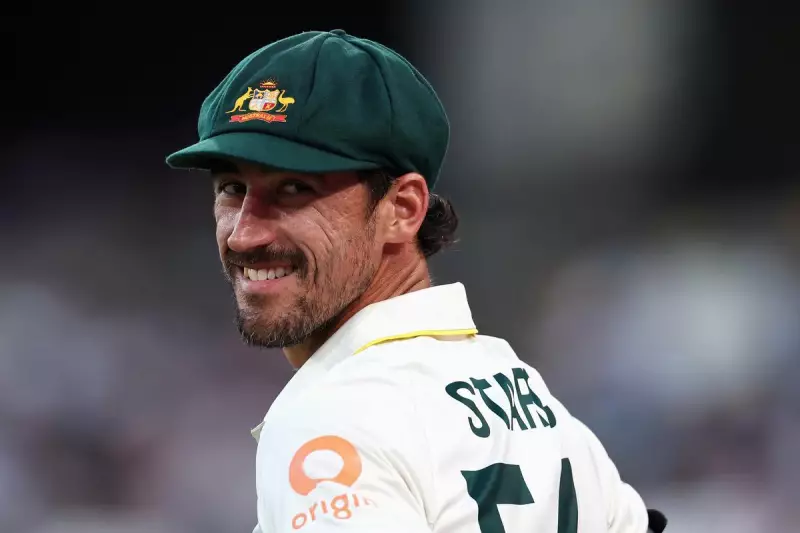
Australian pace spearhead Mitchell Starc has etched his name into cricket's record books, officially becoming the most successful left-arm fast bowler in the 148-year history of Test matches.
A Humble Champion Claims a Legend's Crown
In a moment rich with symbolism, Starc has now taken more Test wickets than the iconic Pakistani left-armer, Wasim Akram. The milestone was reached during the ongoing Ashes series, yet Starc's reaction was characteristically self-effacing. When asked about surpassing Akram, he immediately deferred to the Pakistan great, calling him the genuine GOAT (Greatest Of All Time).
According to former teammate and fast bowler Mitchell Johnson, that humility is entirely genuine. However, Johnson suggests that within the Australian dressing room, many believe Starc has built a career that now stands shoulder-to-shoulder with Akram's, perhaps even edging ahead in terms of pure match-winning impact.

The Evolution of a Test Match Warrior
Starc's journey to this point has been one of significant evolution. While long feared as a white-ball destroyer, his growth as a Test cricketer over the past five or six years has defined his legacy. He has transformed into a more reliable and consistent force, renowned for his willingness to bowl the tough overs when the ball is soft, the pitch is flat, and breakthroughs are scarce.
This series has already showcased his enduring value. In a bold selection move for the second Test at the Gabba, Australia opted for a four-pronged pace attack, leaving champion spinner Nathan Lyon out. Starc responded in typical fashion, claiming a wicket in the first over—an act that now seems like muscle memory for the veteran.
More crucially, he stood up under the pink ball. Despite a Gabba pitch that offered batters assistance for the first three days, Starc remained the attack's most potent threat. While England's openers struggled with their lines early in Australia's first innings, it was Starc who provided the constant pressure.
Selection Drama and Starc's Solo Leadership
The decision to omit Nathan Lyon sparked considerable debate. Lyon, understandably disappointed, expressed his feelings in a television interview that, in Johnson's view, momentarily risked appearing less than team-first. Johnson, having experienced similar selection setbacks, empathised with the emotional toll but noted the importance of rallying for the team.
Johnson revealed he, too, would have left Lyon out before seeing the grassy Gabba deck on day one. The three millimetres of grass suggested Lyon's subtle variations and control could have been invaluable, both for taking wickets and for improving Australia's poor over-rate.
Amid this selection controversy, Starc's performance has been the anchoring narrative. His achievement is magnified by the context: he is now also hunting down Terry Alderman's famous Ashes wicket tally, and he is doing so without his usual partners in crime, Pat Cummins and Josh Hazlewood, beside him. This underscores a new chapter where Starc is leading the attack on his own terms, not just acting as the X-factor in a world-class trio.
As Johnson notes, the long summer demands that Starc receives adequate support and remains fit. When Mitchell Starc is firing, the entire Australian team stands a yard taller. He is not merely breaking records; he is actively shaping the story of this Ashes series, reminding everyone with every swinging, searing delivery why a left-arm fast bowler is an indispensable weapon in any attack—even if he's too humble to ever say it himself.