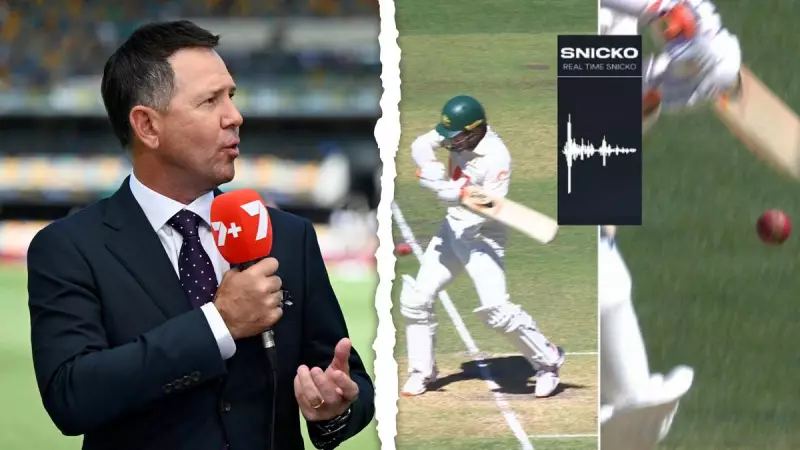
Australian cricket legend Ricky Ponting has revealed that match officials hold significant private concerns about the reliability of the Decision Review System (DRS) technology used in Australia, following a major technological failure on the opening day of the Third Ashes Test.
Snicko Error Sparks Controversy
The controversy erupted on Wednesday when the operators of the Snicko technology admitted a technical error denied England the wicket of Australian batsman Alex Carey. The fault occurred during a review, preventing the tourists from successfully overturning a not-out decision.
England's management immediately took the issue to match referee Jeff Crowe, who acknowledged the fault and returned the team's review. However, this gesture offered little consolation for the visiting side, who were robbed of a crucial breakthrough.

Ponting Exposes Private Umpire Concerns
Speaking on Channel Seven, Ponting stated the incident highlighted ongoing and private worries among the umpiring corps about the system's trustworthiness in Australian conditions.
"This technology that we are using here (in Australia) is simply not as good as technology that's used in other countries," Ponting said. "You talk to the umpires, they'll tell you the same thing. They can't trust it."
He explained that the third umpire, tasked with making critical decisions based on the technology's output, is sometimes left with a gut feeling that the data is incorrect. "That can't happen. You've got to be able to trust the technology that's in place," Ponting emphasised.
Frustration Mounts for England
The blunder is expected to prompt formal discussions, with England likely to raise the issue with the International Cricket Council (ICC). Cricket Australia will also seek answers from the technology operators.
England's bowling coach, David Saker, did not hide his frustration after play concluded on day one. He suggested the calibration of the Snicko system had been problematic throughout the series.
"There's been some things that don't really measure up," Saker said. "And at that stage ... it was a pretty important decision. So those things hurt but we'll get through it. But you would think in this day and age ... technology is good enough to pick things up like that."
The incident casts a shadow over the integrity of the review process in one of cricket's most prestigious series and raises urgent questions about the consistency of the technology deployed across the international game.