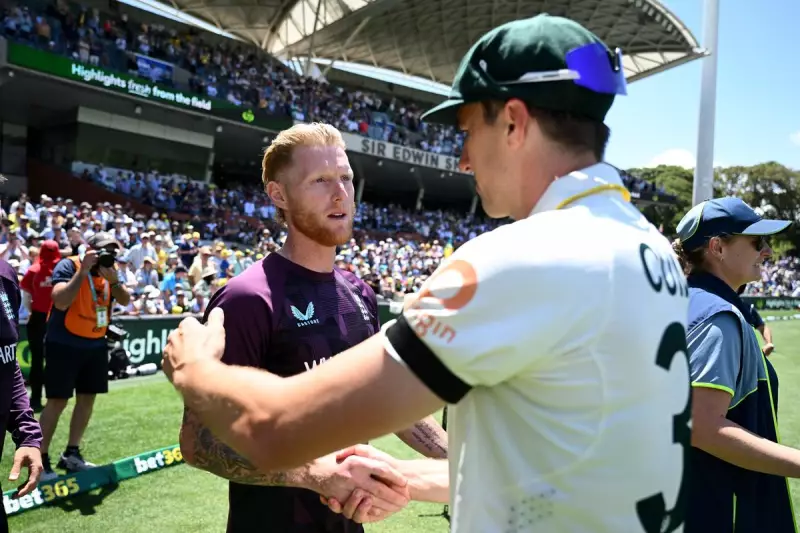
Even the most ardent critics of England's aggressive 'Bazball' cricket philosophy could not have predicted the sheer scale of its unravelling on a dramatic day at Lord's. What began as a confident pursuit of victory against the West Indies descended into a shocking collapse, handing the visitors a famous win and leaving the home side's strategy in tatters.
The Calm Before the Storm at Lord's
The stage was set for a classic English chase on the fourth day of the first Test. Set a target of 121 runs to win, England's openers, Zak Crawley and Ben Duckett, navigated the early overs with relative comfort. The pair put on a steady 47 runs, seemingly putting England on a straightforward path to a 1-0 series lead. The aggressive batting style championed by coach Brendon McCullum and captain Ben Stokes appeared to be under control, with the small target well within sight.
However, the dismissal of Duckett for 11, caught behind off the bowling of Jayden Seales, triggered a catastrophic chain of events. What followed was a batting performance of such fragility that it left the packed Lord's crowd in a state of stunned silence. England lost all ten of their wickets for just 67 runs, capitulating to be bowled out for 114. The West Indies, written off by many before the series, secured a remarkable victory by 11 runs.

A Collapse of Historic Proportions
The heart of England's batting order, the very engine room of the Bazball era, disintegrated under pressure. Ollie Pope managed only 1 run before falling to Seales. The experienced Joe Root followed for just 4, his dismissal a significant blow. Captain Ben Stokes, the talisman of this aggressive approach, could only contribute 4 runs himself before being trapped lbw by Alzarri Joseph.
The procession continued unabated. Wicketkeeper Jamie Smith scored 8, while all-rounder Chris Woakes added 5. The lower order offered minimal resistance, with the final five wickets adding a paltry 19 runs. The West Indies' bowling attack, led superbly by Seales (4-40) and supported brilliantly by Joseph (3-42) and the veteran Kemar Roach (2-22), exploited the pitch's variable bounce and the palpable tension to devastating effect.
This was not a case of brave, attacking cricket leading to a glorious failure. It was a systemic breakdown, a display of poor shot selection and technical flaws exposed when the pressure was at its peak. The collapse raised immediate and serious questions about the sustainability of England's high-risk method, particularly in tight, low-scoring contests where patience is paramount.
Reckoning for Bazball and the Road Ahead
The fallout from this defeat is immense. For the West Indies, it marks a historic and emotional triumph at the home of cricket, their first Test win in England since 2000. It is a monumental boost for cricket in the Caribbean and a testament to the leadership of captain Kraigg Brathwaite and the skill of their young, fiery pace attack.
For England, the introspection will be deep and painful. The loss at Lord's is a severe setback for the Stokes-McCullum project, which has now suffered a series of high-profile defeats, including the recent Ashes series and a heavy loss in India. Critics will argue that the Bazball ideology lacks the nuance required for all situations, and that its unwavering commitment to attack borders on recklessness when game situations demand pragmatism.
The pressure now shifts directly to the second and final Test at Trent Bridge. England must win to level the series and avoid a humiliating home defeat. The selection panel faces tough calls, particularly regarding the form of key batters and the balance of the bowling attack. More fundamentally, the team must decide whether to double down on their philosophy or adapt it with a greater dose of situational awareness.
This stunning result at Lord's proves that no cricket strategy is infallible. While Bazball has provided thrilling entertainment and notable victories, its dramatic failure under modest pressure has exposed a critical vulnerability. The remainder of this series will serve as a crucial test of its resilience and the ability of England's players to learn from a collapse that even its biggest critics couldn't have imagined.