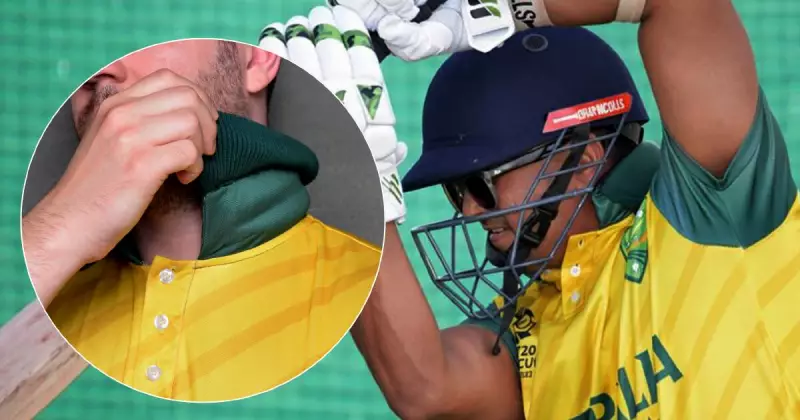
In a proactive move for player welfare, cricket clubs in Canberra are putting their hands up to trial a groundbreaking new piece of safety equipment that could protect players from fatal neck injuries.
A Response to Tragedy
The push for enhanced safety measures has gained renewed urgency following the death of Victorian teenage cricketer Ben Austin in October last year. His passing, during a net session, echoed the profound shock felt by the cricket community after Phillip Hughes died from a similar injury in 2014. While both were described as freak accidents, they have sparked serious concern from grassroots clubs to the national governing body, Cricket Australia, about the need for better protective gear.
"We are starting to find that safety is becoming a bit of a concern, so we do need more protective equipment for players," said Chris Mapstone, junior cricket president of the Tuggeranong Vikings. He confirmed his club's interest in the new invention, stating they would likely volunteer to purchase and trial the equipment for their junior players.

The Australian Invention
The potential solution comes from Western Australian materials engineer and inventor Charisma Wickham. Driven by the desire to prevent further tragedies, she has designed and patented a world-first safety collar specifically for cricket.
The collar is described as an impact-resistant, lightweight device made from two high-density foam tubes with hollow centres. It features a padded resin backing and an inner towelling layer that also acts as a sweatband. Designed to be simply attached to a cricket shirt, the collar is expected to retail for less than $20 and comes in multiple sizes.
"I'm a mother, and I'm a grandmother, and I don't want what happened to Phillip Hughes and Ben Austin to happen again. It's very sad," Wickham told The Canberra Times. "I thought something has to be done, because all these cricketers who face the fastball can get injured in the neck area."
Testing and the Path Forward
Initial testing has involved firing a ball at the collar from close range using a catapult and applying vehicle compression. While further laboratory testing is needed for official certification from sporting bodies—a process Wickham is actively pursuing—she believes the product is ready for the market.
Some clubs in Perth have already given positive feedback after trialling prototypes. Wickham has previously collaborated with Cricket Australia and is now seeking an apparel or equipment partner to help fund mass production. Her goal is to see the collar used nationwide and eventually globally.
Gerard Whitechurch, vice president of Eastlake junior cricket, highlighted the ongoing safety discussions within Canberra clubs. He noted that existing stem guards attached to helmets don't fully cover the neck and haven't been as widely adopted as hoped. "It's unfortunate that these tragedies have happened, but it does get us thinking about how can we avoid this and improve our safety equipment," Whitechurch said.
With Canberra clubs eager to participate and an inventor ready to manufacture, this Australian-made safety collar represents a significant step towards making the sport safer for players at every level.