The 2026 World Cup, set to be the biggest, longest, and most expensive in history, will also feature a host of rule changes that promise to make it the most intricately refereed tournament ever seen. New responsibilities for video assistant referees (VAR), new red card offences, and initiatives to speed up play will be implemented across the tournament hosted by the United States, Canada, and Mexico.
VAR to Check Corners and Second Yellow Cards
Despite growing fan dissatisfaction with video refereeing, FIFA is expanding the VAR protocol. Video officials will now be expected to check every decision that results in a corner kick. According to guidance from the International Football Association Board (IFAB), VAR should intervene only if it can do so quickly, though no specific time limit has been defined. Additionally, VAR will now assess decisions leading to a second yellow card and subsequent sending-off, whereas previously it only reviewed straight red cards. While some IFAB figures are hesitant about extending VAR’s role—and the Premier League appears ready to reject the corner review option—FIFA is concerned about incorrect decisions affecting high-profile matches. The original VAR protocol was designed to eliminate serious incidents missed by on-field officials.
VAR Also to Check for Fouls Before Set Pieces
In an unexpected development less than two weeks before the World Cup, IFAB announced another change to the VAR protocol, labelled a "clarification." This adaptation extends the window for assessing goals, penalties, or sendings-off that follow a set piece. Video referees will be encouraged to check for any offence committed before the set piece was taken (while play was stopped) if the incident is deemed to have had a "direct impact" on the outcome. This change is widely seen as a tool to tackle grappling in the box before corners and free-kicks, and a missed foul in the buildup to England’s opener in a recent friendly against Uruguay is cited as an example of the type of infraction being targeted.

Red Cards for Covering Mouths and Leaving the Field
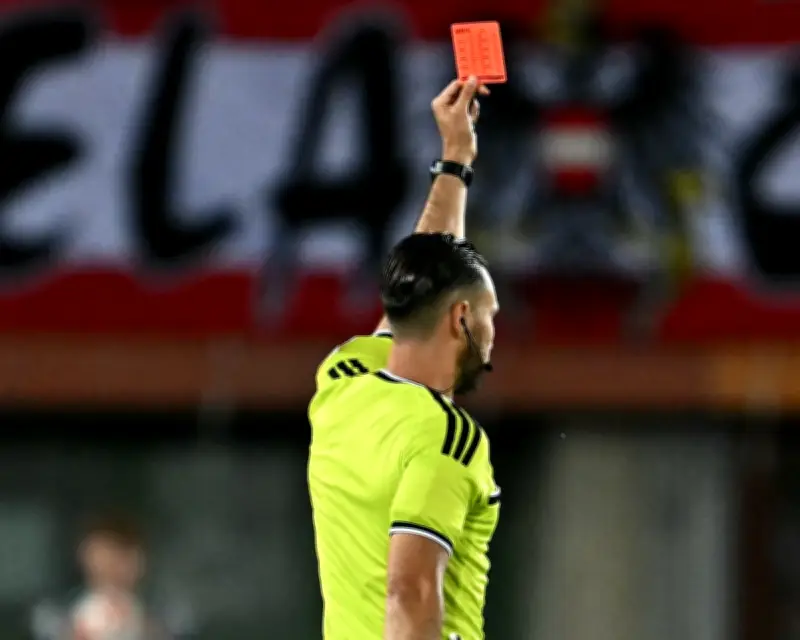
Two notorious incidents in 2025 have led directly to new red card offences. The first stems from the Senegal coach, Pape Thiaw, and several players walking off the field during the Africa Cup of Nations final in protest at a penalty awarded against them. Now, any player or official who "leaves the field of play in protest at a referee’s decision" can receive a red card. The same sanction applies to players who cover their mouths "in a confrontational situation." This change follows an incident where Benfica midfielder Gianluca Prestianni hid his mouth under his shirt before confronting Vinícius Júnior during a Champions League tie. Real Madrid claimed the abuse was racist, but Prestianni admitted to and was banned for homophobic remarks. FIFA President Gianni Infantino personally called for such actions to result in a sending-off, and this optional rule will be applied at the World Cup.
Measures to Stop ‘Tactical Timeouts’
Another growing frustration in the game is the use of tactical timeouts, where apparent injuries are used as opportunities for coaches to relay instructions. Seen as exploitation of a loophole and an unnecessary interruption, officials will clamp down on this behaviour at the World Cup. Outfield players will be expected to leave the field for treatment and then stay off for 60 seconds before returning. Goalkeepers, the prime culprits in tactical timeouts, will continue to be treated on the field, but referees will adopt a measure from the National Women’s Soccer League (NWSL): while treatment continues, all other players must retreat to the centre circle and not approach the coach’s technical area.
The successful introduction of referee countdowns to speed up goal-kicks will be expanded to include throw-ins. Referees can signal a five-second countdown to dawdling players. If the count reaches zero, the throw-in is awarded to the opposition, or for goal-kicks, a corner is awarded to opponents. Finally, any player being substituted must leave the field within 10 seconds of their number being raised. If they take longer, the replacement player will be kept off the field for an additional minute.