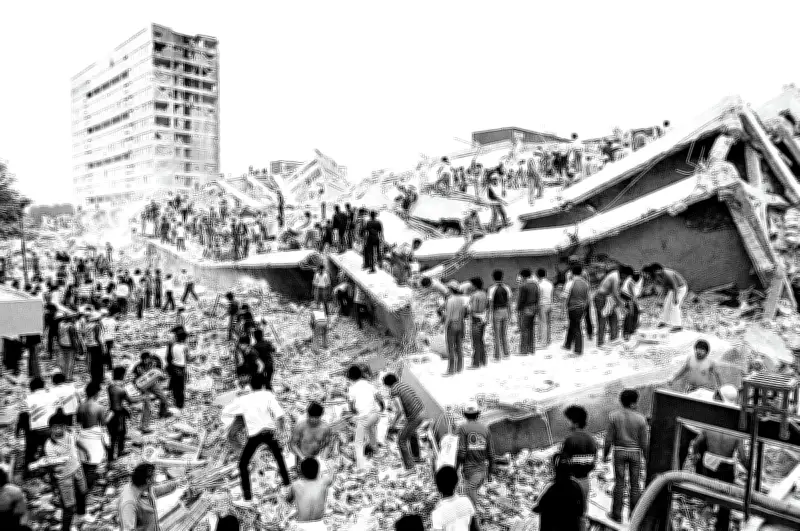
Mexico hosted the World Cup in 1986, but the tournament nearly did not happen. In September 1985, a devastating earthquake struck Mexico City, killing at least 5,000 people, leaving 30,000 homeless, and flattening large parts of the capital. Some estimates place the death toll as high as 40,000. The disaster prompted calls to cancel or move the World Cup to a neighboring country. However, because the football stadiums, including the Estadio Azteca, remained standing, the Mexican government, backed by FIFA, decided to proceed.
Earthquake Devastation and Initial Response
The earthquake hit Mexico City on 19 September 1985 at 7:19 am local time. A second tremor on 20 September caused little extra damage but hampered rescue efforts by 50,000 troops, police, and firemen already struggling with dwindling supplies of water and medicine. About 250 buildings, mostly in the city center, collapsed, and another 50 were in imminent danger. At least three hospitals were seriously damaged or destroyed, trapping doctors and patients. Several churches caved in minutes before morning mass.
Survivors described the earthquake as “a mighty blow from hell.” Within three minutes, the city center resembled a war zone. One volunteer rescue worker said, “It’s like a big monster, like being bombed or in a war.” A survivor, Flavio Bocuccia, 21, from Rome, recounted saving his six-year-old brother from falling out of a hotel window. “I caught Alexandro as he lurched out of the hotel window,” he said in a trembling voice.

FIFA’s Assurance and Tournament Continuation
Despite the widespread destruction, FIFA quickly moved to calm fears. On 21 September 1985, a FIFA spokesman stated, “No immediate emergency measures regarding the World Cup preparations are called for.” Reports confirmed that none of the 12 stadiums designated for the tournament were damaged. Mexico had stepped in as hosts in 1983 after Colombia withdrew due to economic and security reasons.
The Mexican government was determined to go ahead, viewing the World Cup as a symbol of the country’s recovery. However, public sentiment was sour. When the tournament opened on 31 May 1986, President Miguel de la Madrid was loudly booed and jeered during the opening ceremonies at the Azteca stadium. With 100,000 people present, not a word of his speech could be heard. The crowd’s anger was also directed at Mexico City Mayor Ramon Aguirre, blamed for the government’s failure to address earthquake damage, and Guillermo Canedo, head of World Cup organizers, whose remarks about rising from the ruins clashed with the ongoing suffering of thousands of homeless.
Legacy and Lessons
The 1986 World Cup proceeded without major incident, with Argentina winning the final. The earthquake’s lessons, however, remain debated. Thirty years on, questions persist about whether Mexico’s disaster preparedness improved. The event highlighted the resilience of a nation but also the deep political and social fissures exposed by the tragedy.