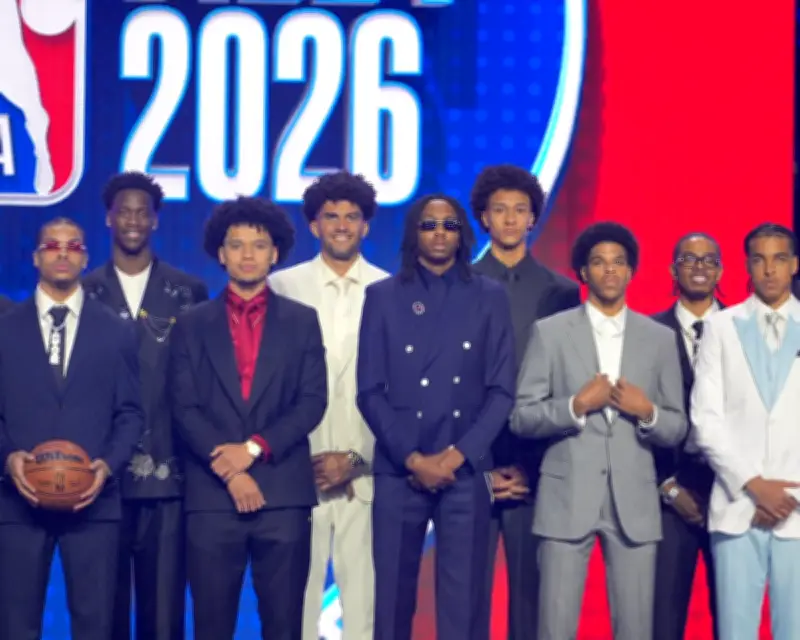
The 2026 NBA Draft first round concluded with a clear narrative: the teams that embraced the tanking strategy reaped the biggest rewards, while the so-called 'Jalen Brunson effect' reshaped how franchises evaluated guard prospects. The draft, held at the Barclays Center in Brooklyn, saw the Houston Rockets secure the top pick after a season of strategic losses, selecting Duke freshman forward Cooper Flagg, widely regarded as a generational talent.
Tanking Teams Dominate the Lottery
The Rockets, who finished with the league's worst record at 17-65, were rewarded with the No. 1 overall pick for the first time since 2002. General manager Rafael Stone said, 'We stuck to the process, and it paid off. Cooper Flagg is the cornerstone we've been building toward.' The Washington Wizards (No. 2) and Detroit Pistons (No. 3) also benefited from their losing campaigns, selecting guards Ace Bailey and Dylan Harper, respectively.
According to league sources, the 2026 draft class is considered one of the deepest in recent years, with seven players projected as future All-Stars. The top three picks alone are expected to transform their franchises, with Flagg averaging 22.1 points, 9.8 rebounds, and 4.3 assists in his lone college season.

The Jalen Brunson Effect Reshapes Guard Evaluations
Perhaps the most intriguing trend of the first round was the 'Jalen Brunson effect'—a term coined by analysts to describe the increased value placed on crafty, high-IQ guards who excel in pick-and-roll situations. This led to a run on point guards early in the draft, with five selected in the top 10, including the Wizards' pick of Bailey and the Pistons' selection of Harper.
ESPN draft analyst Jonathan Givony noted, 'Teams are now prioritizing guards who can control the game like Brunson, rather than just raw athleticism. This draft reflected that shift.' The effect was most evident when the San Antonio Spurs, picking at No. 8, traded up to select guard Rob Dillingham from Kentucky, despite his 6-foot-1 frame.
Winners: Houston Rockets, Washington Wizards, and the Spurs
The Rockets were the clear winners, landing Flagg without any trade complications. The Wizards, after a 22-60 season, secured a dynamic backcourt duo in Bailey and a future first-round pick from a separate trade. The Spurs, meanwhile, added Dillingham to pair with Victor Wembanyama, creating one of the most intriguing young cores in the league.
Another winner was the Utah Jazz, who drafted for need and value by selecting forward Matas Buzelis at No. 10. Buzelis, a 6-foot-10 playmaker, is expected to complement Lauri Markkanen perfectly.
Losers: Portland Trail Blazers, Chicago Bulls, and the 'Treadmill' Teams
The Portland Trail Blazers, picking at No. 7, were widely criticized for reaching on center Donovan Clingan, a traditional big man in an era of positionless basketball. Analyst Tim Bontemps said, 'Portland passed on higher-upside guards to take a player who might not fit the modern NBA.'
The Chicago Bulls, who finished 10th in the Eastern Conference and missed the playoffs, selected guard Bronny James at No. 11—a pick seen as a gamble on potential rather than production. James averaged just 8.2 points per game at USC, leading many to question the selection.
Teams like the Atlanta Hawks (No. 12) and Toronto Raptors (No. 13) were also considered losers for failing to address glaring roster needs, instead opting for 'best player available' without a clear plan.
Impact on the 2026-27 Season and Beyond
The first-round outcomes are expected to significantly impact the upcoming season. The Rockets, with Flagg, are projected to improve by at least 15 wins, according to betting markets. The Wizards and Pistons are also expected to climb out of the lottery, potentially competing for play-in spots.
However, the 'Jalen Brunson effect' may have longer-term implications, as teams increasingly devalue traditional big men in favor of versatile guards. This could accelerate the decline of centers like Clingan, who was selected in the lottery despite being projected as a mid-first-round pick.

Overall, the 2026 draft reinforced the value of strategic tanking, while the Brunson effect highlighted the NBA's ongoing evolution toward guard-centric basketball. As one anonymous general manager put it, 'If you don't have a top-tier guard, you're playing from behind.'